

In response to the growing environmental concerns associated with urban freight, cities, including Rosario, Bogotá, Kochi, Shimla, and Panaji, are proactively engaging in initiatives involving smart technology, forward-thinking urban planning, the promotion of sustainable practices, strategic policy development, and the cultivation of collaborations with the private sector. These collective endeavors are geared toward shaping a more sustainable future.
The movement of goods in urban areas, commonly referred to as “urban freight,” is a critical factor shaping economic activities in cities. This activity ensures the flow of necessities and services for citizens and businesses alike.
Given the importance of this system, its vehicles account for about a quarter of the vehicles moving within cities. Before the COVID-19 pandemic, estimates showed that this system occupied approximately 40% of road capacity, resulting in nearly 40% of carbon dioxide emissions and 50% of primary air pollutants associated with urban transportation.
This was the situation before 2020, which witnessed the spread of the COVID-19 pandemic. Following an exceptional surge in urban freight during 2018 and 2019, movement restrictions led to a leap in e-commerce, placing additional pressure on infrastructure.
In light of these circumstances, the EcoLogistics Project, affiliated with the International Council for Local Environmental Initiatives (ICLEI), launched a set of experimental and collaborative projects in the Indian cities of Kochi, Shimla, and Panaji, as well as in the Argentine city of Rosario and the Colombian city of Bogotá.
The Council works to enhance regulatory, planning, and logistical government tools at various levels to support low-carbon urban freight. Its initiatives align with future expectations in cities regarding freight requirements, as projections indicate a 36% increase in delivery vehicles in 100 top global cities by the end of the decade. This could translate to an additional 32% of emissions and 21% more congestion.
The first experiment in Rosario, Argentina, introduced an idea not widespread in Latin America, which involves the shared use of public cargo bicycles. In collaboration with the Mobility Office and local businesses, 20 specially designed cargo bicycles equipped with rentable features and “geofencing” technology were launched. This technology creates a virtual fence around the boundaries of a specific area or location, notifying the user when a certain distance is covered.
In Colombia, the focus shifted to the last-mile concept, emphasizing the use of environmentally friendly transport in the final stages of delivery when it is not feasible for the entire journey. The capital city, Bogotá, conducted an extensive study on the options for using emission-free vehicles in the final stages, such as mandating that vehicles weighing less than 12 tons be electric and implementing policies that encourage this option. Workshops were also organized to collaborate with stakeholders and the private sector, facilitating the exchange of ideas and perspectives. In the near future, the government plans to add traditional cargo bikes and electric bikes to substitute fossil fuel-powered trucks in areas with low air quality. All these measures are accompanied by a tool to assess the feasibility of technological tools and assist authorities in decision-making.
In India, the city of Panaji launched a similar initiative by deploying electric cargo vehicles to complete last-mile operations, while simultaneously improving digital infrastructure and data analytics. Another congested Indian city, Shimla, identified and revitalized 17 locations, rehabilitating their sidewalks to facilitate the loading and unloading of goods. This involved implementing new traffic signals, scheduling, and using smart technology and intelligent shipping solutions to track traffic movements and manage parking spaces.
The human element is not overlooked, with the city trying to enhance the capabilities of employees through training programs and education, including training drivers in environmentally friendly practices.
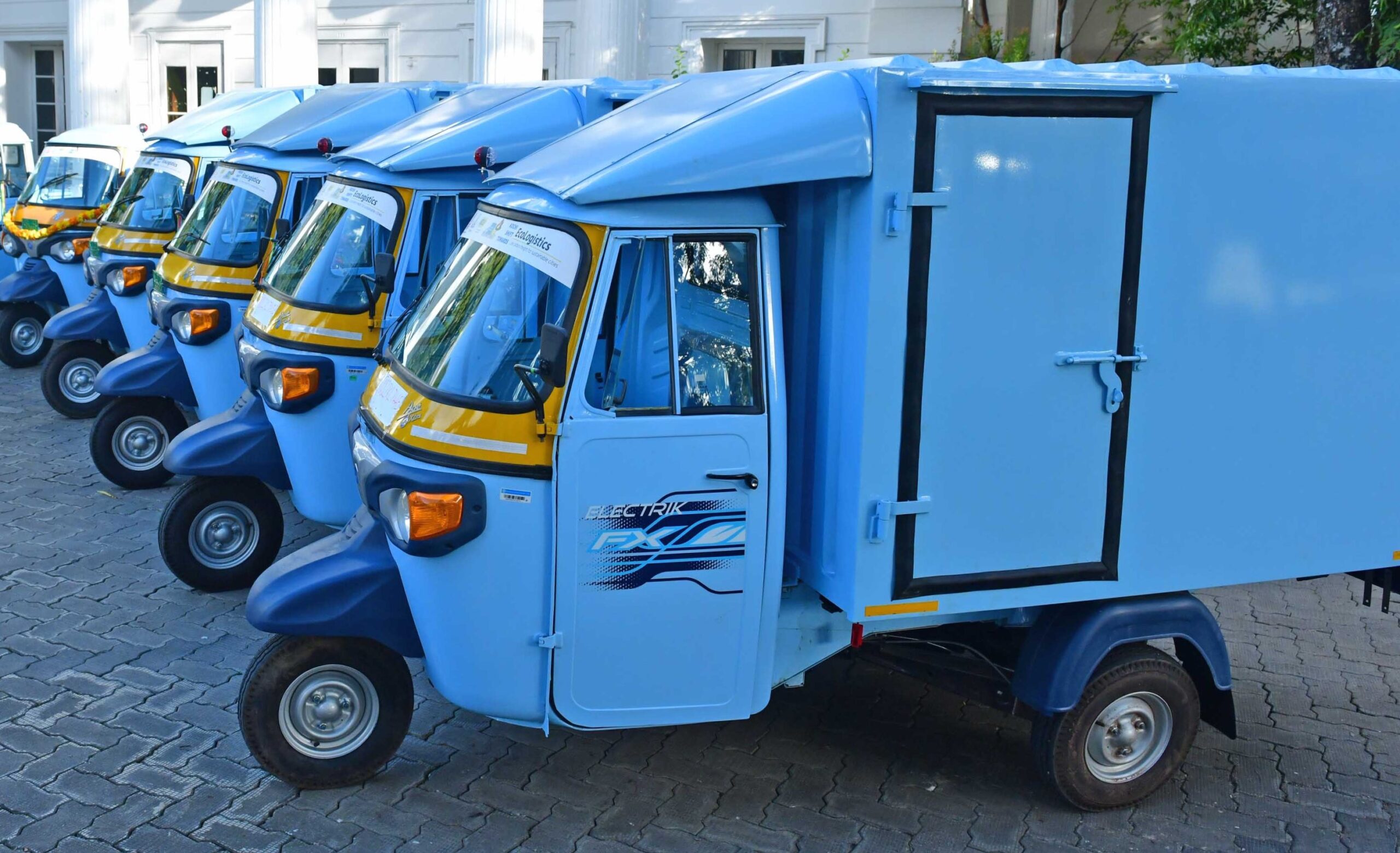
In Kochi, India, authorities initiated a program to replace traditional vehicles with three-wheeled electric alternatives. The focus of the experiment is on improving charging methods and optimizing battery usage.
These initiatives, among others, must overcome a set of challenges, including infrastructure development that requires significant financial resources and competes with various government priorities. Authorities must strategically allocate funding to address these challenges.
As changing societies and their behaviors is a challenging and significant task, technology alone is not sufficient without building a culture that values adopting sustainable practices. This requires awareness campaigns and intensive communication with people to promote future collective responsibility.
These projects will not have a meaningful impact if they do not expand and sustain their momentum. This presents another challenge that requires careful planning, resource allocation, and coordination of efforts among stakeholders, alongside effective governance capable of addressing logistical, organizational, and financial complexities.
Experiences provide in-depth evaluations of new ideas, identifying results achieved and challenges faced. This enables decision-makers to make informed decisions based on evidence. Collaboration between countries and entities opens up wide avenues for the exchange of knowledge, resources, and best practices for further development.
In the Argentine experience, the Rosario government offered small businesses a sustainable and environmentally friendly solution that enhances the efficiency of delivery operations. Meanwhile, the Bogotá government aims to eliminate 98% of carbon emissions by 2050 while providing better service with less congestion.
In India, the Panaji government seeks a gradual phase-out of traditional vehicles, with around 10,000 delivery operations expected to transition to electric vehicles after three and a half months of the experiment. At that point, the possibility of expansion and prospects for long-term emission reduction can be assessed. Similarly, Shimla authorities aspire to regulate work, reduce violations, and enhance environmental sustainability. Kochi plans to cut over 20 tons of carbon emissions.
By increasing reliance on zero-emission vehicles and promoting sustainable practices, these cities are steadfastly progressing towards reducing greenhouse gas emissions, with the hope of expanding this trend further.
References:
- https://talkofthecities.iclei.org/cities-in-drive-lessons-from-ecologistics-pilot-projects-towards-sustainable-urban-freight/
- https://iclei.org/about_iclei_2/
- https://sustainablemobility.iclei.org/ecologistics-initiative/
- https://sustainablemobility.iclei.org/ecologistics/demonstration-projects/#rosario
- https://sustainablemobility.iclei.org/wpdm-package/ecologistics_handbook_eng/
- https://www.weforum.org/press/2020/01/urban-deliveries-expected-to-add-11-minutes-to-daily-commute-and-increase-carbon-emissions-by-30-until-2030-without-effective-intervention-e3141b32fa/