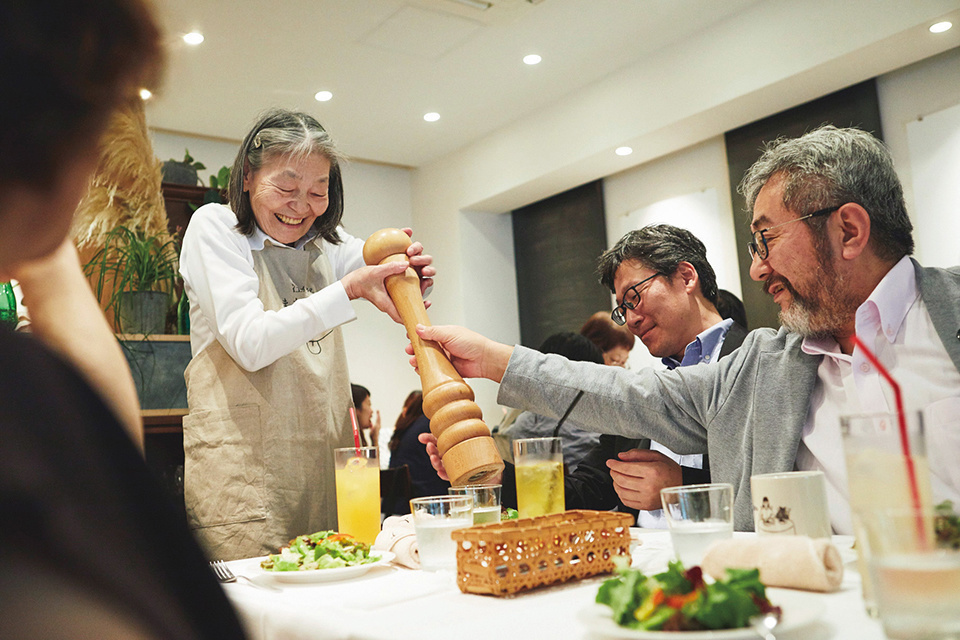
In the heart of Tokyo, innovators have opened a restaurant where waiters are encouraged to intentionally serve customers the wrong dishes. Rather than being met with frustration, these mistakes are welcomed with laughter, as the waiter in question is an elderly person working at the “Restaurant of Mistaken Orders,” which challenges societal norms and fosters a deeper understanding and acceptance of dementia through a unique dining experience.
It may not be a coincidence that “aging” has become a metaphor for the frailty and impermanence of everything, with its details reminding us of the inevitable changes that affect all things. Among these, dementia stands out as it challenges our perceptions of identity, cognition, and capabilities.
For a long time, our societies have treated—if not ignored or marginalized—those with cognitive impairments resulting from aging. At best, when the symptoms of aging aren’t met with ridicule, stigma, or bullying, they are greeted with sympathetic gestures, reflecting the belief that communicating with the elderly is futile, or that their memory will inevitably improve.
However, the world today is witnessing an increase in life expectancy and a growing elderly population. According to the World Health Organization’s 2023 report, more than 55 million people worldwide suffer from dementia, with 10 million new cases each year. The WHO also highlights the significant economic impact of dementia, estimating global losses of approximately 1.3 trillion dollars in 2019.
In Japan, the Ministry of Health and Welfare estimates that 5.23 million people will be living with dementia by 2030, accounting for 10% of the population, alongside an additional 5.93 million experiencing mild cognitive impairment, the precursor to dementia.
Thus, there is an urgent need to foster societal acceptance and support for individuals living with dementia. Both the government and, to an even greater extent, civil society can no longer tolerate the traditional view of dementia as a complete loss of function and independence, as this reinforces harmful stereotypes and obscures the potential contributions of those living with the condition.
From within civil society, a talented director introduced the idea of the “Restaurant of Mistaken Orders,” inspired by an experience at a nursing home, aimed at creating a space where mistakes are met with kindness and empathy.
After securing nearly $115,000 in funding, this initiative opened its doors in 2017, becoming a recurring event where professionals from various fields, including restaurant management, interior design, social care, and organizations addressing mental and cognitive issues related to aging, come together.
The restaurant employs workers and waiters living with dementia, who are expected to intentionally make mistakes—whether mixing up orders, misunderstanding them, or even drinking a customer’s glass of water. At times, they may engage in aimless conversations with guests or ask someone to take orders from neighboring tables. In this way, they create an environment that prioritizes human connection, surprise, and unique experiences over the conventional efficiency of service.
This initiative encourages patrons to embrace the unexpected and appreciate the efforts of service providers. By accepting mistakes with humility and kindness, customers gain a deeper understanding of the challenges faced by those living with dementia.
To broaden its impact, the restaurant launched a website offering detailed resources and contact information, aimed at anyone daring enough to replicate this experience elsewhere in the world. Similar initiatives have already started in South Korea and Australia.
While the idea seems heartwarming, it raises many legitimate concerns and questions, particularly regarding societal and ethical issues. Many feared the potential exploitation of elderly individuals with dementia or the risk of turning them into subjects of ridicule or opportunities for exhibitionism. A significant number of critics expressed concern that, over time, the restaurant might perpetuate negative stereotypes or create a harsh, demeaning environment where workers could be humiliated.
However, most of these concerns were alleviated by the positive participation of the workers and the supportive, human responses from customers, which collectively demonstrated the transformative potential of this approach.
On the other hand, the initiative faced operational challenges, including the need for intensive planning and collaboration across multiple sectors, as well as the challenge of ensuring financial sustainability. While the initial funding provided the spark for the project, its continued viability hinges on its success.
The results appear promising. The Restaurant of Mistaken Orders has had a profound impact on both its patrons and workers. For instance, on one occasion, 37% of the diners received incorrect meals, but 99% of them expressed satisfaction with the experience.
Most importantly, the initiative succeeded in challenging preconceived notions, showcasing the capabilities of individuals with cognitive impairments, and revealing aspects of their personalities that deserve recognition.
In other words, the organizers of this restaurant decided to prioritize genuine interaction and deepening relationships with others, proving that true value lies in human experiences.
Ultimately, this initiative contributes to a broader societal shift toward a more comprehensive and humane understanding of age-related conditions. Major behavioural transformations not only change the lives of individuals but also have the potential to alter the fabric of our communities, fostering environments where everyone can thrive.
References:
• Restaurant of Mistaken Orders
• Japan’s “Restaurant of Mistaken Orders”
• Forbes on the Restaurant of Mistaken Orders