
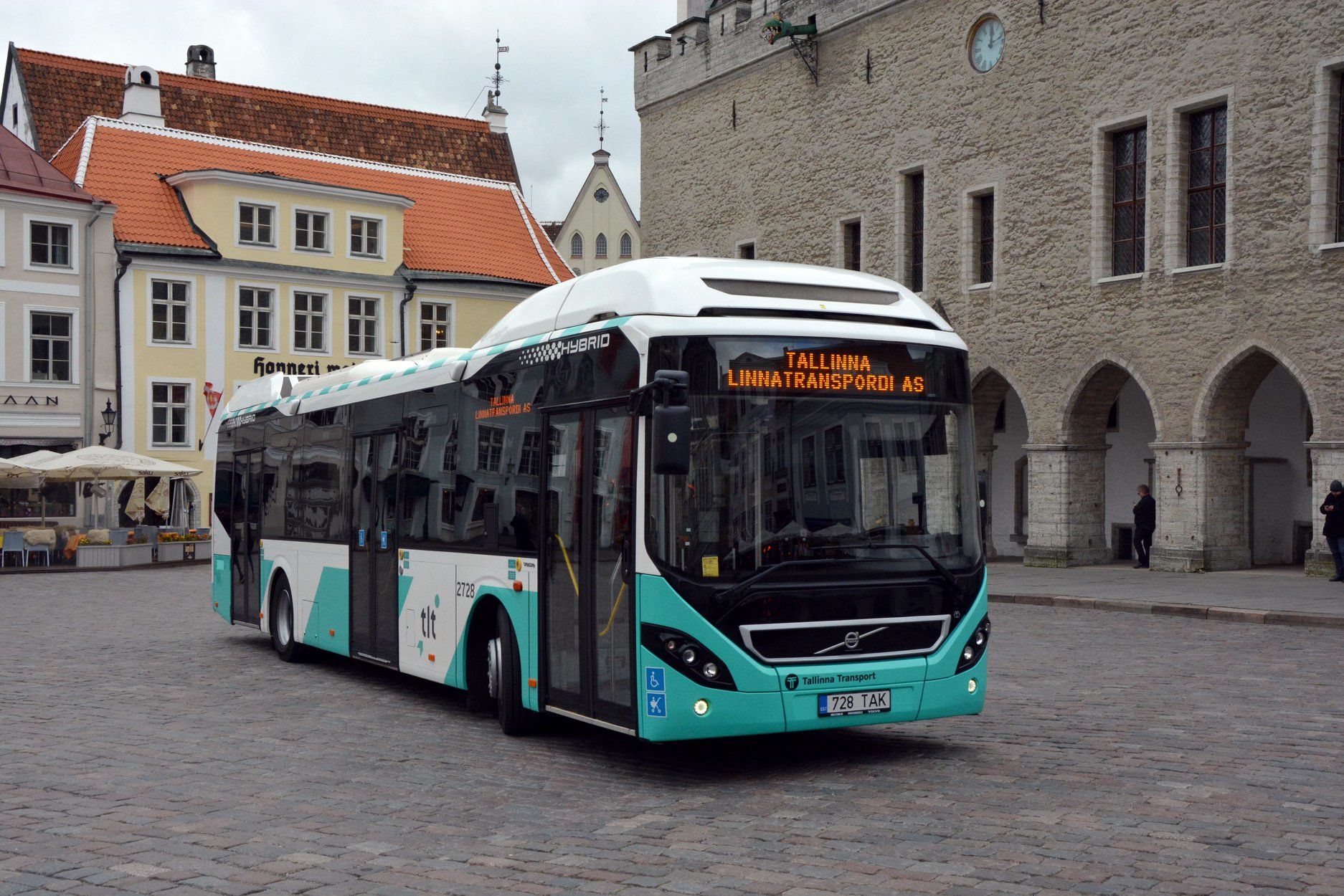
As part of the digital transformation journey, To make urban planning more efficient, The Estonian capital Tallinn adopts a digital model for data collection, and make more informed decisions, and upgrade the transport network as a whole.
The world is increasingly aware of the relationship between data sharing and policy formulation. Digitalization has become a key element for the development of sustainable systems in various aspects of public life. Today, Mobility data is becoming increasingly important, Where companies resort to it for innovative uses such as vehicle sharing, These are uses that rely on mapping, guidance, autonomous driving, data collection and processing. Governments also use this data in their quest to understand and monitor transport networks. Modern technologies combine with traditional methods of management and planning.
But transport digitization is still a distant goal in many countries. It is estimated that 35% of major cities and 92% of the largest low- and middle-income cities lack clear and complete maps of the transportation network. In Estonia, Facing the Metropolitan Government, Tallinn, Challenges in planning transport infrastructure investments, and in maintaining the flow of traffic during road maintenance operations, Especially since the needs of the population vary according to their regions.
This prompted the authorities to adopt a digital transport model developed by the Ministry of Transport using special software to be an additional means of analyzing future scenarios.
The new model comes innovatively, Simulates experiments applied in Western Europe, It is a digital tool where all available data comes together to help authorities understand the mobility patterns of Tallinn residents. And knowing how they move from one place to another, and when, And why. In addition to modeling the movements between two fixed points such as housing and workplace, The model examines population movements at more complex levels, Like citizens who take their children to school on their way to work, Or they pass a shopping mall on the way home.
To collect this information, The model receives data from 130,000 roads and more than 51,000 vital points in the capital. This continuously updated data includes the movement of private and public vehicles, trucks and pedestrians, It distinguishes between 12 different types of road users, of youth, the elderly, car users and others, Within the capital and at other points in Hargo County. The model also includes the road network, traffic frequency and survey results from community members over the past five years.
After these models are established, It will be relied upon for planning, traffic management, modernization of the public transport network and urban planning. The role of the model does not end with a survey of a particular project, It is more than an internal analytical tool that can be used in the long term to assess the feasibility and impact of major infrastructure investments on traffic.
In other words, The task of the model is to find answers to pressing questions, as the causes of congestion at a location, or how to mitigate the negative impact of road works on traffic, Or the best way to complete the main national road works surrounding the city without affecting the lives of citizens within it; the model allows, for example, a simulation of traffic, And through them, The authorities can see the capacity of the streets and the extent to which residents rely on them, or on the performance of the public transport network, To make decisions to widen streets, build new roads, increase the number of buses, etc.
In addition, If traffic on a major road is stopped or temporarily closed, A digital model can help predict outcomes and changes in other major methods. With this, Citizens can be guided via smartphone applications.
By integrating live data, Emergency response can be greatly improved. In the event of an accident, Intelligent systems help determine the fastest route to the accident site. and in programming traffic lights to install the green light to allow first responders to pass quickly and safely.
Tallinn is gradually becoming an ideal for a smart city, After a digital transformation journey that relied on 3 pillars, They are accessibility, interoperability and ease of use. Estonia was able to overcome historical and geographical factors after leaving the Soviet Union in the early nineties.
With a population of barely more than one million and three hundred thousand people, Estonian authorities have found that the consolidation of technology is not possible if it is not embraced by everyone. The target group is the source of the real decision. So, From the capital, The necessary infrastructure began to be introduced in schools, then government agencies, and then for all members of society, With a focus on transportation and deployment of contact points in all public places, and in rural and urban environments. Today, All citizens of Estonia receive prescriptions online, All its schools enjoy global network connectivity, 30% of the population can vote electronically. In 2001, the government introduced X-Road to facilitate communication between various open databases of government agencies.
However, some challenges have encountered the advancement of these technologies and hindered the interconnection of databases. Many companies refrain from sharing their data for reasons of privacy, competition standards and operational compliance. Along with cybersecurity concerns and questioning the ethical use of data. They are global concerns, Confronting them requires a collective effort from citizens, businesses, and governments.
As for the digital transport model, It will contribute to predicting the different needs of the population and the challenges facing the transport system and analyzing their causes, To make the most appropriate decisions, which serves the comprehensive development of the city, as well as anticipating their effects, This means more efficient planning for the future.
References:
https://www.sum4all.org/data/files/policymakingfordatasharing_pagebypage_030921.pdf
https://www.theagilityeffect.com/en/case/the-three-pillars-of-the-digital-transformation-in-tallinn/