MBRCGI Websites
|
Ibtekr.org
|
MBRCGI.gov.ae
|
UAE Innovates
|
Edge of Government
|
Pitch@Gov

Smart Water Meters

6 minute read
Akron, Ohio, has launched a promising project to harness digital technology, specifically water meters, in the field of water management to study new options that would allow the government to provide useful services that meet the needs of its 90,000 citizens.
Share this content

Add to Favorite ♡ 0

Akron, Ohio, has launched a promising project to harness digital technology, specifically water meters, in the field of water management to study new options that would allow the government to provide useful services that meet the needs of its 90,000 citizens. Akron has relied since 2003 on analog water meters that took about two years to be installed at a cost of USD 17.9 million and were expected to remain effective for twenty years. Since they needed to be replaced soon, the city decided to study new options that keep pace with technical developments and achieve greater benefits.

In 2017, the idea of smart meters was introduced and a pilot project was launched to measure their effectiveness. In light of this project’s success, the municipality decided to install digital meters in all homes and the tender for the supply of meters by the private sector ended in September 2019. The Water Supply Bureau and the Public Service Department are expected to begin installing the new meters between 2020 and 2022 at USD 35 million.

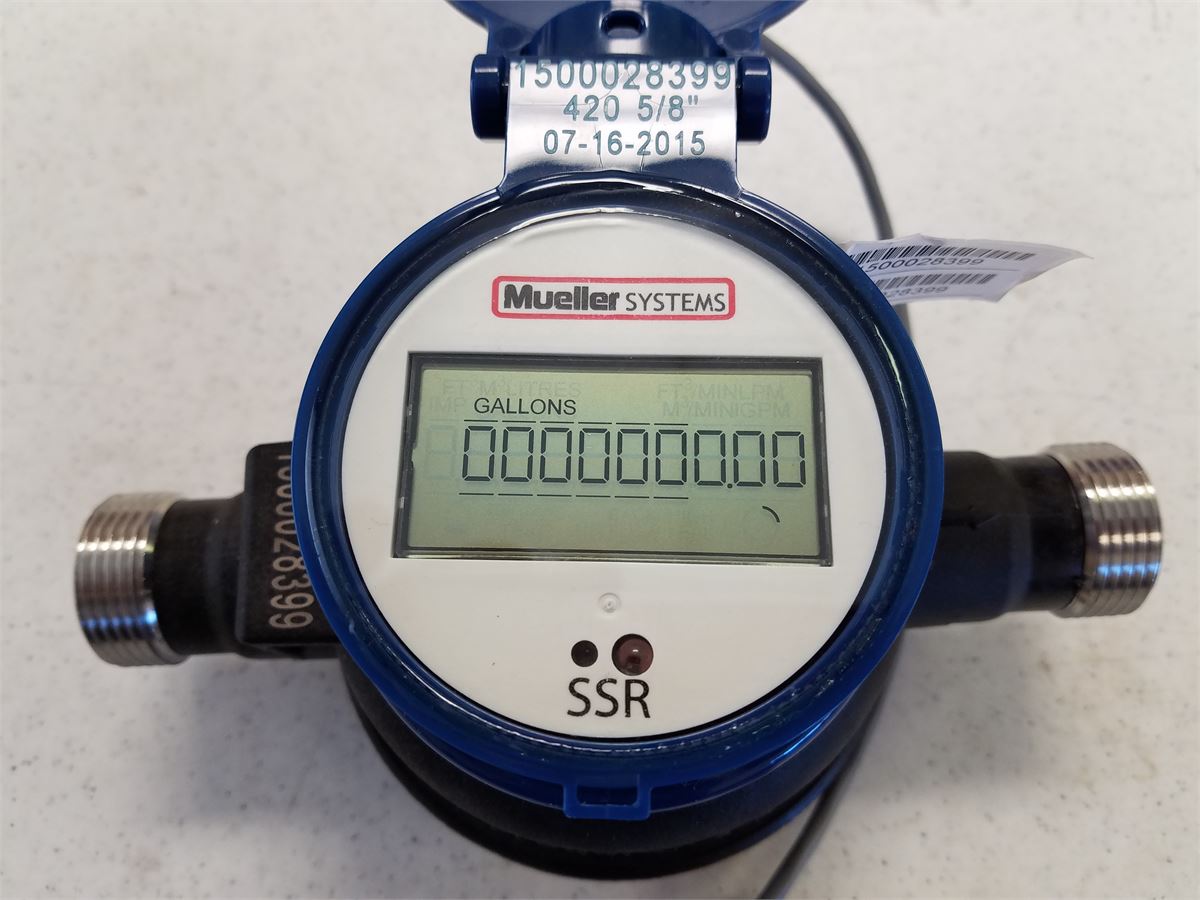
The smart water meters were chosen due to their many advantages, starting with their reasonable cost that does not exceed USD 65, in addition to the installation cost that ranges from USD 80 to USD 160 to be paid by the user. Smart meters do not have to be read by meter readers as it was the case with traditional meters installed in every home, thus allowing these employees to take on the new role of monitoring reports issued by the automated system. The new meters also display the amount of consumption in gallons, which is a more accurate unit of measurement compared to the traditional meters that used cubic meters and provided rounded readings that results in inconsistencies in monthly bills.

Smart meters enable users to view their water consumption online, which is useful for property owners, summer residents, or caregivers. These meters help users avoid costly bills by sending them instant alerts when their water consumption is high. The water authority also benefits from these smart meters by checking direct information that can identify water leakage or theft cases more accurately compared to the current system, since an alarm is triggered as soon as the meter is stolen and its cover is removed.

To evaluate the performance of this pilot project, daily reports were sent to users via email, in addition to providing a dashboard through the website that displays the consumption of the 225 participants per hour of use. When the meters were used for two years, the project was a major success. After the city used to allocate 18 meter readers to visit the units, record water consumption, and issue bills to users, the process of issuing water bills has become more efficient and relies on automated reading. With time, meter readers will be assigned to prepare the reports issued by the system to avoid layoffs of governmental employees. Many US cities are replacing analog meters with digital ones, proof of the project’s success.  On another note, the water meter market is expected to grow at a compound annual growth rate of over 12% by 2023, and more than 56% of this growth will take place in North and South America. It is expected that 400 million smart water meters will be installed worldwide by 2026.


Subscribe to Ibtekr to stay updated on the latest government initiatives, courses, tools and innovations
Register Now
Subscribe to Ibtekr’s Newsletter
Innovators’ Mailing List
Our newsletter reaches more than 30,000 innovators from around the world! Stay up to date with innovations from across fields of practice in the public sector.
Subscription Form (en)
More from Ibtekr

The Deviation Game: A Japanese Innovation Rekindling Human Creativity in the Age of Algorithms

In a world increasingly shaped by artificial intelligence, a deceptively simple game emerging from Japan, “Deviation Game,” is making a bold statement: human creativity still holds a unique power that no machine can replicate. By nudging players to think beyond conventional cues and craft ideas that defy algorithmic imitation, the project highlights not just the current limitations of AI, but the irreplaceable essence of human expression.

 · · 8 October 2025

The New DGP: A Data Tool that Aims to Track Inequality in Real-time

Experts are gaining a direct view of the economy’s core dynamics, uncovering not only the scale of growth but also who truly benefits from it. This American initiative provides policymakers with powerful tools to track and respond to disparities in real time, introducing a groundbreaking innovation that redefines how the economic landscape is understood.

 · · 8 October 2025

Redesigning Comfort: The Navy’s Quest for Better Uniforms for Female Sailors

In the US Navy, one of the most demanding work environments in terms of precision and efficiency, the administration observed female personnel feeling restricted by the standard uniform. It embarked on an ambitious mission to redesign it using an innovative, data-driven, and inclusive approach, ensuring it met their needs and the nature of their duties while remaining a symbol of professionalism, identity, and unity.

 · · 8 October 2025

How Technology is Helping Track Graffiti to Fight Hate Crimes in Canada

In the era of artistic freedom, a creative product can either inspire peace or embody intolerance. In Canada, a nation that prides itself on its diversity, the spread of hate cannot be permitted, even within an artistic framework. Consequently, the city of Edmonton launched the "Lighthouse" initiative, harnessing the power of technology to monitor and mitigate expressions of hate.

 · · 23 September 2025

Voices of Poverty: A Narrative Approach to Human Development in India

The Indian Poverty and Human Development Monitoring Agency (PHDMA) has reimagined its data collection methods to cultivate a genuine understanding of the lives of the people behind the statistics. By gathering narratives and visual evidence, analyzing data, and unifying stakeholders, the agency is establishing a novel approach to human development.

 · · 23 September 2025
1 2 3 91
magnifiercrossmenuchevron-down