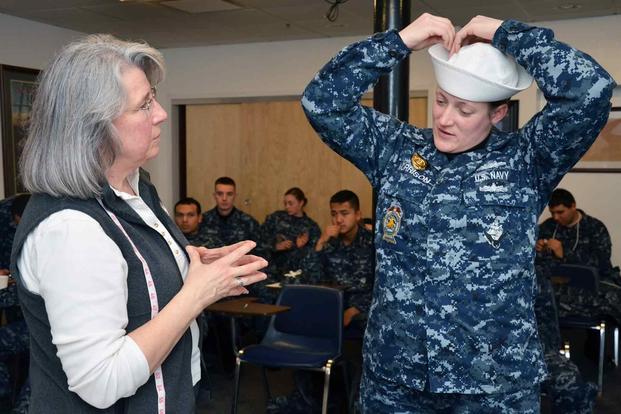
In the US Navy, one of the most demanding work environments in terms of precision and efficiency, the administration observed female personnel feeling restricted by the standard uniform. It embarked on an ambitious mission to redesign it using an innovative, data-driven, and inclusive approach, ensuring it met their needs and the nature of their duties while remaining a symbol of professionalism, identity, and unity.
From hospitals to restaurants to military ranks, the uniform represents an individual’s identity, responsibilities, and expertise. However, its significance extends beyond these symbolic meanings; it is the silent partner in the wearer’s daily activities, and its design is the product of continuous innovation.
In fields characterized by precision, movement, and focus, the uniform either provides support and comfort or acts as an obstacle that hinders job performance. In the military, this attire is not merely clothing but a symbol of discipline, equality, and unity. If it does not meet the needs of its personnel, it jeopardizes these values, leading to dissatisfaction and even reduced operational efficiency. For decades, female sailors in the US Navy have faced difficulties wearing a uniform that does not suit or comfort them. Since the 1980s, complaints expressing this issue have been ongoing, and successive surveys have demonstrated the shortcomings of the current sizing system. At a certain point, piecemeal or temporary solutions were no longer effective, and a comprehensive solution became necessary to ensure fit, comfort, and the highest possible job performance.
Behind this initiative stands the Navy Exchange Service Command, the entity that oversees uniform standards and distribution across the institution. Its specialized team collaborated with researchers and Navy personnel to update the female uniform sizing system.
The initiative was based on the principle of inclusivity and actively listening to the needs, feedback, and experiences of the beneficiaries, alongside relying on accurate data. The team began by conducting a survey of uniform fitting experiences in Norfolk, Virginia. This survey included 400 participants of diverse ages and body types, each of whom tried on three specific categories of US Navy attire: long-sleeved white shirts, khaki shirts, and summer white shirts. Precise and detailed measurements were then collected for each experience to standardize patterns and achieve better fit and greater comfort.
After a somewhat slow start, the survey managed to attract an additional 100 participants by the second week, exceeding its initial goal. The Navy plans to integrate this comprehensive data into future uniform designs, ensuring the sustainability of improvements and their adaptability to evolving needs. By using a data-driven methodology, the Navy aims to create a uniform that is both practical and comfortable, finally putting an end to the restrictions and discomfort that female sailors have long endured.
Despite the initiative’s importance, it faced several challenges. Firstly, there was the logistical complexity. Organizing clothing experience surveys and conducting all the fitting sessions for a large number of participants required significant resources, meticulous data collection, detailed planning, and substantial organization in documenting the results.
Furthermore, the legacy challenges that the institution has suffered for decades surfaced. Even the sizing system developed in the 1980s may not suit contemporary body shapes, comfort standards, and efficiency requirements. The reality is that transitioning from old patterns to a modern and unified system necessitates overcoming established practices, stereotypes, and navigating potential resistance to change within the organization.
Given the fundamental nature of the problem, the initiative undoubtedly faced the broader aspects of gender inequality. While the fitting sessions and measurements address a crucial issue, we must not forget the considerable list of difficulties women face in military service in general, the most important of which are the high costs of the uniform and the limited availability of certain pieces. Addressing these deep-rooted inequalities requires continuous efforts and collaboration among various departments and administrations.
Nevertheless, the initiative has achieved a multifaceted impact, with benefits extending beyond mere physical comfort for women within the institution. For example, a proper and standard professional appearance can enhance women’s confidence, pride in belonging to the Navy, and their sense of equality within it. This step will also improve operational efficiency by eliminating distractions, enhancing movement, and reducing safety risks.
By actively involving young female sailors in the design and evaluation process, the Navy demonstrates its commitment to addressing gender-specific challenges and placing the needs of its personnel—all of its personnel—at the top of its priorities. This ultimately serves the broader military goals of promoting diversity, equality, and inclusion.