
A partnership between the public and private sectors was launched in Italy to transform the city of “Taormina” into a smart city, Within the project “Taormina Technological City System”, This is a first and experimental step towards transforming the entire country to a smart approach. The project seeks to digitize everything in the city, and manage it via a smart network of sensors, Such as the “Smart Roads 4.0” system, which connects vehicles to improve transport movement using a range of modern technologies.
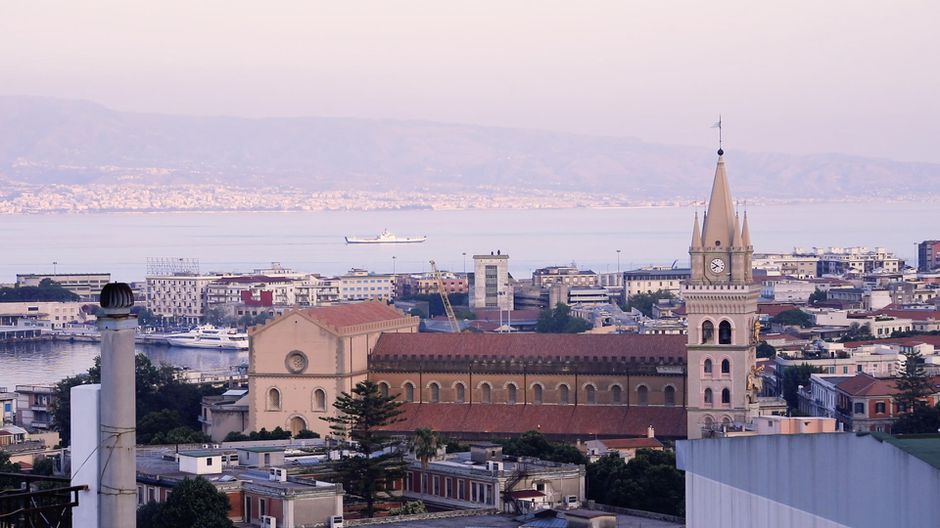
Smart city is a comprehensive term that aims to overcome the accelerating challenges left by rapid urbanization. Such as social differences, congestion, pollution, increasing demand for services, and others. therefore Governments are seeking to use technology to build smarter and more sustainable cities to improve the lives of their citizens and run their operations efficiently. Italy is no exception to this global trend. Today, her government is working to adopt a smart city system to meet the needs of residents in all aspects of life. To achieve this endeavor, The city of “Taormina” located in Sicily has been chosen as the center for the implementation of the new smart city project, The city is an important tourist destination thanks to its landscapes and historical monuments.
The startup project was called “Taormina Technological City System”. It is a modular system based on the so-called “smart city block”. This concept is a spot spanning an area of 2 square kilometers, Can be integrated and provided with microservices using cloud computing technology, These services include retail, health solutions and others, Having adopted a modular structure that facilitates the completion of intelligent operations repeatedly and at scale. Using low-power wide area network (LoRa) technology to send and receive information, The system focuses on a range of urban services, Such as the transport network, waste collection and lighting in public places, A network of smart sensors will be employed to manage it.
The smart city project required the participation of the public and private sectors, The municipality of Taormina collaborated with the startup NET (T.net) to complete the project, which will form a model for the smart cities program in Italy. The company belongs to the European Institute of Innovation and Technology (EITI), which is partly funded by the European Union. The company will provide a series of digital services and engineering solutions for the Internet of Things.
Practically The project executive team used a 5 GHz wireless network to help create IoT and V2X technology, which is based on establishing a connection between vehicles and any entity that affects or is affected by them, Such as managing the interaction between vehicles on the one hand and road infrastructure or other users on the other, The technology can monitor traffic, such as calculating waiting times in front of toll kiosks. and how long it may take to get from the highway to the city center, and show available parking locations.
The team also worked in collaboration with the National University Telecommunications Union and the University of Catania to develop a smart road system (4.0) with an investment of one million euros. One of the most important features of this system from other systems is that it does not rely on the “Global Positioning System” (GPS) in determining geographical locations. Rather, it is replaced by Low-Power Wide Area Network (LoRa) technology, which provides a range of up to 10 km in rural areas and 5 to 6 km in urban areas, It determines the geographical location with better accuracy than that enabled by current technologies. The team also encrypted data sent to and from networked vehicles for privacy and security purposes. Connect vehicles to weather and traffic systems to provide users with live information regarding their flight route and guide them to avoid congested roads, suggest alternative routes or guide them to parking lots. In addition, The system monitors tourist sites and services such as cable cars, And inform tourists about waiting times and schedules of upcoming trips. Among the technologies developed by private sector partners, Smart lighting systems come, Air pollutant monitoring systems and trash containers.
Through the project, which will be completed by the end of the year, the implementing agencies hope to stimulate the cooperation of citizens to launch a project that works to transform the city into a smart society. Following its launch, The experiment will be evaluated based on its effects, challenges that may face its application, and the extent to which it achieves the desired goals.
Using V2X technology, the team aims to improve live multimodal communication. This ensures traffic safety and efficiency, helps save energy and deliver a comprehensive mobility experience across the city. Employing Low-Power Wide Area Networks (LoRa) technology offers wider range of motion, greater positioning accuracy, and reduced battery consumption for connected devices.
More broadly, All these technologies are a way to help authorities conserve resources, improve the quality of life and protect the environment. It is an approach that the Italian government seeks to adopt in the future throughout the country.
References:
- https://www.smartcitiesworld.net/news/italian-tourist-destination-to-become-smart-city-prototype-6915
- https://www.eitdigital.eu/newsroom/news/2021/tnet-to-turn-popular-italian-tourist-destination-into-smart-city-prototype/
- https://www.smartcitiesworld.net/news/smart-road-system-prototype-developed-for-italia