

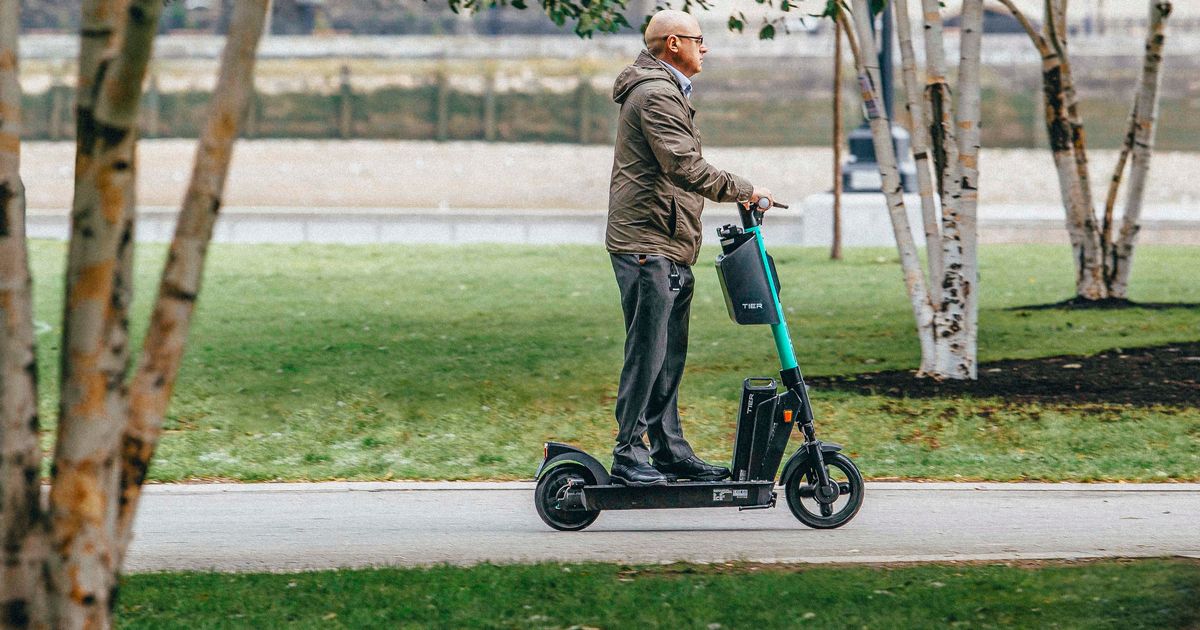
The city of Dublin is witnessing a pilot project for artificial intelligence-based electric scooter research, As the first project to combine academic research and industry and focus on computer vision in electric scooters. The bill runs parallel to moves to legalise the use of means of movement across Ireland. The project will last for six months with the aim of improving the safety of the electric scooter, Investigating the cases of its use in smart cities and the possibilities of providing it with computer vision technologies.
The use of the electric scooter has a number of environmental and economic advantages that make it very popular among residents of major urban agglomerations. such as its moderate prices, And his voice calmed when walking inside cities, In addition to being one of the “green” and environmentally friendly means, that do not emit any polluting gases. These advantages are due to the electric scooter’s reliance on electric motors that do not emit any gases harmful to the environment. They are also less noisy compared to diesel and gasoline engines used in conventional cars and motorcycles.
Electric scooters still face some technical challenges that limit their wider spread. such as how far it can travel before its battery runs out, and the time required to recharge the battery, battery life, Even its noise, albeit low-intensity, that others may notice late at night in quiet neighborhoods. Regardless of these challenges, The concerns of those involved in Dublin, The capital of the Republic of Ireland, It is the need to regulate the use of electric scooters.
To this end, In parallel with some moves to make it legal to use electric scooters on the streets across Ireland, A pilot project for the research of electric scooters equipped with artificial intelligence technologies has been launched on the Dublin City University campus. Which aims to improve the safety of these small mobility vehicles, And explore ways to use them in smart cities if equipped with computer vision technologies. Dublin City Municipality, Which is moving towards the adoption of smart city technologies in its various services, Many cities around the world share their concern about electric scooters. It calls on its operators to adopt better governance of its bicycle fleets, In response to complaints from pedestrians and road users at risk, Fearing some wrong practices that lead to increased road hazards due to chaotic parking of bicycles, And also during crossing pedestrian paths illegally.
The project, which combines academic research with the electric scooter industry, claims to be the first in the world to focus on computer vision in scooter bikes. It is also the first electric scooter experiment to be organized in Ireland. Four institutions are collaborating in the project, namely Tier, It is one of the largest electric scooter companies in Europe; Luna, Ireland’s urban mobility technology platform; Insight SFI’s data analytics research centre, and Dublin City University. The project mainly includes the interior areas within the university’s headquarters, Electric scooters equipped with computer vision will also be able to operate between different university campuses (and possibly at special test sites around Dublin) once government legislation regulating the use of the electric scooter is signed into law.
This partnership between the academic sector and the private sector is based on providing a fleet of 30 electric scooters supported by computer vision, This allows researchers from the university’s Insight Center to discover a new source of smart city data. This is because these degrees are able to run algorithms to identify the locations of pedestrians and various road elements, This allows to know how many people are on its route, And understand whether they are walking on the road, on a bicycle lane or crossing a pedestrian walkway.
The university, in collaboration with TIR, will also evaluate the possibility of using electric scooters on the university’s campus, which has 18,000 students and nearly 2,000 employees. This helps reduce greenhouse gas emissions from other modes of transportation at the university. Computer vision data collected by the scooter fleet will be analyzed as part of the research to determine how smart cities use electric scooters and identify applications of value to local authorities. In line with the vision of Smart Dublin, the government institution responsible for promoting innovation and adopting smart solutions in the city of Dublin.
Another smart technology that has been integrated into electric scooters is the Global Positioning System (GPS), which is characterized by high accuracy compared to current positioning systems. Whereas this technology is the first of its kind in the world, It works in conjunction with smart cameras to control clutter while queuing on sidewalks, and crossing footpaths illegally.
On the other hand, Some observers believe that this research project will help provide a better understanding about the future of the use of electric scooters. Especially with regard to road safety, users and the determination of local taxes by the municipality on electric scooters.
References:
https://www.smartcitiesworld.net/news/dublin-to-host-ai-powered-e-scooter-research-project-6298
https://www.smartcitiesworld.net/news/companies-team-to-roll-out-smarter-e-scooters-in-ireland-6038