

To increase the efficiency of the transport system and contain its environmental impact, The Municipality of Pittsburgh has partnered with the private sector to create smart loading and unloading points that make delivery easier, more efficient and safer.
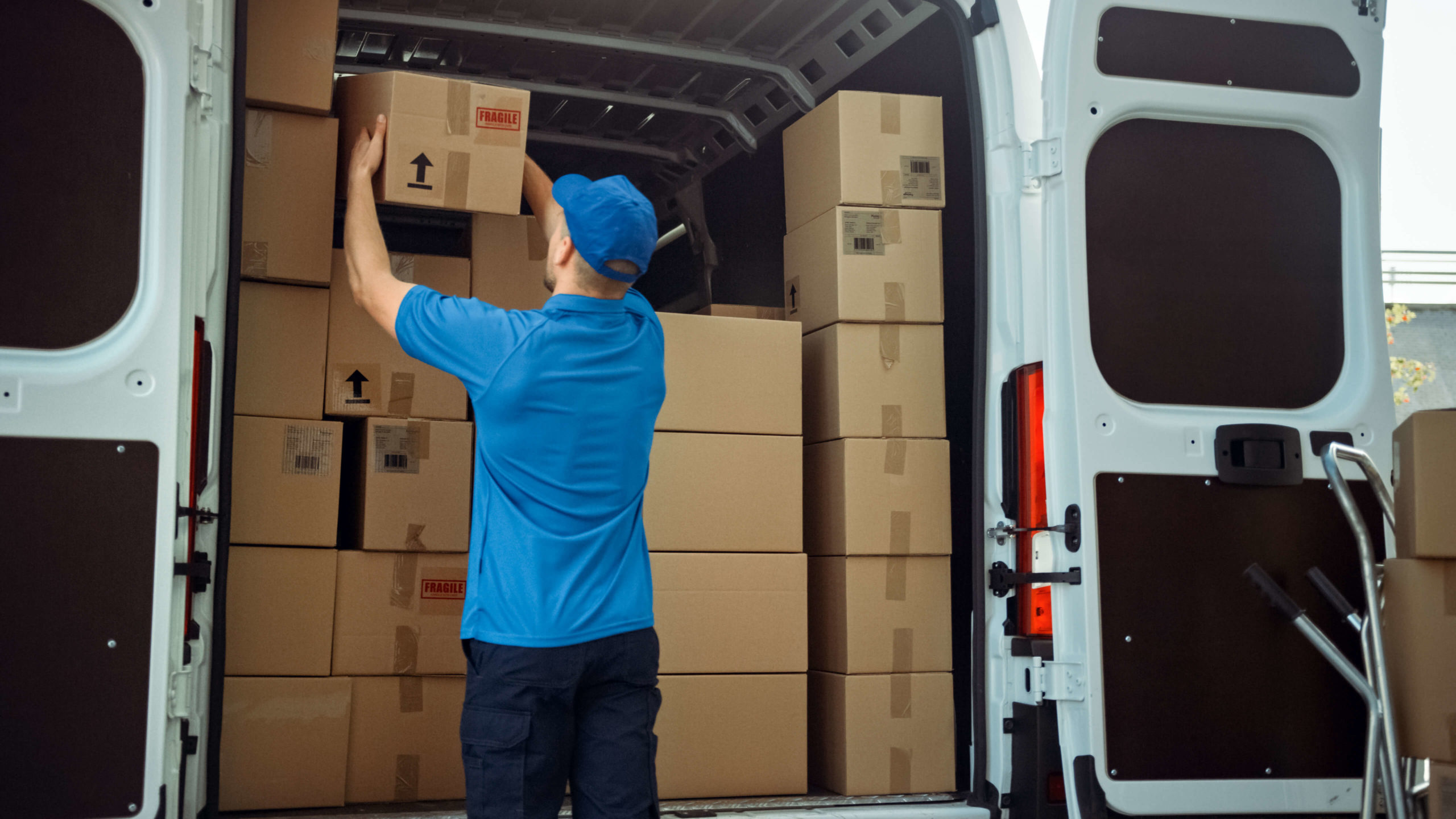
The technological advancements of life have shaped a new form in which e-commerce has become increasingly dependent on e-commerce until associated logistics has become a sector in its own right. Over the past decade, This commercial delivery sector has witnessed an unprecedented development, Previously, Observers predicted a 35% increase in commercial vehicles by 2030. The COVID-19 pandemic changed the equation with an increase of 44% in 2020 alone.
In the United States of America, Food apps saw 64 million downloads in January and February 2021. However, this growth has been accompanied by increased congestion and emissions in urban areas, and safety risks that threaten delivery drivers in particular.
In Pittsburgh, Pennsylvania, Another challenge related to parking arises, Narrow roads make it difficult to find a suitable platform for parking the truck and carrying out loading and unloading operations, Especially in commercial areas and in areas that are not designed to accommodate such a large number of cars or such large commercial activity. Loading areas are also open to any vehicle, therefore, Small cars often occupy the spaces needed by large commercial trucks. The results of a survey of 120 delivery drivers conducted by the authorities months ago showed that less than 1% of them find parking on arrival at their destination. A quarter spend 4 to 7 minutes searching for a situation, The other quarter is forced to park in undesignated spaces, Nearly 60% reported that the process of paying parking fees lengthens the delivery time by about two minutes.
In the face of the urgent need to change the loading and unloading mechanism and facilitate the work of delivery drivers, Municipal authorities have invested a $100,000 grant from the private sector in the field of sidewalk management. It collaborated with the Ministry of Transport and Infrastructure and the Parking Authority to launch a year-long project called “Smart Loading Zones”.
The project is based on replacing 20 of the previous loading areas with smart ones equipped with cameras, 10 of them will be concentrated in the Central Business District, Another 10 will be distributed in remote areas.
To manage the process, Authorities have created a web-based app – not smartphones – where delivery drivers can enter their license plate numbers and select their preferred payment method. Then comes the role of a pole-mounted camera overlooking the entire site, which records the vehicle information and issues an invoice for the curbside occupancy fee, This is depending on how long the vehicle spends at the loading site.
It is worth noting that these fees increase the longer the vehicle is parked, The cost of the first five minutes differs from the next ten minutes, This is to encourage delivery and loading workers to complete the work quickly to reduce cost. If the driver is not subscribed to the app or is an employee of a fleet company such as Amazon, It can use smart download points for higher fees.
In conjunction with this, The donor company will collect data from cameras for analysis, Compare the numbers of electric vs. fuel-using cars, It examines the impact on their performance, This data is used to conduct emission reduction research and plan similar projects in other cities.
After the expiry of the planned trial period, The authorities will evaluate the project, measure its impacts and challenges, and decide whether to roll out and adopt the trial permanently.
This isn’t Pittsburgh’s first experience with intelligent transportation technologies. It hosts autonomous vehicle experiences due to the difficulty of traffic, For the companies developing these vehicles, If its product is successful in Pittsburgh, It can work anywhere.
The municipality also adopts an artificial intelligence system that is loaded on traffic lights, It enables them to adapt to traffic conditions rather than relying on pre-programmed cycles. and funded by the Federal Highway Administration, This system has been used at 50 intersections, It is now being installed in another 100.
at a cost of $20,000 per copy of the system, Computers, camera or radar are installed at the intersection, The software detects cars coming from all directions and creates predictive models to develop a real-time signal timing plan. The system also connects different intersections to build forecasts of vehicles coming to a given point and better prepare for them. The system has reduced journey time by 25%, brake rates by 30% and car deceleration rates by over 40%.
As for Smart Load Point technology, It saves drivers the hassle of getting out of the car or dealing with electronic payment applications in every download. It also contributes to increasing the efficiency of delivery workers and increasing the revenues of small business parking, Via the idea of graduated drawings.
Municipal authorities are looking to reduce parking congestion by 20%. Double parking reduction by 60%, In addition to improving the safety rates of pedestrians, cyclists and others. This project is part of the Pittsburgh Climate Action Plan, These include cutting half of transport emissions, half the distances traveled by everyone by car, and a quarter of freight emissions.
Perhaps the most important impact is to harmonize the policies of the commercial transport sector based on direct, accurate and up-to-date data.
References:
- https://pittsburghpa.gov/domi/smart-loading-zones
- https://www.smartcitiesdive.com/news/automotus-pittsburgh-smart-loading-zones-pilot/622697/
- https://www.govtech.com/fs/pittsburgh-receives-10-million-for-smart-spines-traffic-sensor-program.html
- https://www.smartcitiesdive.com/news/this-ai-traffic-system-in-pittsburgh-has-reduced-travel-time-by-25/447494/