
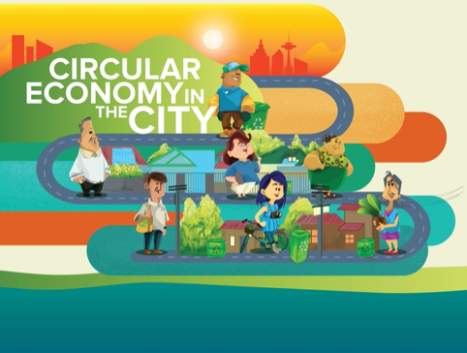
The Philippines is facing a serious pollution crisis due to plastic waste that threatens its seas, tourism, and the livelihoods of its people. With the support of international organizations, programs have been developed to collect and recycle plastic bottles, and mobile centers have been deployed to receive waste from residents in exchange for incentives that encourage them to adopt a circular economy approach.
In the pursuit of efficiency, convenience and cost cutting, people have come up with numerous inventions that have rapidly proliferated and changed the course of life. One such invention is plastic, which did not enter commercial production until the mid-20th century. Since then, its usage has increased 20 times, with a cumulative production of 8.3 metric tons between 1950 and 2015.
However, this increase has not been entirely advantageous, as plastic has a short primary usage cycle, and when it ends, 95% of its value is lost. Even attempts to collect and recycle it cover no more than 68% of the total quantity.
As a significant portion of waste ultimately reaches the ocean, and considering the plastic’s characteristics regarding decomposition, plastic waste reduces the survival of vital ecological systems and threatens the livelihoods of millions who rely on marine resources as a source of income. This applies to 63 million Filipinos whose country produces more than 2.7 million tons of plastic waste, with 20% of it ending in the ocean. This has the most severe impact on waters classified as biodiversity centers for marine coastal fish, adding to the challenges posed by climate change. Moreover, 74% of Filipinos live in areas prone to natural disasters, experiencing 565 disasters since 1990, with a total cost exceeding 23 billion dollars.
This scenario is expected in one of the fastest-growing Asian economies, linked to population growth, rising incomes, increased spending and consumption, along with the absence of robust regulatory laws and the difficulty of their enactment and enforcement.
Given that the Philippines is an archipelago comprising over 7,600 islands, its local governments are tasked with administrative and service-related functions such as solid waste collection, which proves challenging in densely populated areas.
Estimates indicate that approximately 80% of plastic in the oceans comes from land-based sources, with one of the main sources being rivers, the majority of which are in Asia. Among the top ten contributors, the Pasig River stands out, contributing around 39,000 tons of plastic entering the oceans annually. It receives pollutants from 27 tributaries contaminated with industrial and household waste.
Today, the United Nations Development Program collaborates with the Japanese government and the Ministry of Energy and Natural Resources to launch a project that supports local governments in the Philippines in addressing this challenge in cities such as Quezon, Manila, Caloocan, Cotabato, and Pasig. These governments have initiated plastic waste collection through mobile recycling centers that receive plastic, paper, and glass waste from citizens. In return, citizens receive essential supplies such as food and cleaners, and single-use materials are sent to the production of other products, such as government school seats. The mobile centers also work on raising awareness about the importance of sorting household waste and the methods to do so.
The project also provided the necessary equipment for recycling, such as plastic melting devices. Training programs target academic, private, and civil society institutions, and funding is provided to small and medium-sized enterprises to enhance their production efficiency and guide them towards global markets. Work is currently underway to develop a digital platform that brings stakeholders together to exchange knowledge and experiences, launch joint initiatives and programs, and the project includes collecting high-quality data to enable performance measurement and progress in achieving the circular economy.
In Quezon City, the government supports urban agriculture to improve organic waste management. Farms work to produce multiple crops and recycle biodegradable waste for fertilizer production, while plastic waste is sent to a specialized facility for processing. Quezon City authorities have also collaborated with the “Trash to Cash” program, encouraging provinces to deliver recyclable materials to earn money or points that can be used to pay municipal fees for services such as electricity.
Overall, the Philippines is committed to the goals of the Paris Agreement, aiming to reduce greenhouse gas emissions by 75% by 2030. To achieve this, circular economy emerges as a key mitigation measure. The Extended Producer Responsibility Act holds manufacturers accountable for the environmental impact of their products throughout their lifecycle. Large companies are mandated to comply with a maximum limit of plastic packaging production.
The COVID-19 pandemic posed a significant challenge to the growth of these projects. Due to the pressures it imposed, authorities were unable to establish more waste collection centers, stopping at the nineteenth center. However, local governments are attempting to compensate for this by selecting strategic locations such as the zoo, which attracts large numbers of tourists in the capital.
Even the centers face their own challenges, requiring substantial resources for equipment and workforce, posing another challenge for authorities in densely populated and rapidly growing areas like Pasig. This is in addition to infrastructure development challenges associated with financial and logistical obstacles.
Nonetheless, all these initiatives will be futile unless accompanied by a sustainable cultural shift among the population. Overcoming these challenges requires educational and incentive initiatives that make people feel like they are part of the decision-making and change process. Collaboration and coordination between governmental and non-governmental organizations are crucial to mobilize funding, expertise, and on-the-ground efforts. The circular economy brings a series of benefits such as job creation, green investments, and ensuring a fair transition to clean energy.
By improving waste management in urban areas, updating legislation, and enhancing data systems, the Philippines is crossing a new threshold on the path to sustainable and inclusive development.
References:
- https://undp-climate.exposure.co/the-philippines-is-going-circular
- https://www.undp.org/philippines/publications/circular-economy-city-rapid-ethnographic-research-circular-economy-philippine-urban-setting
- https://newsinfo.inquirer.net/1522790/pasig-micro-entrepreneurs-get-boost-through-waste-to-cash-program