

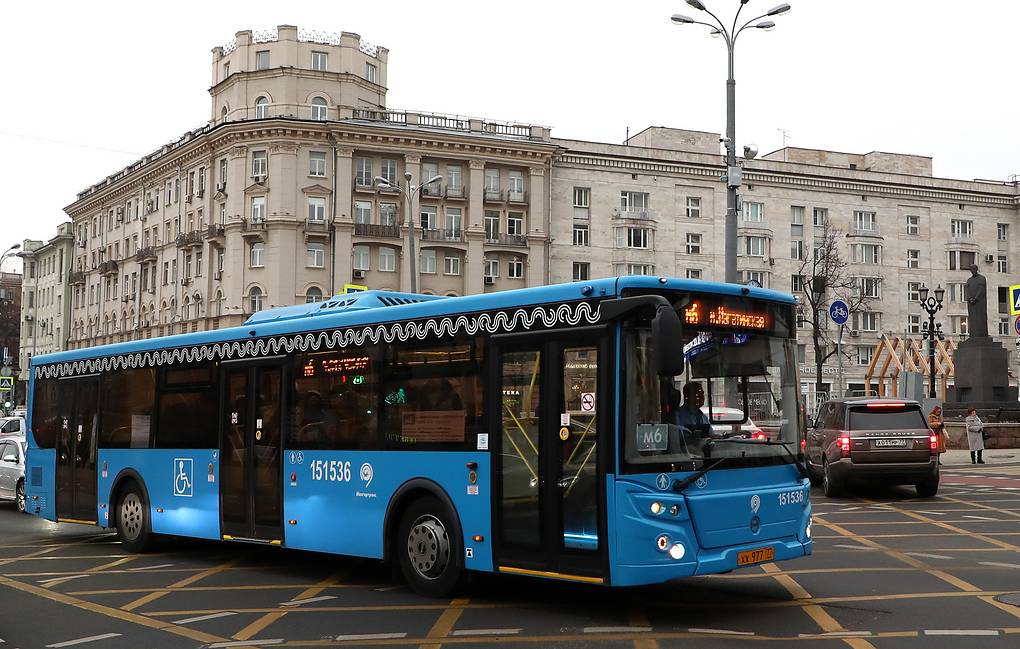
To develop its services, The Moscow Transport Authority is employing technologies such as the Internet, smartphones, face recognition and others to give residents wider choice, more convenient transportation and a more efficient ticketing system.
Modern ticketing systems have provided the world with a key tool for the development of transport system infrastructure, As a means of adopting a unified tariff and easy-to-understand mechanisms that save time and effort. One of the performance criteria for these systems is the speed of payment at the gates, An average of not more than half a second. Having a leading position in this indicator, the Russian metropolitan occupies a leading position, With its turnstiles that open as fast as 0.3 seconds, However, a long period of planning preceded this phase.
Moscow has been unable for years to keep pace with developments in the field of public transport compared to other major capitals, When Hong Kong launched the contactless unified card, Moscow was learning about automated systems for collecting public vehicle wages. It soon became clear that the old ticketing system did not meet modern requirements for reliability and security, It does not allow for tariff standardization, It will not fix part of the future system, Especially with the growth of autonomous systems such as metro, suburban trains and private transport operators, Those concerned had to seek a qualitative modernization of the entire system.
After the launch of the Troika card in 2013, The Moscow Transport Authority announced that by the end of 2021 it will launch a face-to-face payment system accompanied by the virtual “Troika” card. The “troika” is a Russian word meaning a light carriage drawn by three horses, It has been used as the name of the unified card that can be used in any means of public transport, which is now virtual that passengers carry on their phones, They pay for their trips without a physical card, It has been used on more than 180,000 trips outside Moscow.
In the Tula region, for example, Within two months, The number of flights has been increased by 15% without changing the tariff set to suit the region, So that passengers do not have to pay in cash or to distract the driver by cutting the ticket and calculating the remaining amount. The system also calculates the lowest tariff according to the payment mechanism, It informs users of free flights to enable them to choose the most appropriate fare, Considering both individual trips and monthly subscriptions.
The face propulsion system will also be deployed, Passengers can pass through the gates by looking directly at a camera installed on the ticket barrier, and surrounded by stickers indicating it, To be deducted from the balance automatically, Using facial recognition technology. Once the personal photo, bank card and Trioka card are linked to the service via a dedicated app, the information will be encrypted and the camera will recognize a “vital password”. Neither on facial features nor other personal data.
In conjunction with these efforts, Moscow continues to develop the concept of “mobility as a service” and to promote the use of mobile phones and the Internet to provide services such as charging cards. To collect data for regional authorities to analyse the system and follow up on the views of its users.
The uses of the troika go beyond transportation services, More than one million users can collect tokens and use them in other urban services available at more than 6,000 retail centers. Since its inception, the program has provided rewards of more than 380 million rubles.
In order to avoid depriving passengers of choice, It is a challenge that usually faces any uniform fare system in its infancy. The Authority has made the face payment service voluntary, It promised that it would not eliminate the traditional methods that some users might prefer, It has also developed a transport system to allow the use of a standard number of propulsion systems. Such as local credit cards and payment systems for smartphones of various software. For Android phones with NFC modules, Whereas, carriers make up more than half of the users of public transport in Moscow, It allows the option to recharge the bundle balance remotely by simply swiping the card on the back of the phone. As for the devices “Apple”, It doesn’t allow it yet, The cancellation of the NFC protocol by its developers has posed a major challenge to the Transport Authority. which promises to find a solution to it soon, It also promises to use the Troika on any device that carries a radio-wireless chip.
Modern technologies will make the system simpler and faster, The average speed of opening the train door will be 0.2 seconds, The Moscow Metro will become the first transport operator in the world to use face propulsion across the entire system. This technology will increase the security of infrastructure, The adoption of a contactless system will reduce disease transmission, Especially in light of the COVID-19 pandemic, It is expected that 10 to 15% of passengers will use it regularly. What may require their expansion in the near future.
Besides providing comfort to passengers, Virtualization will reduce queues at ticket offices by 40 to 70%. Whereas, the number of paper tickets has decreased over the last decade six times, It saved the budget 2.5 billion rubles (US$33 million). He saved two thousand trees that were cut down annually to make paper tickets, Over time, Virtual tickets will reduce the amount of plastic consumed as the need for physical cards recedes.
It can be said that the “troika” has begun to expand technically and geographically. If the work goes exactly according to plan, Having resolved technological and political issues, Citizens will soon be able to travel across the country using a single payment method, Developers also aspire to offer world-class ticketing solutions.
References: