
MBRCGI Websites
|
Ibtekr.org
|
MBRCGI.gov.ae
|
UAE Innovates
|
Edge of Government
|
Pitch@Gov

More results...

Generic selectors
Exact matches only
Search in title
Search in content
Post Type Selectors

Innovation in aviation

5 minute read
The Allegheny County Airport Authority has developed the first app to help people find parking spots using real-time information related to parking spaces to locate available spots, track cars, and help individuals move inside the airport's parking space.
Share this content

As part of the efforts to enhance the passenger experience at Pittsburgh International Airport (PIA), professors, students, and airport officials collaborated to develop five major projects aimed at transforming PIA into the smartest airport in the world. These innovations include a special app that relies on understanding people’s movements inside airports to help them find vacant parking spots in a shorter period of time. Moreover, these innovations offer a sensor-based app and a smart suitcase to help people of determination.

The Allegheny County Airport Authority has developed the first app to help people find parking spots using real-time information related to parking spaces to locate available spots, track cars, and help individuals move inside the airport’s parking space. In order to identify the direction of passengers on wheelchairs, the app analyzes how easily they can reach their destination, how much time they spend waiting for escorts at the gate, and the location of the wheelchairs if not in use. Furthermore, the app processes the purchasing habits of passengers in case of flight delays or cancellations.

In order to serve visually impaired passengers, smart suitcases have been developed to sound an alarm when users are headed for a collision. Moreover, Carnegie Mellon University and IBM developed NavpassenCog. This smartphone app relies on hundreds of Bluetooth beacons and is equipped with sensors to help the visually impaired reach their destination without any help. The app relies on a map of the airport to provide audio instructions, hence users are able to reach the ticketing counter in three minutes, traverse the terminal in about six minutes, and go from the gate to a restroom in a minute. The airport is powered by Zensors system equipped with cameras that provide accurate and real-time data on waiting times at checkpoints.

In 2018, Carnegie Mellon University and Allegheny County Airport Authority signed an agreement to establish a partnership with Metro21: Smart Cities Institute to research and develop a number of projects targeting local sectors and airports. Moreover, the University of Pittsburgh has also entered into a partnership with Pittsburgh International Airport to establish a 195-acre innovation campus within the airport’s premises. The campus is expected to be fully ready by 2023. This campus will focus on industrial facilities aimed at saving energy. It will also recycle the gases emitted by the space manufacturing sector and 3D printing technology used in manufacturing. This campus, which is home to Neighborhood 91, sought to use 3D technology in all manufacturing processes, including the production of noble gases and powder used in printing by employing argon and highly efficient power sources. Furthermore, manufactured parts are also tested, analyzed, treated with heat, and exposed to x-rays within the campus to eliminate any unwanted materials. Once the 3D-printed parts are manufactured, they are moved to the storage site or immediately shipped from Pittsburgh International Airport to any other destination in the world within 24 hours.


Subscribe to Ibtekr to stay updated on the latest government initiatives, courses, tools and innovations
Register Now
Subscribe to Ibtekr’s Newsletter
Innovators’ Mailing List
Our newsletter reaches more than 30,000 innovators from around the world! Stay up to date with innovations from across fields of practice in the public sector.
Subscription Form (en)
More from Ibtekr

The Deviation Game: A Japanese Innovation Rekindling Human Creativity in the Age of Algorithms

In a world increasingly shaped by artificial intelligence, a deceptively simple game emerging from Japan, “Deviation Game,” is making a bold statement: human creativity still holds a unique power that no machine can replicate. By nudging players to think beyond conventional cues and craft ideas that defy algorithmic imitation, the project highlights not just the current limitations of AI, but the irreplaceable essence of human expression.

 · · 19 January 2026

The New DGP: A Data Tool that Aims to Track Inequality in Real-time

Experts are gaining a direct view of the economy’s core dynamics, uncovering not only the scale of growth but also who truly benefits from it. This American initiative provides policymakers with powerful tools to track and respond to disparities in real time, introducing a groundbreaking innovation that redefines how the economic landscape is understood.

 · · 19 January 2026

Redesigning Comfort: The Navy’s Quest for Better Uniforms for Female Sailors

In the US Navy, one of the most demanding work environments in terms of precision and efficiency, the administration observed female personnel feeling restricted by the standard uniform. It embarked on an ambitious mission to redesign it using an innovative, data-driven, and inclusive approach, ensuring it met their needs and the nature of their duties while remaining a symbol of professionalism, identity, and unity.

 · · 19 January 2026

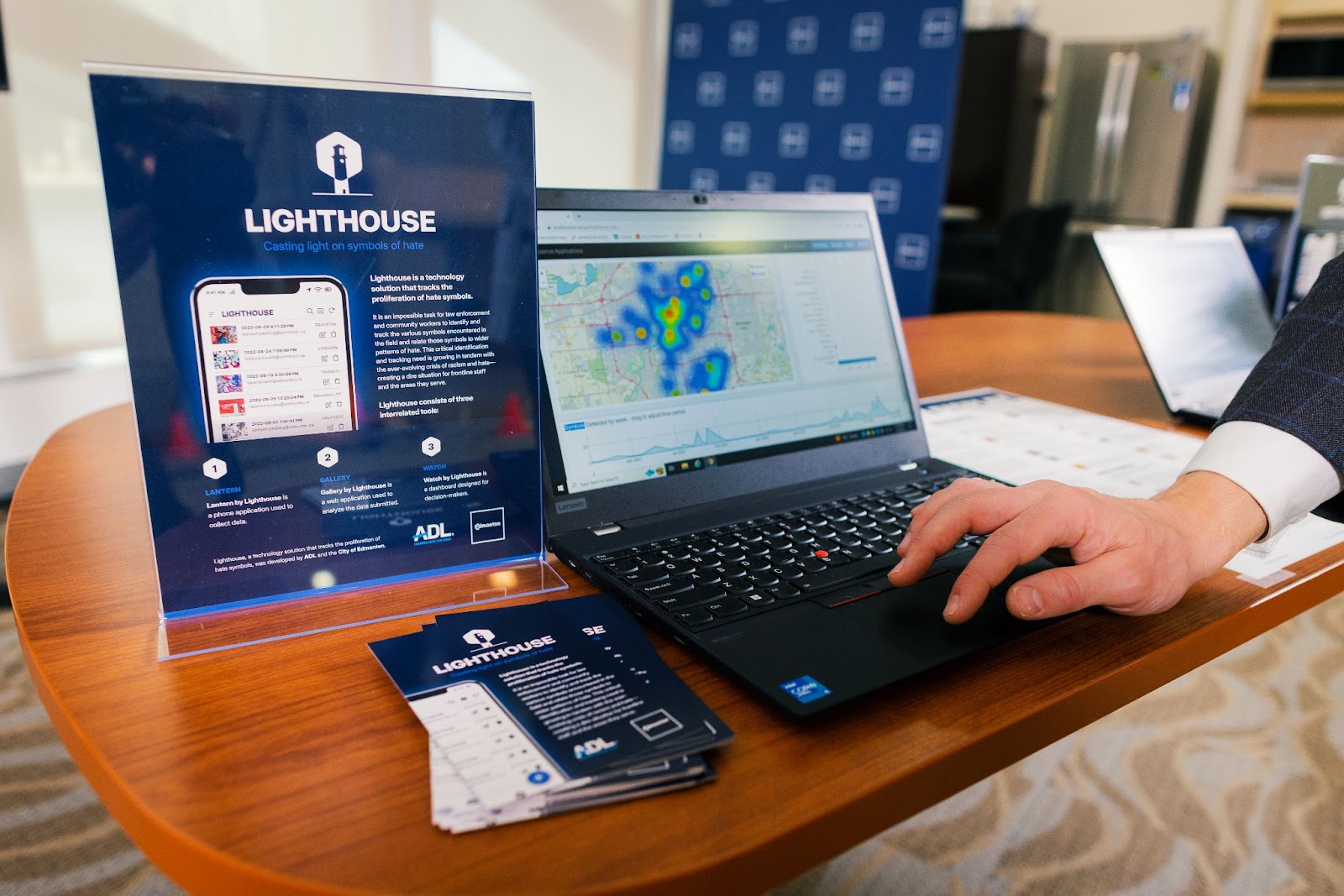
How Technology is Helping Track Graffiti to Fight Hate Crimes in Canada

In the era of artistic freedom, a creative product can either inspire peace or embody intolerance. In Canada, a nation that prides itself on its diversity, the spread of hate cannot be permitted, even within an artistic framework. Consequently, the city of Edmonton launched the "Lighthouse" initiative, harnessing the power of technology to monitor and mitigate expressions of hate.

 · · 2 January 2026

Voices of Poverty: A Narrative Approach to Human Development in India

The Indian Poverty and Human Development Monitoring Agency (PHDMA) has reimagined its data collection methods to cultivate a genuine understanding of the lives of the people behind the statistics. By gathering narratives and visual evidence, analyzing data, and unifying stakeholders, the agency is establishing a novel approach to human development.

 · · 2 January 2026
1 2 3 91
crossmenuchevron-down
This site is registered on wpml.org as a development site. Switch to a production site key to remove this banner.