
Following the footsteps of other countries’ successful digital experiences, Indonesia is working to create a unified electronic medical record system that includes individual health history, and allows information to be easily shared between health facilities, referenced and updated at any time.
If someone tries to remember how many diseases they’ve had, how often they’ve received health care, or visited a hospital or doctor’s clinic, they’ll likely fail to count them. If they are receiving care and need this information, they may not even be able to decide what to share.
People usually keep hard copies of their X-rays, test results, and previous prescriptions to show to their new doctors, but they often have to re-check or fill out forms because they are lost, and sometimes both options fail, and important medical data is lost.
The COVID-19 pandemic has brought this to light as it has with many deep-rooted challenges. While the world was struck by the collapse of health systems in Europe’s most advanced countries, their Asian and African counterparts were living in a far harsher landscape.
Indonesia is home to the world’s fourth-largest population, making infection and death rates one of the highest ever, with health facilities overcrowded and their medical records, usually kept only in hospitals, inaccessible, except in some cases where the patient is given hard copies. Finding and viewing such documents is a luxury for a doctor trying to save the life of a patient who is unable to breathe.
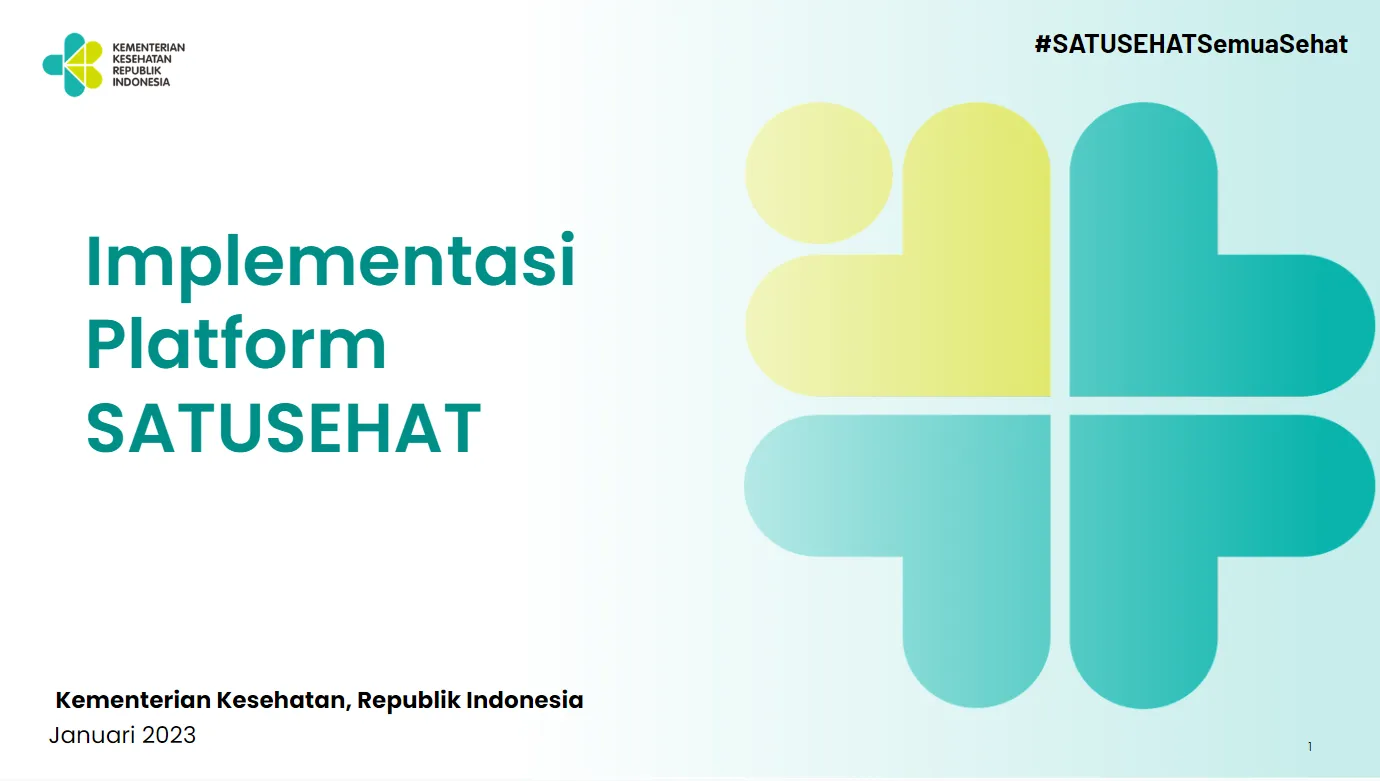
Therefore, after the pandemic subsided, the Ministry of Health, through the Digital Transformation Office (DTO), initiated the creation of the SATUSEHAT platform to standardise and simplify healthcare service record keeping.
SATUSEHAT was officially launched in 2022, as an integration platform for all health information technology in Indonesia. This platform adopts a model that connects the entire ecosystem of health industry players (government and private hospitals, health centres, laboratories, clinics, and pharmacies) to create one reliable national health data repository.
The process of integrating data into the SATUSEHAT platform will be carried out through several phases. The first phase will encompass patient registration data and diagnoses. The second phase will consist of data on patients’ medical procedures, vital signs and diet. The third phase will integrate drug data along with the drug dictionary. The fourth phase will integrate laboratory and radiology observation data, and the fifth phase will integrate allergy data and physical condition data.
The database allows uploading files of various types and formats, from written medical reports to laboratory test results as well as multimedia such as radiographs or videos recorded for surgeries. The Ministry of Health plans to integrate SATUSEHAT with Indonesia’s healthcare social security agency. The integration will include a tuberculosis recording system, mortality data, maternal and perinatal data, immunisation data, and a national referral system.
SATUSEHAT will also be integrated with the PeduliLindungi application, a Covid-19 app that is already familiar to Indonesians and has been accessed by more than 60 million users.
The National Registry adopts a software model, which is a cloud computing one where an external service provider provides tools and software to users over the Internet.
To date, 77% of Indonesian health facilities have joined the platform, and the Ministry of Health has issued a law requiring all health facilities to integrate their electronic systems into SATUSEHAT before the end of 2023 and requiring them to adhere to the standards set by the ministry.
There are some challenges, as many health facilities do not have sufficient infrastructure and digital resources, especially in remote areas. According to a survey, only 16 per cent of hospitals have implemented an electronic medical record system with strong criteria, with 32 per cent possessing sufficient criteria. The majority of hospitals, or 52 per cent, have weak criteria. In a number of facilities, medical workers still record their patient’s medical history manually on a computer because there is no internet.
Therefore, the government must provide support, deliver digital services to all parts of the country, prepare qualified staff, and motivate health facility departments to catch up. It is also necessary to approach the challenges of privacy and security and provide assurances to patients that no party will be allowed to access their medical records without their consent, and that these records will be in safe hands and will not be leaked or used to harm them, in addition to guiding them to deal with this new application and overcome software and technical pitfalls.
Several countries are taking this direction, including the United Arab Emirates, which recently began work to launch a national unified medical record platform called “Riayati”, which aims to provide advanced health care services to citizens.
A central database means a secure and sustainable source of updatable information, which will provide decision-makers with a solid ground on which to develop health policies.
The central database seeks to create an advanced system for documenting health information and data for each resident and citizen to deliver advanced health care services. It is a sustainable and secure information source and has been created to achieve the safety and quality of health care.
References:
- https://gulfnews.com/uae/watch-uae-inches-closer-towards-unified-medical-record-data-base-for-patients-1.85245948
- https://medium.com/@riqulaziz/satusehat-the-indonesian-healthcare-game-changer-6f54f9baec5
- https://govinsider.asia/intl-en/article/Indonesia-makes-health-data-available-at-ones-fingertips
- https://setkab.go.id/en/health-ministry-launches-satusehat-platform/