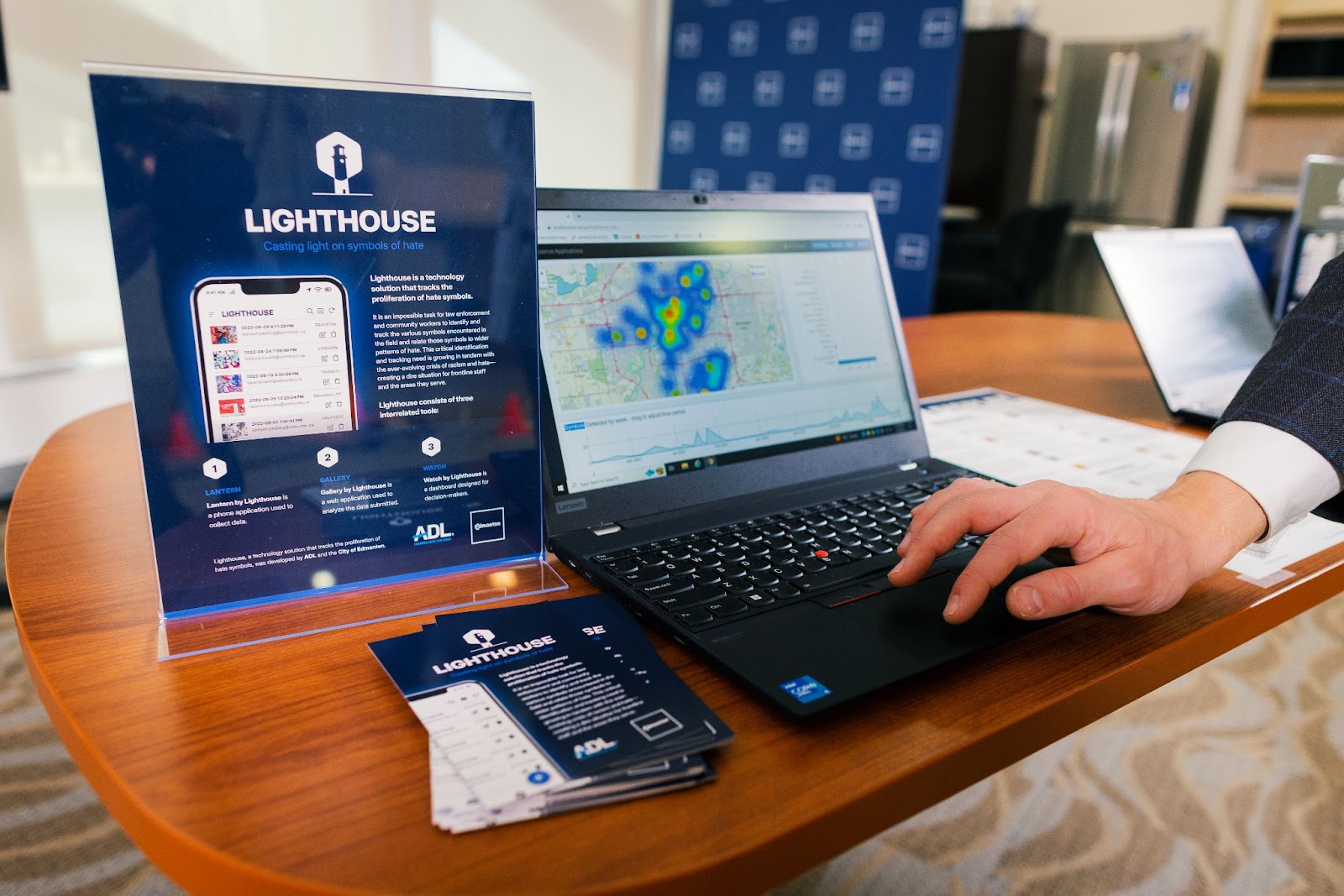


To establish transparency and accountability, American cities have begun launching electronic data dashboards that collect all information about crimes, the performance of law enforcement agencies, and make facts available to their citizens to keep them informed of the work progress and make them part of the decision-making process.
Data science combines different disciplines such as engineering, research, statistics, mathematics and programming, to generate a science that transforms the abstract into knowledge upon which contemporary governments base their decisions.
But in many cases people should be part of the decision-making process, especially when it comes to their security and safety. An equation understood by the US government, as it has suffered and continues to suffer from high crime rates that in some of its cities, including Baltimore, may reach public unrest, such as the one that the city witnessed as a result of accusing the police of racism. A charge indicted by the Civil Rights Division of the Department of Justice and issued a report accusing the city’s police department of racial discrimination and excessive use of force.
Due to that, the Mayor’s Office of Neighborhood Safety and Engagement (MONSE) cooperated with Baltimore’s Chief Data Officer and the Criminal Justice Coordinating Council to release Baltimore’s Comprehensive Violence Prevention Plan, which included the first-ever Public Safety Accountability Dashboard (PSAD) designed to provide greater levels of transparency into a single portal.
The dashboard is an electronic platform that visualizes all data, after it has been collected by employees through smart devices, or from the private sector and citizens, or from other sources. Governments use data covering various areas from geography to traffic, healthcare, education, social security, energy networks, transportation, communications, and more. Law enforcement agencies in Baltimore have used big data analytics to identify where crime is most likely to occur, and where public safety threats are greatest, to which to divert resources, precautions, and protections.
Evaluation and accountability are central pillars of Baltimore’s Comprehensive Violence Prevention Plan. It allows the public to hold agencies accountable for executing agreed upon strategies and identifying best practices for measuring effectiveness of the administration’s public safety efforts. Furthermore, to ensure peak accessibility and usability for the public, MONSE hosted virtual focus groups to review and offer feedback on the dashboard before it was made accessible to the public.
The data dashboard provides viewers with accurate, ever-updated information and real numbers of patrols roaming the streets, crimes and their locations, the speed of the security forces’ response to them, and arrests. It also shows textual and visual explanations of the neighbourhoods and demographics of the victims of violence, but without addressing personal data.
The Office of Data Analytics and Business Intelligence (DBI), in partnership with the Dallas Police Department (DPD), has developed a new interactive Crime Analytics Dashboard that is a “one-stop shop” for most crime related data. The dashboard will display crime related data and information without compromising victim identity or sensitive data.
While hovering over number cards and graphs, viewers will be able to see year-over-year crime trends for all crime categories. The dashboard will also show metrics like total crimes, violent crime, family violence, hate crime and murder rate. Analytics on the dashboard are organised by areas like council district, zip code and police areas. DBI has published an accompanying story page to the dashboard that provides instructions on navigating the dashboard and using its interactive features.
This dashboard is not the first of its kind in the city, as it has an interactive data dashboard of domestic violence cases to increase public awareness.
It is worth noting that the US federal government had started since 2009 to develop data dashboards to revive the national economy in the wake of the global economic crisis, and was followed by several local governments, which in turn created similar dashboards available to the public. Such step requires vision, will and commitment of law enforcement and IT industry leaders.
There is no single methodology that can be applied in all cases, as the subject is governed by the legal frameworks adopted by each state or city. This is the case in federations, where each legal authority must adapt its project according to its local conditions.
In many cases, the use of these dashboards is difficult, such as when dealing with data that applies to specific contexts where the margin of error becomes large in interpreting and analysing the data.
Today, Baltimore has higher levels of transparency, and Dallas is also building a deeper understanding and analysis of the police force and types of crime.
Certainly, data dashboards are not a panacea for crimes, but they will provide information that enhances the performance of the authorities, as they can help preserve higher values such as security, safety, transparency and accountability, and contribute to bringing the government closer to the public and building their trust by involving them in the decision-making process.
References:
- https://monse.baltimorecity.gov/gvrs-new
- https://mayor.baltimorecity.gov/news/press-releases/2023-02-28-mayor-scott-unveils-public-safety-accountability-dashboard
- https://www.smartcitiesworld.net/citizen-engagement/citizen-engagement/baltimore-launches-public-safety-dashboard-data-tool
- https://www.nytimes.com/2019/03/12/magazine/baltimore-tragedy-crime.html
- https://dallascitydata.dallascityhall.com/views/CrimeAnalyticsDashboard/CrimeOverviewD?:showAppBanner=false&:display_count=n&:showVizHome=n&:origin=viz_share_link&:refresh=yes&:isGuestRedirectFromVizportal=y&:embed=y
- https://www.dallasopendata.com/stories/s/r6fp-tbph
- https://www.dallascitynews.net/the-city-of-dallas-launches-a-new-crime-analytics-dashboard
- https://spectrumlocalnews.com/tx/dallas-fort-worth/news/2022/10/11/city-of-dallas-launches-interactive-domestic-violence-dashboard
- https://dallascitydata.dallascityhall.com/views/DomesticViolenceDashboard/DallasDomesticViolenceCrimes?:iid=1&:isGuestRedirectFromVizportal=y&:embed=y