
Amidst the myriad hazards faced by firefighters, including building collapses, sudden intense blazes and relentless forest fires, several cities across the United States have turned to artificial intelligence to bolster safety measures. The goal is to prioritise the controlled demolition of aged buildings, provide strategic guidance to firefighting units, and even anticipate potential explosions stemming from severe fires.
Somewhere in the world, a firefighter is preparing to embark on a shift, joined by tens of thousands of individuals dedicated to one of the noblest yet most perilous professions. They are acutely aware that every day’s routine work carries the potential for loss of life.
In addition to the risk of losing their lives, firefighters constantly grapple with the possibility of injury or the loss of comrades. Moreover, the psychological impact of their profession, which ranks among the world’s most hazardous, cannot be overlooked. Frequently immersed in flames as they battle to quell them, or confronting toxic fumes as they rush into buildings to rescue those trapped within, they contend with ceilings and walls that may collapse abruptly, leaving little time to even tally potential victims.
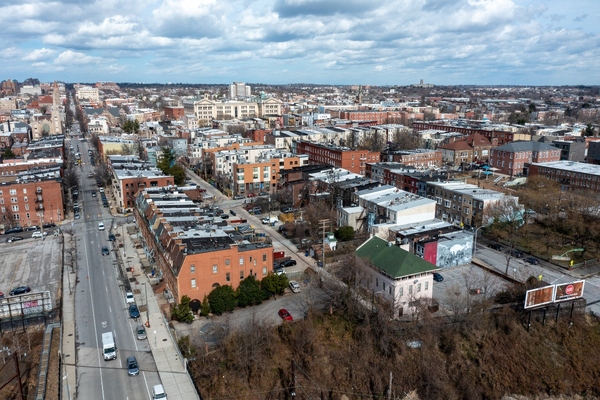
This harsh reality is particularly evident in the United States, a nation dealing with one of the highest rates of both urban and wildfires. In 2022 alone, dozens of firefighters tragically perished due to the collapse of roofs. The most recent of these tragic events took place in Baltimore, Maryland, where three firefighters lost their lives as a consequence of a roof’s collapse within one of the city’s nearly 15,000 abandoned buildings. These structures, on the verge of collapse, remain irrevocably damaged and defy any possibility of repair. The prospect of their demolition is a formidable one, demanding substantial funding. Moreover, the decision to embark on this process is contingent upon factors such as area congestion and the availability of resources.
In the wake of this tragic incident, the Baltimore Housing and Community Development agency was compelled to re-evaluate firefighter protection methods. It sought to introduce more advanced solutions, with artificial intelligence at the forefront, in collaboration with Data Science for Social Good, a programme run out of Pittsburgh’s Carnegie Mellon University.
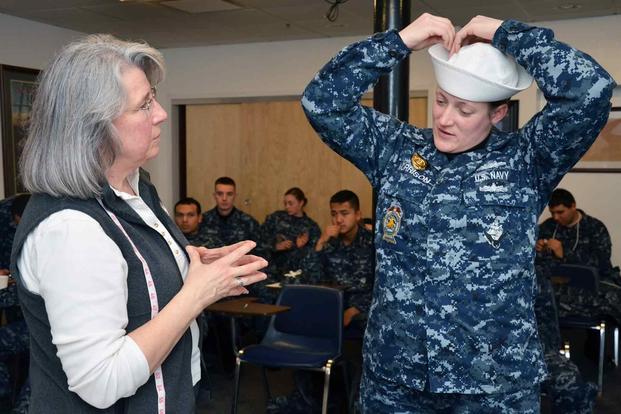
This collaborative effort resulted in an innovative tool to predict roof collapses using algorithms that detect signs of structural deterioration. The algorithms draw upon existing regulations and data derived from multiple sources, notably geographic information systems and aerial imagery, as well as images obtained from previous agency initiatives. A notable instance is a workshop conducted in 2018, during which trainees analysed photographs of all abandoned structures, noting their unique specifications and shortcomings. These images became a cornerstone reference for the development of the AI tool, ultimately facilitating the identification of properties warranting demolition. This tool was seamlessly integrated with the computer-assisted dispatch system used to efficiently direct response teams.
In partnership with various institutions, the National Institute of Standards and Technology has developed FlashNet, a tool that leverages artificial intelligence to identify imminent flashover occurrences. Flashover, a hazardous fire phenomenon, occurs when almost all combustible materials within an enclosed space ignite simultaneously. Such instances tend to rapidly intensify at around 600 degrees Celsius, subsequently propelling temperatures to even higher levels.
The tool achieved an impressive accuracy of 92.1% with 30 seconds of lead time. However, this outcome is largely tied to familiar contexts, which contrasts with the dynamic nature of firefighting scenarios that often unfold in unfamiliar settings. Recognising this, researchers employed the tool to simulate numerous fire scenarios across 17 distinct structures, drawing from data gathered from approximately 25,000 past fires. These fires spanned various building types, designs, and diverse data points, including causes, furniture types, numbers of air outlets, and more. Moreover, the study encompassed the real challenges faced by firefighting teams, where details about the building and the raging fire within may be entirely absent. Ultimately, 16,000 instances were meticulously selected for the conclusive virtual testing phase.
In California, a similar experiment was conducted with a focus on forests. The government established a network of more than 1,000 high-definition, pan-tilt-zoom cameras positioned across the state and able to see up to distances exceeding 190 kilometres on clear days. These cameras are linked to a supercomputer centre at the University of California, where they relay real-time data feeds for modelling and predictive analysis. This setup enables the identification of the source of any smoke detected by the cameras.
While the value of developing an algorithm rooted in human experience and evaluation is undeniable, this approach is not without challenges. It demands considerable effort, thousands of labour hours, and substantial costs, rendering it unsuitable for consistent implementation. Instead, it remains confined to studies conducted every few years.
These innovative tools are poised to usher in a proactive strategy for addressing building collapses and wildfire incidents. Their potential lies in alerting responders and facilitating strategic operational planning. Notably, FlashNet outperformed five other machine-learning-based tools, producing the least false negatives. This achievement earned Baltimore a well-deserved countywide innovation award.
References:
- https://www.smartcitiesworld.net/ai-and-machine-learning/baltimore-utilises-ai-tool-to-detect-collapsed-rooftops
- https://www.usatoday.com/story/money/2019/01/08/most-dangerous-jobs-us-where-fatal-injuries-happen-most-often/38832907/
- https://statescoop.com/baltimore-ai-data-abandoned-buildings/
- https://www.nist.gov/news-events/news/2022/08/ai-may-come-rescue-future-firefighters
- https://www.sciencedirect.com/science/article/abs/pii/S0952197622003220
- https://www.zdnet.com/article/how-ai-is-saving-homes-and-lives-in-california-during-wildfire-season/
- https://www.nfpa.org/News-and-Research/Data-research-and-tools/Emergency-Responders/Firefighter-fatalities-in-the-United-States
- https://www.nytimes.com/2022/06/18/us/philadelphia-building-collapse.html
- https://www.usnews.com/news/best-states/new-york/articles/2022-04-24/nyc-firefighter-dies-in-collapse-at-brooklyn-house-fire
- https://www.cbsnews.com/baltimore/news/new-details-surface-about-the-fire-that-killed-three-firefighters/
- https://www.wypr.org/wypr-news/2022-07-14/baltimore-city-council-member-pushes-to-demolish-thousands-of-vacant-properties
- https://www.washingtonpost.com/graphics/local/baltimore-life-death-and-demolition/
- https://dhcd.baltimorecity.gov/sites/default/files/30%20Day%20Vacants%20Memo%203.10.22_0.pdf
- https://dhcd.baltimorecity.gov/sites/default/files/30%20Day%20Vacants%20Memo%203.10.22_0.pdf