
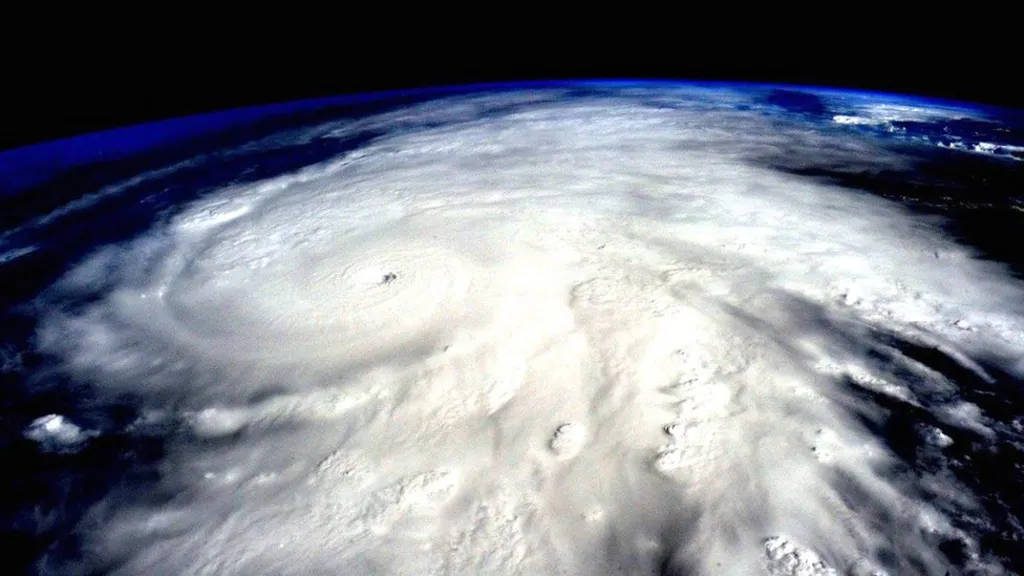
Ming Yang Wind Power Group, a Chinese company, has developed an innovative technology that harnesses one of nature’s most formidable forces to generate clean, renewable energy. Their deep-water turbine platform converts offshore wind energy into electricity, even during a category 5 hurricane.
From the ocean depths to the vast expanse of space, nations are constantly seeking new frontiers to drive progress and innovation. In this quest, maybe challenges can be transformed into opportunities.
As the threats of natural forces intensify and the demand for renewable energy sources grows, current methods are struggling to keep pace with the frequency and severity of extreme weather events. Traditional wind turbines, for instance, often cease operation during storms and typhoons, limiting their efficiency and reliability. This is particularly true for offshore turbines, which represent only a small fraction of the global wind energy market, despite offshore winds being faster and more consistent. However, the high upfront costs of constructing these platforms have been a limiting factor. What was needed was a platform that could not only withstand harsh conditions but also capitalize on them.
This is where the “Ocean X” platform developed by Ming Yang Wind Power Group, China’s largest private wind turbine manufacturer, in collaboration with a Chinese state-owned shipbuilding company, comes into play.
The platform’s design is an engineering feat, featuring high-performance concrete and a cable-supported system for structural efficiency and adaptability. Three floating arms connected by cables provide additional stability, while a unique Y-shaped twin-turbine configuration enhances performance. Together, these elements ensure stability and efficiency in waters deeper than 35 meters and can withstand waves up to 30 meters high, allowing the platform to harness wind energy even in conditions that would ground traditional turbines, such as winds reaching speeds of 260 kilometers per hour.
The Ocean X turbine system includes a single-point mooring system for stability during severe typhoons and a 16.6-megawatt twin-turbine platform. The structure houses two contra-rotating rotors with large blades spanning 182 meters in diameter, improving its ability to capture wind and increasing efficiency.
The system includes ladders and elevators for easy access and movement, and the platform is reinforced with high-tension cables and anchored to a floating foundation weighing approximately 16,500 tons, equipped with counter-rotating turbines to maintain a balance of forces.
Despite its innovative design, the platform faces several challenges. Machines exceeding 8 megawatts can experience component failures within two years of installation, meaning their lifespan is about half that of their 4-8 megawatt counterparts. This is a significant challenge given the high construction costs and the risks of collisions with ships, seismic activity, or manufacturing defects, any of which could dislodge these massive structures from their moorings and increase costs.
Additionally, offshore wind farms pose environmental risks and threaten biodiversity, as floating turbines are anchored to the seabed. There, they can become entangled with marine debris, creating a hazard that marine life can become trapped in, a phenomenon known as “secondary entanglement.”
Furthermore, the noise, increased ship traffic, and other disturbances associated with these wind farms can force marine life to migrate away from their primary habitats, potentially disrupting the ocean’s ecological balance.
Moreover, the real-world performance of Ocean X has yet to be fully studied. Tests involve attaching “actuators” to the blades to simulate repeated stress, bending them to the breaking point to determine maximum load capacity. Despite advanced designs, turbines often cease operation at lower speeds than they are designed to handle for safety reasons. As a result, the performance metrics of Ocean X, such as durability, efficiency, longevity, and survivability, remain unclear or undefined.
It remains to be seen whether the design improvements in Ocean X will effectively reduce the likelihood of failures and whether its team can successfully address these challenges.
If successful, the Ocean X project promises to harness wind and typhoons to generate 54 million kilowatt-hours of energy annually, enough to power 30,000 homes, making it a significant advancement in renewable energy production in coastal regions.
After thorough testing and study, Ocean X can provide invaluable lessons for future innovations in the wind energy sector and take another step toward a sustainable energy future.
References:
- Futurism: Wind turbine that can stand hurricanes
- Wind Turbines
- How wind turbines survive severe weather
- OceanX by Mingyang
- https://www.bbc.com/news/business-65261147
- Issues that offshore wind turbines face- BBC
- Can wind turbines handle hurricane level speeds? BBC
- Ocean X – Times of India
- Mingyang Launch of Twin Rotor V Floating Wind turbine Platform
- Ocean X can withstand Cat 5 hurricanes
- University of Maine – US simulation of wind turbines that can withstand high wind speeds
- About Seawind
- Biodiversity challenges from Floating wind turbines
- Structural issues with floating wind turbines
- Mingyang – OceanX – News Atlas