

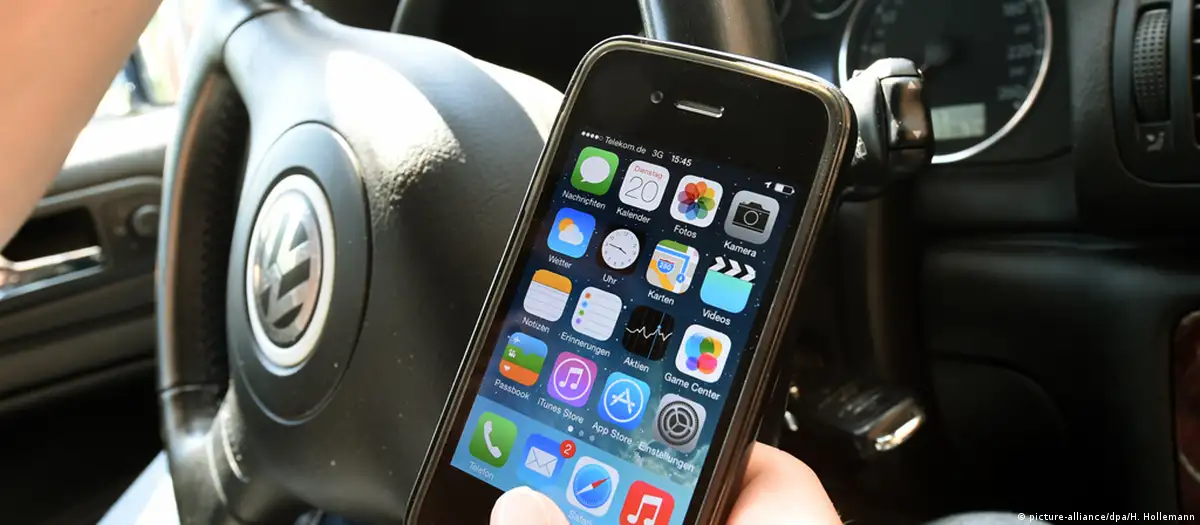
To combat distracted driving, one of the leading causes of road accidents worldwide, numerous governments in Europe and America have turned to smart cameras powered by artificial intelligence (AI). These cameras monitor traffic violations and seamlessly integrate with stringent regulations that leave no room for drivers who prioritise distractions over their own safety and that of others.
The sight of a driver holding the steering wheel in one hand and their smartphone in the other has become a common occurrence, symbolising one aspect of the larger issue of distracted driving.
This term includes any activity that diverts a motorist’s attention from the road ahead, ranging from engaging in conversations with passengers and changing radio stations to using GPS devices and texting. Among these distractions, texting is the most prevalent and dangerous, as it demands significant cognitive focus and causes drivers to take their eyes off the road, leading to a loss of situational awareness. It is responsible for a significant proportion of traffic accidents worldwide, resulting in severe consequences. In the United States, for instance, research conducted by the National Highway Traffic Safety Administration reveals that phone-related distractions result in the deaths of nine individuals and injuries to over 1,000 others on a daily basis.
The European Union has also conducted studies on driver distraction, revealing that 25% of car accidents are attributed to this factor. These findings have sparked the interest of countries like Germany that had not previously focused on studying or compiling official statistics on this issue. In response to the alarming global statistics, German police conducted widespread, unannounced inspections across the country. These inspections resulted in the identification of over 3,000 drivers using their smartphones while driving, and approximately 10,000 drivers engaged in other forms of distraction. In just a matter of hours, the police were able to stop more than 51,000 vehicles.
Distracted driving is a prevalent issue that extends beyond Europe and America, affecting most countries worldwide. Governments are actively seeking solutions to combat this problem, from national awareness campaigns, to strict laws and fines, to the utilisation of advanced technologies.
In the UK, for example, the police, fire and emergency departments in Devon and Cornwall have integrated surveillance technologies with AI to enhance road safety. The cameras in both counties monitor the movement of cars and identify potential violations such as mobile phone use, failure to wear a seatbelt, or exceeding the speed limit. Once the AI algorithms detect any violation, the driver is automatically notified.
The implementation of this technology follows research conducted by UK authorities, revealing that 55% of Britons frequently witness instances of cell phone use or seatbelt non-compliance, while 81% of respondents expressed the need for enhanced law enforcement in these matters.
Similar findings were observed in Belgium, where random monitoring showed that 5% of Belgian drivers were using their phones while driving.
In Antwerp, the Belgian government launched a similar experiment to the one implemented in the UK to automatically detect drivers holding their phones using smart cameras. In this experiment, pictures are taken through the windshield and driver’s window. Unlike the previous trial, the determination of violations is not solely reliant on AI assessment but is subject to review by human employees. Currently, these violations do not result in financial fines, as the federal government is in the process of developing a new law to enforce penalties for such behaviour.
However, according to the European Transport Safety Council, the first European Union (EU) Member State to do so is the Netherlands, where authorities installed cameras that operate day and night in all weather conditions, taking photographs of every car that passes before them. Images, which are taken diagonally downwards, capture the driver’s hands and license plate, but not their head. The Netherlands has been a leader in addressing the issue of distracted driving, implementing a ban on the use of mobile phones while driving cars and motorcycles as early as 2002. Furthermore, in 2019, the ban was expanded to encompass all other portable electronic devices, such as tablets, music players, and navigation systems.
In Germany, the government has been working on its official data and amending relevant laws and accident reporting systems. It has incorporated distracted driving as a new classification. To gather evidence for such incidents, Germany too has resorted to technology. It has employed cameras that see into the car and quickly scan the hand position of the driver, which ideally should remain on the steering wheel. If the driver is detected holding a device, they will be fined and get one demerit point on their license. To further train AI network, any suspicious hand positions will be photographed, and the photo will be evaluated by humans.
In order to address the privacy concerns associated with these technologies, the German government has used cameras that are incapable of facial recognition and exclusively transmit their images to traffic safety authorities.
Undoubtedly, the root cause of the issue remains the primary challenge for governments, as human behaviour is inherently difficult to control. Even in the most civilised societies, drivers will always attempt to find ways to bypass censorship. For example, they might place their phone near the car door or mount it discreetly to avoid detection by cameras.
Transforming societies requires long-term efforts, and it is precisely what these initiatives aim to achieve. Their objective goes beyond merely monitoring and punishing violators. The ultimate goal is to enhance the overall driver culture and foster greater compliance with traffic laws, leading to safer and more dependable transportation networks.
References:
- https://www.dw.com/en/germany-police-catch-3100-drivers-on-their-cell-phones-in-one-day/a-45584719
- https://fallman.tech/germany-using-cameras-and-ai-to-catch-distracted-drivers-holding-smartphones/
- https://www.bbc.com/news/uk-england-devon-62993340
- https://visionzerosouthwest.co.uk/pioneering-cameras-that-catch-drivers-on-their-phone-trialled-in-devon-cornwall/
- https://www.forbes.com/sites/tanyamohn/2021/12/30/smart-cameras-catch-drivers-on-their-mobile-phones-the-netherlands-issues-automated-fines/?sh=54b83ba31bda
- https://www.brusselstimes.com/145737/antwerp-police-test-smart-cameras-that-see-drivers-texting
- https://www.brusselstimes.com/312526/life-threatening-5-of-brussels-drivers-use-mobile-phones-behind-wheel
- https://www.dw.com/en/germany-police-catch-3100-drivers-on-their-cell-phones-in-one-day/a-45584719
- https://fallman.tech/germany-using-cameras-and-ai-to-catch-distracted-drivers-holding-smartphones/
- https://www.bbc.com/news/uk-england-devon-62993340
- https://visionzerosouthwest.co.uk/pioneering-cameras-that-catch-drivers-on-their-phone-trialled-in-devon-cornwall/
- https://www.forbes.com/sites/tanyamohn/2021/12/30/smart-cameras-catch-drivers-on-their-mobile-phones-the-netherlands-issues-automated-fines/?sh=54b83ba31bda
- https://www.brusselstimes.com/145737/antwerp-police-test-smart-cameras-that-see-drivers-texting
- https://www.brusselstimes.com/312526/life-threatening-5-of-brussels-drivers-use-mobile-phones-behind-wheel
- https://www.brusselstimes.com/315783/drivers-caught-using-mobile-phone-by-smart-cameras-will-soon-be-fined