
With an eye toward future sustainable development, the German government is working across all levels to foster the creation of digital twins. Collaborating with the private sector, the government is leveraging these innovative models to bolster the railway network, optimise water management, and enhance overall quality of life.
City planners and urban developers are grappling with one of the most intricate tasks in history, making decisions that reverberate across millions of lives while juggling a myriad of data points with minimal room for error.
Amidst the rapid urbanisation and population growth witnessed in cities, a cascade of human, environmental, and cultural challenges have surfaced. These include economic stagnation, environmental pollution, health and psychological strains from epidemics, escalating climate change consequences, traffic gridlocks, noise pollution, water scarcity, and pervasive inequalities. Furthermore, cities are facing heightened occurrences of natural disasters, like floods, storms, and rising water levels. These intricate predicaments necessitate innovative technologies to help city planners envision and evaluate future urban projects alongside their repercussions on diverse sectors.
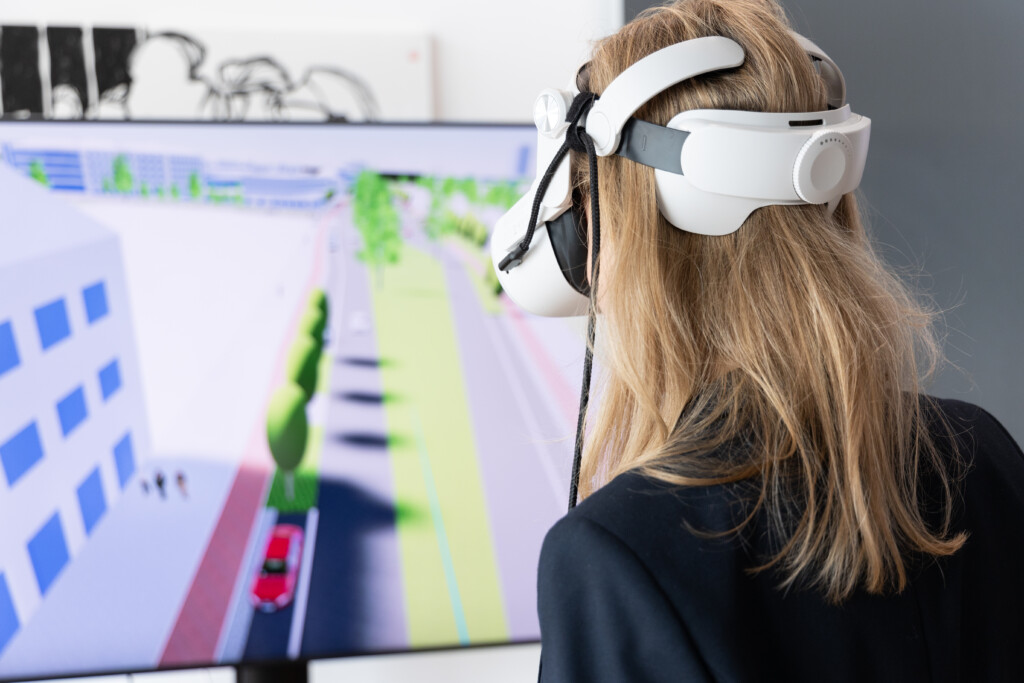
One such technology is available in Germany, where it serves both central and local governments. This technology, known as digital twins, involves the creation of virtual models for places or objects, powered by information technology systems encompassing digital identification, machine perception, networking, universal computing, and intelligent control, among others. These twins mirror the original in three dimensions, facilitating testing of new projects across diverse scenarios and yielding precise predictions about potential outcomes of proposed changes on the ground.
Digital twins serve a multitude of purposes. They enhance infrastructure, such as roads, bridges, water systems, and energy networks, and provide emergency services, firefighting, and ambulance teams with accurate, comprehensive data for finely tuned responses.
Germany’s federal government has launched the Connected Urban Twins project – part of a larger series of smart city pilot projects. Led by Hamburg and involving Leipzig and Munich, this endeavour constructs centralised platforms for city data and digital twin development. The benefits of this project extend beyond these three cities, offering support to urban areas and municipalities in harnessing digitalisation’s potential to realise sustainable urban development.
By 2025, Hamburg, Leipzig, and Munich will each have invested over 10 million euros into crafting their digital twins, drawing from five core resources:
Geo Base Data: The basis of an Urban Digital Twin, defining the spatial references, enabling persistent, interdisciplinary relationships between diverse information sets, and thus creating an unambiguous interpretive space.
Specialised Data: Application-specific data, including information on construction projects, environmental protection, or demographic status.
Analysis: Analytical tools to interpret data. Analyses can be carried out interactively, through visualisations, or, in simulations, their operation may be fully or partially automated.
Applications: Faces of Urban Digital Twins vis-à-vis customers. Data provided via interfaces is presented in visual form, suitable for human-machine interaction. Analysis components can be integrated into applications as fixed components, or they can be used as individual components.
Geo Base Twin: The intelligent network that combines all information and data analysis methods, offering a comprehensive and reliable perspective.
Digital twins, when infused with real-time data collected through real-world platforms or city sensors, facilitate the comprehensive visualisation of diverse scenarios. Germany’s ambition, at both the federal and local government levels, is to attain this capability through its support for the programme. Its comprehensive strategy has been inspired by the remarkable success of digital twin applications in realising substantial advantages in terms of sustainability, heightened efficiency, and enhanced safety.
Germany is designing a digital twin for its 33,000-kilometre railway network – the largest in Western Europe. The aim is to boost network capacity without extending new tracks and to introduce automated train operation. This involves crafting an accurate simulation of the entire system, including tracks traversing cities and towns, trip schedules, and roughly 6,000 stations.
In Stuttgart, the local government collaborates with private-sector partners to forge its own digital twin. The goal is to monitor water and sewage systems, particularly for flood drainage, assess traffic networks, and trial new strategies for managing public parking facilities.
The management of Germany’s railway network is set to boost safety, accident prevention, network efficiency, and customer satisfaction, while reducing carbon footprint and costs. In essence, Germany seeks to shape the future of railways across Europe as a whole.
This technology serves to elevate urban activities, rendering them safer and more efficient. It ensures that residents benefit from greater convenience, inclusivity, and equity in their daily services. Additionally, it helps preserve a healthy environment and fulfil commitments related to climate change.
Most significantly, digital twins open up new horizons for achieving sustainable development by seamlessly integrating digital technology innovations with on-the-ground work mechanisms.
References:
- https://hexagon.com/company/newsroom/press-releases/2022/hexagon-fujitsu-support-stuttgarts-urban-digital-twin-project
- https://www.connectedurbantwins.de/en/the-project/
- https://www.connectedurbantwins.de/en/urban-digital-twins/modular-system/
- https://www.smartcitiesworld.net/digital-twins/digital-twins/stuttgart-uses-digital-twin-to-promote-sustainability
- https://www.thesmartcityjournal.com/en/cities/german-government-funding-digital-twins-project#:~:text=The%20cities%20of%20Hamburg%2C%20Leipzig,Projects%22%20from%202021%2D2025.