

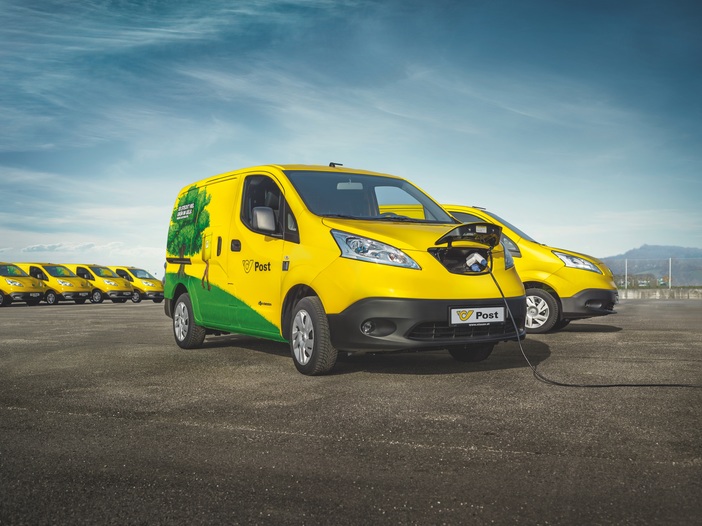
Austrian Post is moving to electrify all its vehicles to make the “last mile” phase of package delivery carbon dioxide-free by 2030. This initiative emerged as a result of a collaboration between Austrian Post and some of the leading private sector companies in the field of transport and energy in order to find the best solutions for the adoption of a shipping system that ensures the achievement of Austria’s sustainable goals at low operating costs.
Global logistics and parcel delivery companies seek to adopt sustainable solutions to reduce operational expenses, Many have recently turned to the adoption of electric vehicles, Whereas, the initial investment in these vehicles will lead to tangible economic and environmental benefits over the coming years, Especially with the steady increase in e-commerce sales. In this context, The Austrian Post Company, It is the national company responsible for postal services, From the pioneer to the integration of electric vehicles into their fleet, It has been used in parcel deliveries since 2011. Based on the success of these initial trials, Austrian Post has decided to convert its entire fleet to electric vehicles to achieve its goal of reaching zero carbon dioxide emissions while operating the “last mile” operations. It is the journey of parcels from delivery centers to the addresses of their recipients, By 2030.
This is a very important step for the future of sustainability in Austria. According to Austrian Post, It operates the largest fleet of electric vehicles in the country. Which includes more than 2,100 electric vehicles. The fleet covers about 80% of the country’s parcel delivery areas. Supported by 2,400 charging stations in over 130 locations. To be able to ship its growing fleet, The company distributes 2,000 chargers throughout Austria. The new chargers are small in size and easy to use. They are more like small boxes that can be mounted on the wall. ABB, one of the leading private sector companies in clean energy, provides the charging standards required to ensure that Austrian Post fleet electric vehicles charge quickly and efficiently. The company has provided more than 60 Terra chargers, It is the fastest in Austria.
With regard to the management, charging and operation of the electric vehicle fleet, Austrian Post has selected a private sector partner, Mobility House, to contribute extensively to the project. The main task of the company is to provide Austrian Post with the ChargePilot system. It is a system specifically designed to manage electric vehicle charging operations. This system will contribute to overcoming the most important challenge facing the postal company, which is the complexities that result from the expansion of the fleet size of electric vehicles in terms of monitoring the process of supplying the fleet with energy and organizing charging times. One of the challenges resulting from the increase in the number of electric parcel delivery vehicles is the increased pressure on charging centers and thus on power grids, Here, the importance of solutions provided by freight management systems such as “ChargePilot”, which gradually reduce the charging capacity of each vehicle or ensure that the charging process is carried out intermittently, So that it organizes the charging of all vehicles at a specific charging center without causing disruption to power grids.
In this way, ChargePilot allows fleet supervisors to regulate vehicle shipping times. It also avoids the Austrian Post company from conducting shipping operations at the peak hours of daily shipping, which is accompanied by a noticeable rise in energy prices. Thus contributes to reducing costs for the company. Perhaps the most important feature of this system is its ability to deal with charging stations available in Austria of different manufacturers. In addition ChargePilot identifies shortcomings in the charging network, This allows them to be maintained to avoid any disruption to mail delivery services.
Austrian Post believes that public-private partnership is the key element contributing to the success of this initiative. That’s why Postal has carefully selected its private sector partners based on their expertise in renewable energy technology and innovative and sustainable solutions. For example, Mobility House has a long experience in projects to integrate electric vehicles into power grids. In addition to being a partner of many EV charging technology manufacturers, Shipping network installation companies, automakers, This would facilitate communication between Austrian Post and the private sector companies related to the project.
The project to convert Austrian Post’s fleet to an all-electric fleet is expected to contribute to the company’s goals of achieving zero carbon dioxide emissions from operating the “last mile” operations of the parcel delivery journey in 2030. The innovative solutions developed by Post Company in collaboration with private sector companies will help overcome the challenges that may result from the increase in the number of its electric vehicles in terms of increasing pressure on power grids and the high cost of charging vehicles.
References:
https://www.smartcitiesworld.net/news/austrian-postal-service-electrifies-its-fleet-6588