

With the increasing intensity and frequency of natural disasters worldwide over the past few decades, particularly those directly linked to climate change, the United Nations has launched the “Early Warning for All” initiative as a framework to ensure the protection of every individual through the deployment of early warning systems by the end of 2027. As efforts converge on formulating plans and addressing the significant challenges that this initiative will face, there are innovative and advanced experiences that have proven successful in both Japan and China in this field. These experiences can contribute to designing global early warning strategies and systems, further supporting the United Nations initiative or similar initiatives with best practices.
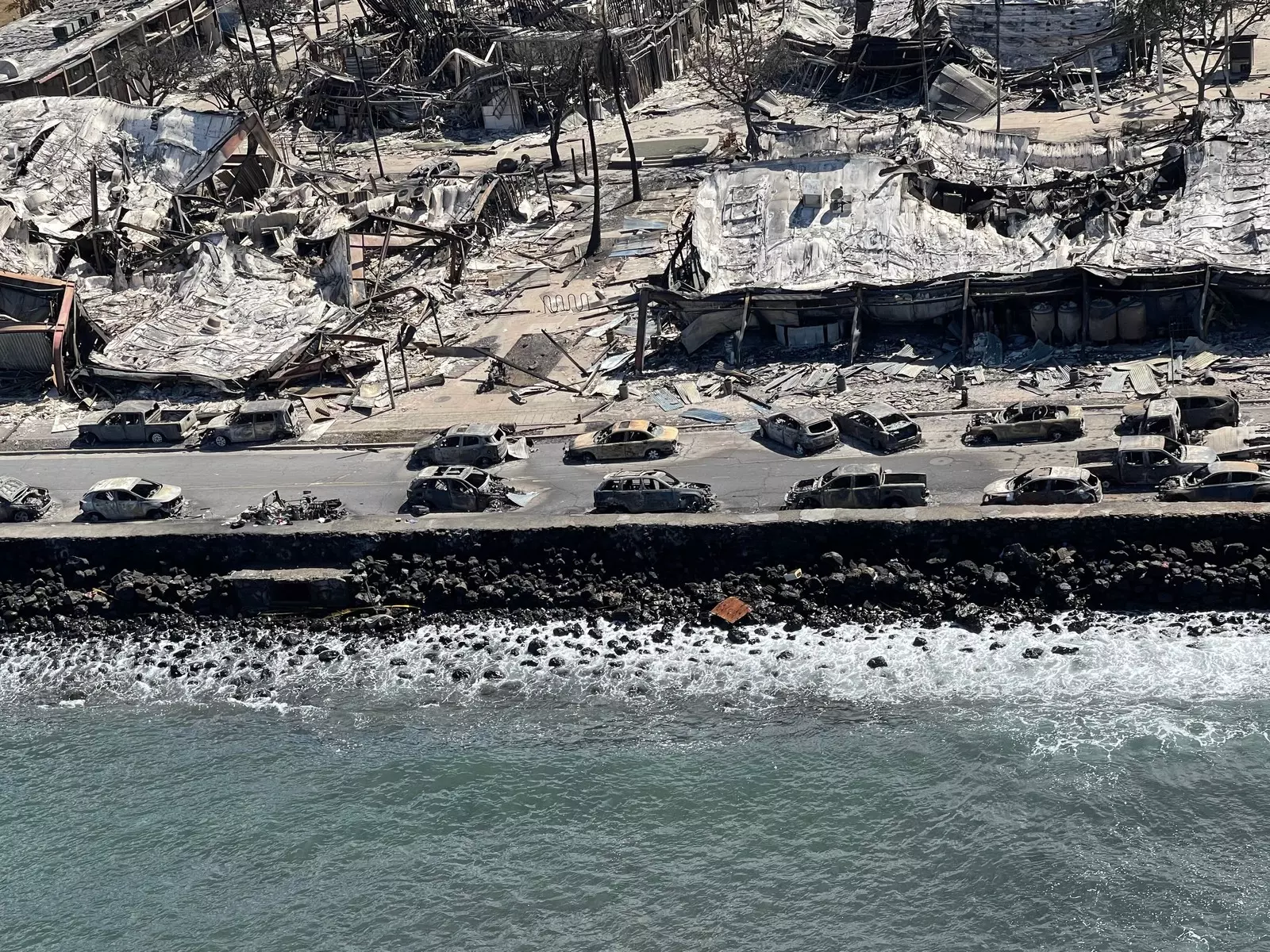
The year 2023 alone witnessed a series of natural disasters during the first nine months, including the devastating earthquake in Turkey and Syria, an earthquake in Morocco, widespread floods in southern China, and forest fires in North America and Southern Europe, particularly in Greece, described as one of the worst in the continent’s history. In addition, unusual catastrophic floods have recently hit several cities in Libya. The magnitude of the damage caused by natural disasters is evident in the statistics. According to United Nations sources, during the past two decades ending in 2019, approximately 7,348 major disasters occurred worldwide, affecting 4.2 billion people and resulting in economic losses worth $2.97 trillion. These statistics represent a significant increase compared to the preceding two decades, when there were 4,212 natural disasters affecting 3.25 billion people, with losses amounting to $1.63 trillion.
Despite the continuous increase in human and material damage, there appears to be a relative decrease in the number of fatalities. The primary reason for this is the early warning systems developed by individual countries, particularly Japan and China.
Japan, a country with a history marked by natural disasters due to its location along the Pacific Ring of Fire, an area prone to volcanic activity, suffered a dual tragedy in 2011. A powerful earthquake struck the seabed off its coast, creating earthquakes and a tsunami that claimed the lives of around 20,000 people and led to the Fukushima nuclear disaster. Despite the magnitude of this disaster and its impact on Japanese society, Japan demonstrated remarkable resilience and high adaptability in dealing with disasters since. Were it not for the preparations it had made for such a catastrophe, the number of casualties would have multiplied.
Japan’s current capacity to respond to disasters is the result of strong investments in three areas: advanced early warning systems, stringent building codes and standards, and comprehensive disaster response strategies. Japan has become a global leader in all three aspects of early warning systems: technology, institutions, and community involvement.
Japan employs advanced technology in the process of early detection and prediction of extreme weather phenomena, including weather satellites, ground monitoring centers, high-speed computers, and weather forecasting systems that automatically send data from 1,300 monitoring stations to the Japan Meteorological Agency for appropriate decision-making. Additionally, a smartphone application allows citizens to track weather changes. In 2015, Japan recorded a world record by predicting a major typhoon two weeks before it occurred, using the three-dimensional “Fugaku” system, one of the fastest supercomputers in the world. Japan has also intensified the use of IoT technologies and artificial intelligence to improve the accuracy of weather, earthquake, and tsunami risk forecasting at the city and village levels.
On the other hand, Japan seeks to expand participation in developing new disaster risk reduction solutions through the innovative “BOSAI” platform dedicated to public-private-academic partnerships, which currently comprises more than 100 institutions. Some Japanese cities have also introduced innovative solutions to the national early warning system, including aerial drones for monitoring hard-to-reach areas, such as volcanoes and regional waters.
China, too, suffers from devastating earthquakes due to its location at the intersection of continental tectonic plates. The capital, Beijing, plans to install earthquake early warning devices in large buildings, major facilities related to gas, oil, and electricity, dams, and mines. These sites also include receiving and broadcasting alarm devices in vulnerable secondary sectors such as schools, hospitals, airports, and nuclear power facilities. Beijing is also contributing to the establishment of a nationwide earthquake early warning system that began in the 1990s, capable of determining earthquake strength and the countdown to impact in seconds, launching an immediate alert within a minute of identifying the source. The system’s network currently consists of 1,500 monitoring stations, three national centers, and 173 provincial-level centers for information dissemination and early warning. China has also developed early warning systems specifically for floods, droughts, and severe heatwaves.
Efforts towards enhanced disaster preparedness from Japan and China can offer lessons benefiting countries looking for ways to develop strong early warning systems. First, technological advancements are pivotal. Investing in advanced weather prediction technologies, satellites, radar, and sensors is important for predicting and responding to various disasters, from earthquakes to typhoons. Second, effective coordination and dissemination of warnings are crucial. Japan’s nationwide early warning system and China’s extensive network of monitoring stations exemplify how clear, authoritative, and rapid alerts save lives. This requires strong collaboration between meteorological agencies, local authorities, and the public. Lastly, adaptability and inclusivity matter. Japan’s people-centric approach and initiatives like the Japan BOSAI Platform highlight the importance of engaging communities and public-private-academic partnerships in disaster risk reduction.
References:
- https://unseen-japan.com/sendai-drone-warning-system-japan/
- https://www.weforum.org/agenda/2023/09/japans-early-warning-systems-blueprint-climate-adaptation-efforts/?utm_source=pocket_saves
- https://www.undrr.org/early-warnings-for-all
- https://www.chinadaily.com.cn/a/202306/13/WS648810d7a31033ad3f7bc014.html
- https://news.cgtn.com/news/2023-06-15/Early-warning-system-prevents-human-elephant-conflicts-in-SW-China-1kEnhK05EHu/index.html