
The contemporary world is brimming with challenges that call for innovation and technology. This has prompted two African countries to experiment with using drones to deliver emergency medical supplies to rural health facilities and enable medical staff to save lives lost while waiting for medical supplies.
Despite the advances made in medicine, Many lose their lives for avoidable reasons. Health risks associated with maternal and unborn health, such as bleeding and unsafe labour, threaten millions of women and their babies. So, Health organizations resort to modern technologies such as drones to deliver medicines and medical devices such as pacemakers or blood bags. It is perhaps obvious that this trend is common in high-income countries. As opposed to a more complex landscape in poorer countries.
In African Botswana, Women in remote areas suffer due to lack of medical supplies and blood. In cases of bleeding during childbirth, The mother’s condition should be stabilized and blood supplied before being transferred to a well-equipped health facility, But delivering medical supplies is a challenge in a large and sparsely populated country where tens of kilometres separate advanced and modest health facilities. Not to mention the shortage of vehicles, the inaccessibility of some areas and the ineffectiveness of supply chain systems. These realities undoubtedly hinder the processes of achieving the Sustainable Development Goals, which include improving the quality of life of the population.
Similarly, Rwanda has the same problem, However, there is a detail that complicates it, 83% of its population of 12 million live in rural areas. In cases of childbirth and accidents, Blood transfusion is difficult on rough mountain roads and through a series of bureaucratic procedures, This prompted health facilities to stock up on more than they needed. But this is not a definitive solution, Some components, such as platelets, even if kept in a cool place, spoil in a matter of days. This exacerbates the risk of malaria complications facing East African children.
So, The governments of Botswana and Rwanda have resorted to drones to deliver medical supplies where needed. And at any time.
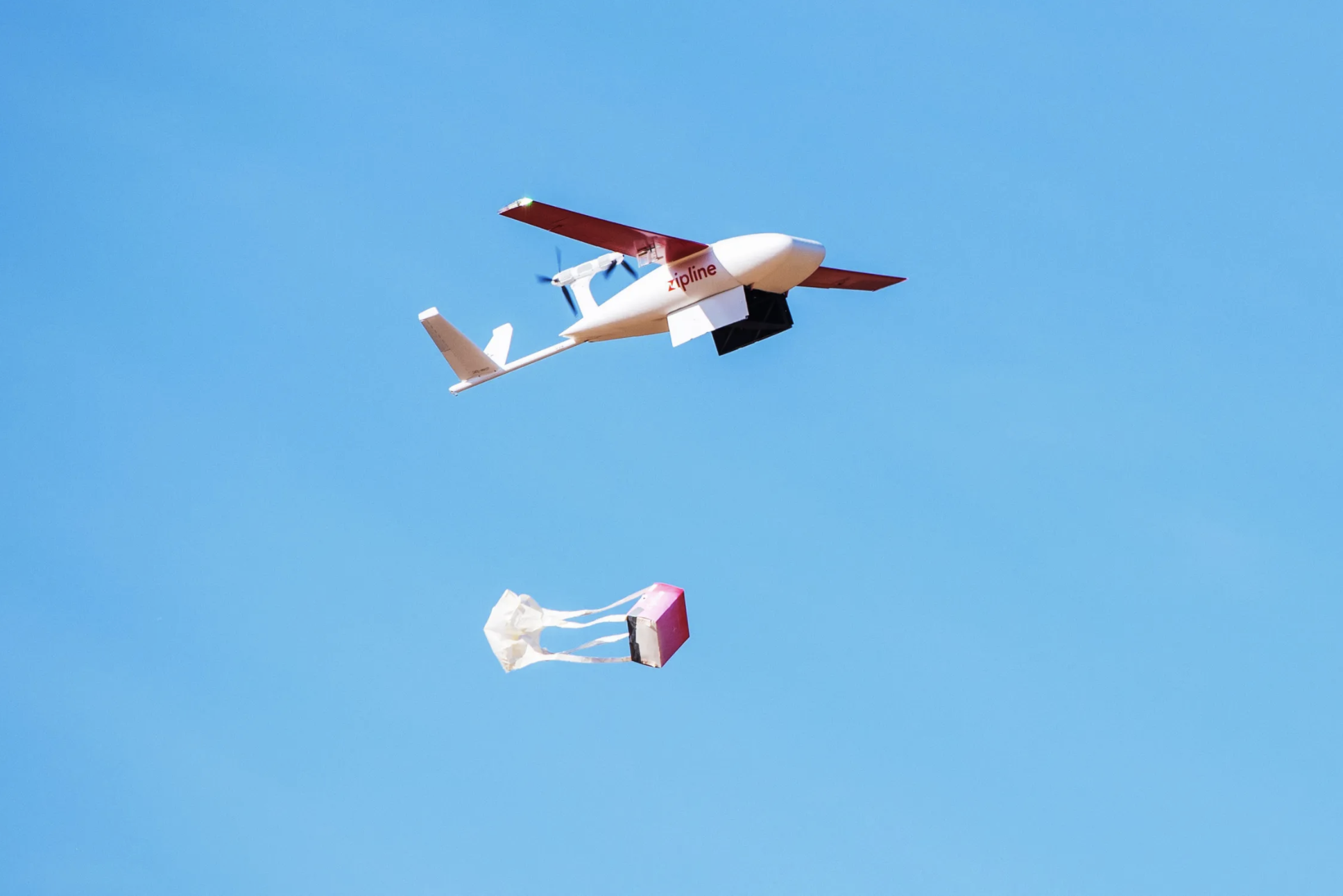
In Botswana, The government, UNFPA and the Botswana International University of Science and Technology collaborated to launch the project called “Drones for Health”. It is the first of its kind in South Africa, The Rwandan government signed a contract with Zipline to implement the technology.
The Botswana project will start with a pilot period in 4 villages, Where the health facilities in which the technology will be tested will be selected, which serve thousands of inhabitants, The aircraft will then be programmed to take off and land automatically. These planes will run on the battery, In case of full charge, It can cover a distance of up to 100 kilometers with a load of about two kilograms, It can also repeat the process. The project was supported by local communities, Rural people built all the landing pads in the selected health centres.
In the Rwandan experiment launched in 2016, The planes carry blood in intravenous bags from two distribution centers to health facilities, And when you arrive, You lower it into an insulated cardboard box without having to land. With this, Every day, the two centers can complete 500 deliveries that include trace elements such as plasma. While a team of tour operators work, At the same time, On the weather monitor and choose the best route for each operation.
The government has benefited from the advanced electronic data systems available to it, Which enables the Ministry of Health to track the number of patients who see doctors and women about to give birth and the number of people infected with infectious diseases such as malaria, This made it easier for the executive team to measure the impact and challenges of the project.
Rhubarbs have also navigated the challenges traditionally posed by rural demographics. The government is always striving to employ health technology innovations, It has reached more than 90% of the population the universal health care system. In 2009, it launched the “Quick Text Messaging” project, which was able within 4 years to connect 15,000 villages to a wide network of doctors, hospitals and ambulances. Help track maternal and child deaths and respond to any emergency.
Another challenge that causes some politicians to fear the use of these drones to drop explosive or harmful objects, Any body is capable of carrying benefit to people, He can harm them to the same degree. But the biggest challenge remains technical, It is related to the size and capacity of the battery, These aircraft are currently capable of carrying out one-way operations, It can only drop the payload, It is not eligible for landing and carrying samples.
But reports between 2017 and 2019 indicated that these planes traveled 13,000 delivery flights. The longest took 41 minutes compared to the two hours it took to deliver supplies by road. Today, it covers 80% of the country. More importantly, is that they reduced blood waste by 67% in one year. Research is ongoing to measure the cost and other impacts of this initiative.
For a country like Botswana, This initiative revolutionizes the delivery of essential medical services, Not only will it improve maternal health, It will change the shape of the entire health system, It will shorten the time of transporting medical supplies from hours to minutes. To achieve the government’s longer-term goal that no woman loses her life while giving life to others.
References:
https://news.un.org/en/story/2021/05/1092512
https://www.wired.com/story/drones-have-transformed-blood-delivery-in-rwanda/
https://www.thelancet.com/journals/langlo/article/PIIS2214-109X(22)00048-1/fulltext