
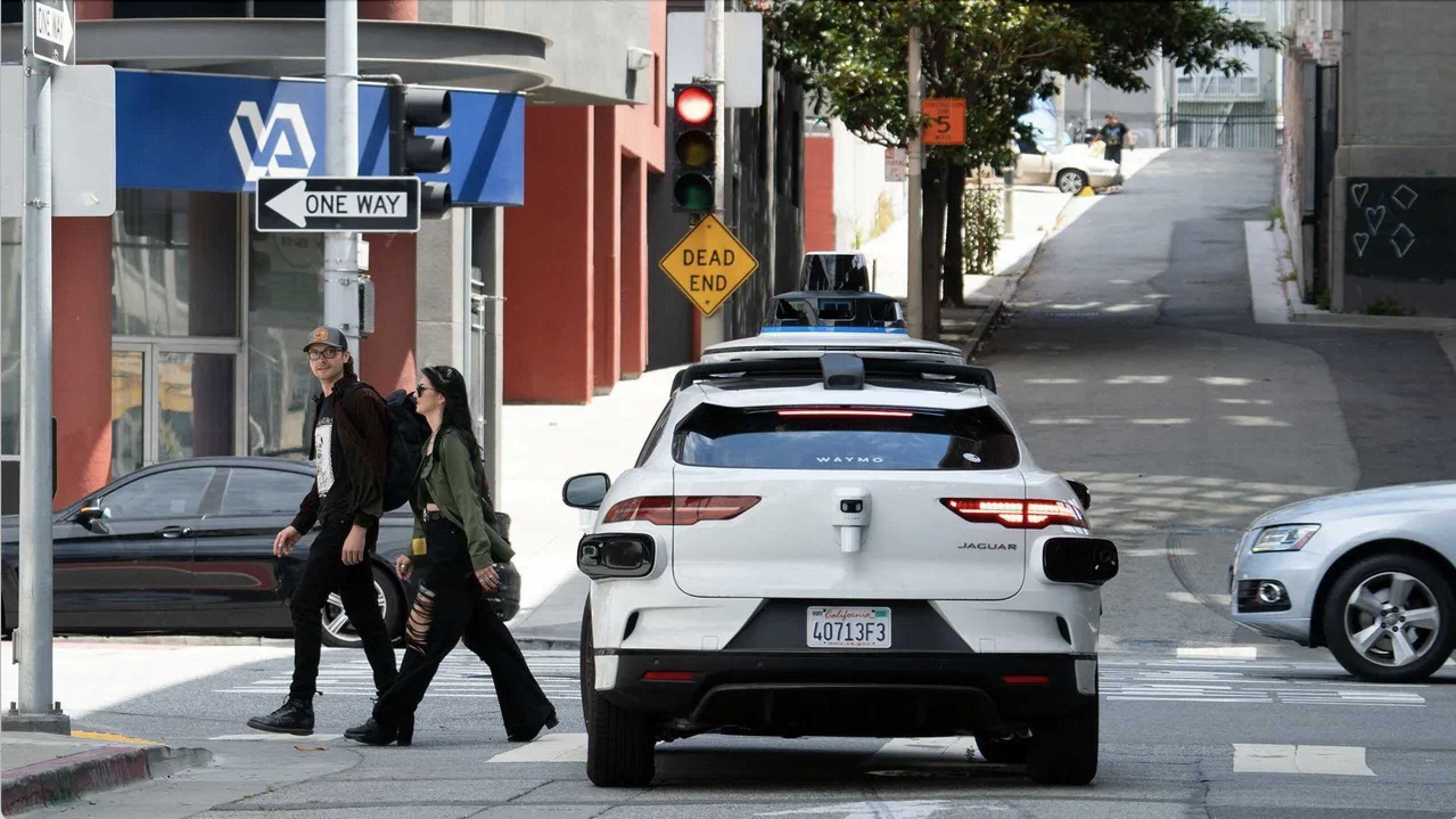
As part of its quest to achieve leadership in the field of artificial intelligence, China’s cities have allowed the testing of autonomous vehicles, Legislative entities are working on regulations that regulate the use of this technology and ensure the safety of its users.
Since the first appearance of the concept of autonomous vehicles, The controversy between those who are optimistic about it and those who are afraid of it has not stopped, But it continued to evolve anyway, Raising more questions about whether it will one day become our new reality.
According to WHO estimates, Road accidents kill more than 1.3 million people annually. The vast majority are due to human errors, Conventional transportation accounts for nearly a quarter of greenhouse gas emissions and 10% of fossil fuel consumption. Many see self-driving vehicles as a way to enhance traffic safety. While this technology is used in some industrial environments, mines and ports, They have not yet become part of the usual landscape in the cities of the modern world, But this did not prevent the emergence of some bold experiments, The most recent came from China, Which began testing the technique.
After two years of experiments, The National Development and Reform Commission has issued a joint guide to promote and develop autonomous vehicle innovations. To begin real-life experiences in many cities, which allowed taxis to operate in low-traffic areas and within manageable scenarios, It began to encourage the deployment of autonomous buses on specific routes, This is after the Ministry of Transport drafted a law regulating the process, setting its fees and prohibiting the use of these vehicles in the transport of dangerous goods.
In Shanghai, The authorities have issued comprehensive rules for smart and connected vehicles, Legislation has been developed to establish the formula for legal liability in the event of accidents involving self-driving cars. The city has set a set of conditions that companies must meet in order to obtain permits that entitle them to deploy their vehicles on the roads. Such as registering with the Ministries of Public Security and Transport, In the event that the vehicles will provide paid services.
As for the city of Shenzhen, Its powers went further and posed the controversial question: Who is to blame when self-driving vehicles make a mistake? Based on the answers, The regulations listed several cases. For example If there is a driver behind the wheel, He bears responsibility for an accident, If the car is fully self-driving, The responsibility lies with its owner or operator, If the accident is caused by a defect in the car, Its owner can claim compensation from the manufacturer.
The city authorities came up with these regulations after dividing autonomous driving into 3 levels, The first of these is conditional autonomous driving, Where the vehicle can perform some dynamic tasks provided there is a driver, The second is near-total autonomous driving, which is known as “very self-driving”, It is similar to the previous one with the need to have a driver, But it can perform all the dynamic tasks. As for the third level, It is fully autonomous driving, The vehicle can operate completely autonomously without the need for a driver.
In Beijing, The authorities have allowed self-driving taxis to operate but without issuing official regulations governing the entire process. Rather, an individual permit is granted to each car separately.
Following these steps, Many companies have begun testing, announcing investments and new plans to deploy these vehicles in other Chinese cities. In Johann, for example, Previous experiences included a driver, For now, fully autonomous or remote-controlled vehicles will be allowed. Working in two experimental areas between nine in the morning and five in the evening, And with the presence of fifth-generation coverage that allows monitoring of operations.
The Chinese experience is characterized by the use of light-based placement technology “lidar”, It is a remote sensing technology that uses light pulses to calculate distances or dimensions. China’s complex traffic data also presents an opportunity for self-driving car companies to improve their technologies, products and services. China is also one of the largest car manufacturers in the world, So that Guangzhou City, It is a major automotive manufacturing exporter in the country, It produced 2.95 million cars in 2020 alone.
But the dedication of this technology as a new reality will face many challenges, Most notably, finding ways for these compounds to operate in complex and unpredictable human environments, While we can ensure that the machine adheres to the instructions, We cannot guarantee the human being. Hence, Perhaps what these cars need most in the first phase of their deployment on the roads is the ability to deal with ordinary drivers when they exceed speed limits or break traffic laws.
Also, all the tests carried out did not provide sufficient accurate data covering the different scenarios, The traffic condition depends on hundreds of variables such as traffic lights, building facades, vegetation, houses, parking lots, temporarily parked trucks, excavations, pedestrian walkways, railways, and others.
This is only the beginning of a long list of laws and a rethinking of the design of highways, infrastructure and cities. and the extent to which the public accepts a shift of this magnitude, Especially since they only see carefully selected videos, This is not enough to assess the risks and get a full picture of the process.
But the steps are the first time a Chinese lawmaker has worked on actual guidelines and legal frameworks for the deployment of autonomous vehicles in the country.
These compounds can reshape our relationship with transport, It offers a new experience with minimal risk, and to establish smoother and safer transport systems, and reduce carbon emissions, and enshrine more sustainable lifestyles, It helps build the cities of the future.
References:
https://www.bbc.com/future/article/20211126-how-driverless-cars-will-change-our-world
https://www.chinadaily.com.cn/a/202208/16/WS62faf729a310fd2b29e726a2.html