

The government of Australia has launched the National Road Safety Strategy 2021, which sets out a set of targets aimed at reducing the number of road fatalities and serious injuries by 30 percent by 2021. The reason behind this interest is the significant increase in road accidents in New South Wales during the first eleven months of 2019, as the number of road traffic fatalities in the city reached 392, compared to 354 in 2018. Most of these accidents were linked to the use of mobile phones while driving, which is a clear violation of road safety rules since it distracts the drivers and distorts their physical, visual, and behavioral capabilities.
Between 2012 and 2018, at least 158 road fatalities or injuries were caused by the use of mobile phones while driving. Although many laws have been enacted forbidding the use of mobile phones while driving in Australia, it is difficult to track such violations when they take place, unless the traffic officer catches the driver in the act. Once the government of Australia realized the ineffectiveness of traditional law enforcement, it decided to use cameras to detect drivers using their mobile phones while driving.
In 2019, the New South Wales government, represented by the Department of Transport, launched the world’s first mobile phone detection program. It partnered with Acusensus and Revenue NSW to start an AUD 88 million project.
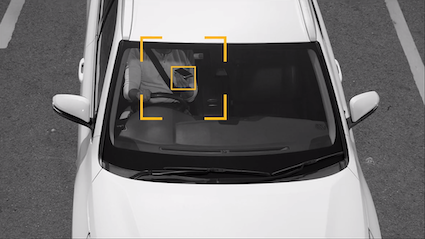
This automated system employs a camera to take infrared images of passing vehicles under all traffic and weather conditions. This system, which relies on AI software, can analyze every image taken and identify drivers who are likely to commit a violation for using a mobile phone, as well as drivers who showed no evidence of illegal use of a mobile phone while driving. In the next stage, images are automatically classified to be verified by trained personnel. Rejected images captured by AI cameras are deleted within an hour of being detected without being verified.
These cameras use the same technology for fixed and mobile cameras while protecting the information of New South Wales road users, which is the responsibility of the Departments of Transport and Revenues that manage camera software and imposed fines.
In January 2019, the program’s pilot phase was launched to test camera technologies, both fixed and mobile (which are mounted on trailers). The six-month pilot demonstrated the technology’s ability to operate with great reliability in real-life conditions. The cameras checked 8.5 million vehicles and detected 100,000 drivers using their mobile phones while driving. The cameras captured clear photos under all weather conditions, regardless of the lighting quality, thus exceeding all expectations related to data management, storage, and security.
In December 2019, the Department of Transport in New South Wales deployed 45 cameras and verified 773,532 images to confirm that 3,303 photos of violators were taken. Unlike speeding cameras, the locations of mobile phone detection cameras are not disclosed and no signs are placed to warn drivers of their proximity. As a result, 179 driver images were taken on the Sydney Harbour Bridge during the first four days of the project.
The first three months of the official program is a grace period during which the driver receives a warning letter without incurring any fines or demerit points. This period will end at the beginning of March 2020 as violators will be imposed a fine of AUD 344 and 5 demerit points, with fines increasing to AUD 457 in areas crowded with children. The Department of Transport plans on verifying images of approximately 135 million drivers by 2023.