
It is normal for city streets and alleys to be damaged due to extreme weather and traffic accidents. Therefore, municipalities, especially in major cities, carry out periodic inspections to check road conditions to preserve the safety of citizens. Inspection teams carefully check streets and alleys to create a list with prioritized repairs according to the municipality’s pre-set standards. However, authorities usually incur significant costs to inspect road conditions, which may take weeks or even months. How can technology partnerships be harnessed to improve the efficiency of this process in innovative and equitable ways for all segments of society?
For example, in the city of Philadelphia, USA, the Streets Department identifies and selects every year the roads that require maintenance according to several factors determined by the Department’s inspectors. The inspectors regularly wander the city streets to monitor cracks and potholes on the roads and assess the overall safety of the streets. This process takes a long time, as inspectors must check the city’s 2,400 miles of roads every year. The city of Philadelphia is one of the largest congested cities in the United States, whose streets require permanent assessment and maintenance. Recently, the city’s authorities have been able to devise solutions based on modern technologies that have improved the quality of road management regarding inspection and maintenance.
In 2019, the city officially launched SmartCityPHL, a roadmap for its transformation into a smart city that included a plan to upgrade and maintain road inspection and maintenance systems and processes. The roadmap is based on several fundamental principles, including innovation, equity, community, and institutional cooperation, as well as improving the quality of life for city dwellers. Philadelphia’s plans to promote its transformation into a smart city are based on the principle of consultation and leveraging the insights of policymakers, entrepreneurs, and innovators both inside and outside the government to highlight and address the main challenges facing the city.
As a first step to address the challenges facing the road sector, SmartCityPHL’s team turned to the city’s departments, academics, researchers, and private sector leaders to design solutions and innovations. The concerned government entities participated in experimenting and testing the proposed solutions and technologies, and then evaluated them based on predefined criteria, such as the proposed innovation’s effectiveness in reducing costs and increasing performance efficiency.
The SmartCityPHL initiative has so far supported four pilot projects using the latest technologies to improve the quality of its road services for the population. The objectives of these projects varied, for example, between the reduction of waste in the streets and the automation of asphalt inspection. Two examples of these projects, with private sector partners State of Place and GoodRoads, use artificial intelligence to examine images of Philadelphia’s streets and alleys, provide a detailed analysis of the city, and connect this analysis to the population’s quality of life standards.
In the first project, the company used images of road inspections collected by the municipality and analyzed more than 150 environmental data points, including road safety, pedestrian crosswalks, park benches, etc., and then used this data to provide a list of necessary maintenance operations. This project took into account the importance of maintaining public resources, achieving equality among the city’s residents, and building trust between the community and the municipality.
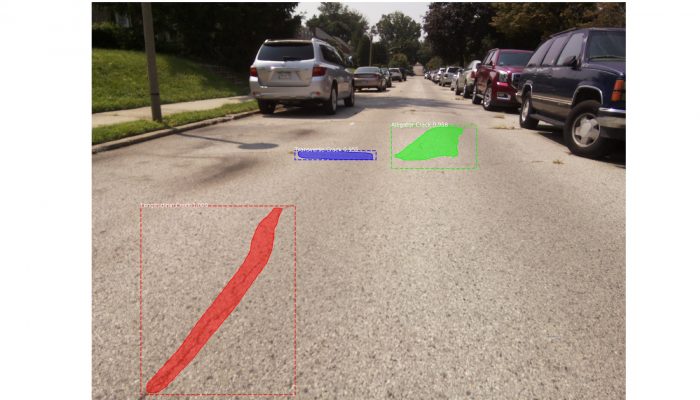
In the second project, the municipality requested the private sector to submit proposals to automatically assess the condition of streets and sidewalks at an affordable cost. GoodRoads was selected as a supplier and partner for a 1,200-mile pilot project. The project involved the installation of low-cost portable devices on road inspection vehicles, which enabled inspection teams to take street photos while conducting inspections on city roads. In just 438 hours (equivalent to five working days for an inspection team of 10 staff), the inspectors captured more than one million images of road conditions. Consequently, the company analyzed the images using artificial intelligence to identify cracks, potholes, and signs of outdated roads, which allowed the Streets Department to develop a comprehensive view of needed repairs. At the same time, the images were used to train the company’s AI platform to identify damaged sidewalks and road signs. The municipality then considered improving those elements and prioritizing spending. These data were not only useful for the streets of Philadelphia because, when combined with demographic and social information that included ethnic and income levels, they helped in prioritizing repairs more evenly for the city’s population.
As a result of these two projects, the Streets Department was able to expand its plan timeline from three to five years, in accordance with the five-year budgets set by the municipality and other utility institutions. Moreover, the Department was able to build the decision-making process on demographic and socioeconomic data and thus prioritize reforms to disadvantaged communities, in line with the municipality’s commitment to embedding racial and economic justice as a key element of the budgeting process.
These technologies are scalable and adaptable for future projects. The funding of a new expansion project within Philadelphia was approved to inspect the city’s roads and develop additional uses for photo applications, such as the possibility of examining other elements of public road services like assessments of general hygiene, landfills, and integrity of the premises.
References:
- https://www.phila.gov/2021-02-2 2-streets-department-and-SmartCityPHL-team-up-to-automate-road-inspections/
- https://www.phila.gov/2021-02-04-SmartCityPHL-two-years-later-and-four-pilots-smarter/
- https://www.phila.gov/2021-02-22-picture-this-using-data-to-make-philadelphias-built-environment-more-equitable/