
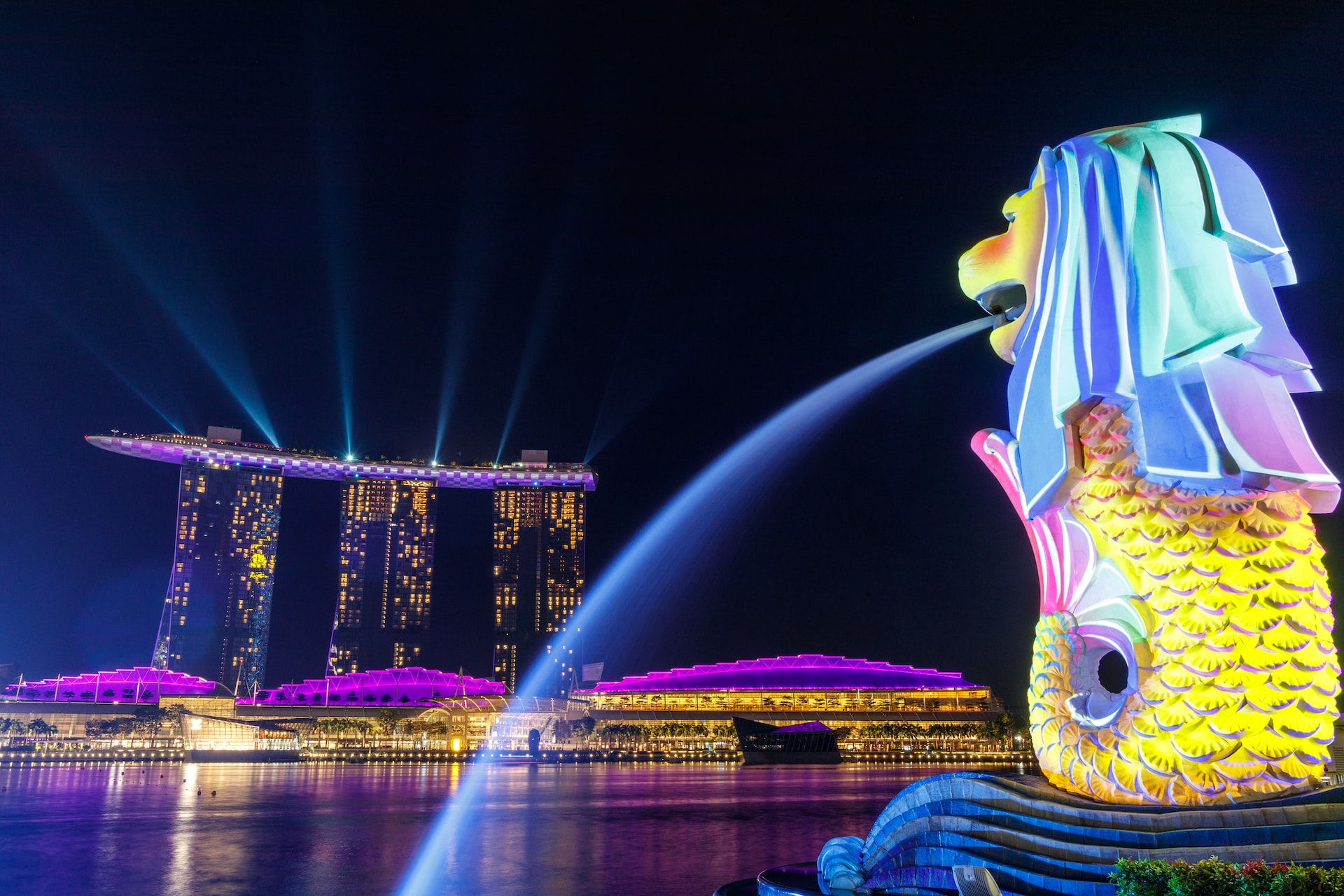
With a food security crisis looming, Singapore is trying to reduce its dependence on imports. It develops smart solutions to support agriculture and aquaculture and automate their processes to create optimal and healthy growing conditions for fish, Achieving production that meets local needs and overflows them to be exported to the world.
By definition, Food security is achieved when everyone has physical and economic access at all times to purchase, produce or obtain adequate, safe and healthy food to meet his needs and that of his or her family; It is a high priority issue for Governments, United Nations organizations and entities.
This problem is no exception, even if it seems to the world to be prosperous. Food security depends primarily on geographical and natural data. They are more important than political, economic and social ones. Singapore is a vivid example of this situation, The small island nation lacks natural resources to the extent that it imports more than 90% of its food consumption from 170 countries. For example, it imports 34% of its poultry needs from neighbouring Malaysia, which recently banned chicken exports.
Historically The Singaporean government’s focus has been on increasing GDP, raising average household income, and importing only while neglecting agriculture. Singapore has earned its fair share of international challenges such as climate change, high inflation, disruption of food supply chains and the COVID-19 pandemic. All this has caused a crazy rise in the prices of food commodities, This is what the government has been relatively successful in confronting so far. But it will not last long and must prepare for the future.
Therefore, The government, through the Singapore Food Agency, launched the “30*30” initiative. It has set the goal of producing 30% of its food needs locally by 2030.
To achieve this goal, The Agency has developed a plan distributed over 3 main axes called “food baskets”, It is the diversification of import sources, and the development of local production, and crossing the border, In the sense of increasing the competitiveness of local companies in the global market, All this in light of the scarcity of agricultural land.
As expected, Singapore has chosen to circumvent this reality by using technology. In cooperation with its counterpart specialized in government technology, the Agency launched a project to automate agricultural work in all its forms, Especially aquaculture or aquaculture, For which it has established a specialized center linked to a network of research institutions and agricultural companies, It is developing the aquaculture sector.
This term refers to the development of aquatic life on private farms rather than fishing from its natural environment. Two types of such farms are common in Singapore, Marine such as coastal mesh cage farms and closed floating farms located in the Strait of Johor, and wilderness that includes open ponds, reservoirs and multi-layered internal systems.
In marine species, Mesh cage farms use automatic feeding, IoT technology, and hydroponic recycling systems, Water monitoring systems are added to them in wild farms.
Recently The Aquaculture Center was able to study the DNA markers of fish, His scientists identified 3 genetically superior strains naturally and without any intervention or modification in their genetic maps. One species was characterized by a great speed of growth, The second with a high ability to resist diseases, The third revealed a high percentage of omega-3s.
Researchers at the center were also able to produce high-quality fish food through an intensive rotor production system. They are small zooplankton brought from the sea to be used as food for farmed fish that need an integrated diet from an early age. As with a growing child, It is necessary to constantly monitor the roundabout counts, as increasing them is as harmful as their shortage. They are susceptible to fungi and bacteria that kill roundabouts and affect fish larvae as well. The rotor counting of samples was also very laborious. To address these challenges, The center has developed a solution based on image recognition technology using artificial intelligence.
The researchers began to study the stages of these processes, And choose the most suitable stage for automation. Over the course of 6 months, They built an AI model with high-resolution images of 100 samples, Then they tried its effectiveness with low-resolution ones such as those that would take it from farmers after they capture it with their phone cameras of varying quality. The system was able to detect rotors with an accuracy rate of 90%. And shorten the time of operations from 40 minutes to one minute. This model will be made available via local servers to farmers interested in developing their tools. The major version will be downloaded using cloud computing for greater cost-effectiveness and provide users with updates as they become available.
These plans may not be enough to eliminate dependence on imports altogether. But modern technologies will help maximize productivity in the smallest possible space, In a manner that achieves efficiency, safety and sustainability, It protects fish from the effects of climate change, pollution and disease, This is part of the solution to prepare Singapore for its future crises.
References:
- https://www.sfa.gov.sg/docs/default-source/food-farming/farm-technology/rotifer(brachionus-rotundiformis)-culture-technology-for-hatchery-production-in-singapore-(updated-with-ai-no-qr).pdf
- https://www.cnbc.com/2022/06/21/singapore-imports-90percent-of-its-food-how-is-it-coping-with-inflation.html
- https://www.sfa.gov.sg/food-farming/sgfoodstory/our-singapore-food-story-the-3-food-baskets
- https://www.sfa.gov.sg/files/SingaporeFoodStatistics/SFA_SingaporeFoodStatistics1/mobile/index.html
- https://govinsider.asia/future-of-work/is-the-future-of-education-in-ai/