
Employing modern technologies in improving health care, Several Singaporean entities have teamed up to set up an AI-equipped laboratory to make rapid diagnosis of people with heart disease and carry out early intervention.
Heart disease ranks first on the global list of fatal diseases, Every year, it kills nearly 18 million people and disrupts the lives of millions. Patients usually undergo several tests to diagnose them. Vary from cardiovascular magnetic resonance imaging, Passing through computerized tomography, And not ending with nuclear imaging. Through these examinations, It is possible to analyze the structure and effectiveness of the heart and detect signs of heart disease such as clots on the walls of arteries, damage to the heart muscle, or interruption in blood supply.
In Singapore, Every day, hospitals record 19 deaths from cardiovascular disease and heart attacks. It even accounted for a third of the country’s deaths in 2020, according to the Singapore Heart Foundation. In trying to reduce these figures, Every year, medical staff conducts hundreds of thousands of patient examinations to perform the necessary interventions before it is too late. However, these tests take a lot of time and effort that can be invested in treating patients.
As Singapore is one of the most technologically advanced countries, Government entities have turned their attention to employing emerging technologies and modern software in the field of healthcare. To achieve this goal, A collaboration has been established between the Healthcare Group and Singapore’s National Centre for Supercomputing. The two entities will support both the Singapore Innovation Organization and the Singapore Health Foundation in their three-year partnership.
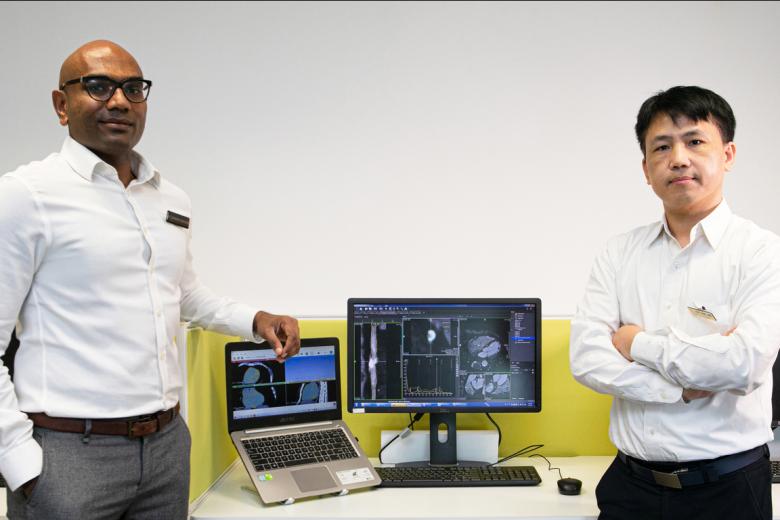
These efforts have resulted in the opening of the Singapore National Heart Centre for a first-of-its-kind laboratory in Southeast Asia. It is the product of the center’s research with a team from Nanyang Technological University and Nagy An Polytechnic College.
In this cardiac imaging research laboratory, The center of the health institution relies on artificial intelligence to read electrocardiograms to detect and predict heart disease with great speed and accuracy. These devices measure the electrical activity of the heart to detect any abnormalities or dysfunctions in performance.
Artificial intelligence algorithms capture and analyze information in detail and according to several dimensions, It monitors subtle changes that the human eye may overlook. The most important thing is that it does it within minutes, This is a very short time compared to the time it takes for radiologists, Which range from two to four hours. Using these detailed reports, Doctors track patients’ conditions, monitor their progression, and predict future possibilities of improvement or regression. In addition The software receives real data and information on a daily basis, It uses machine learning technology that enables computers to learn from past and stored experiences as humans would.
Of course, AI software requires references, In this case, they are the files of old patients collected from four public databases. To avoid any privacy concerns or challenges, The National Heart Centre of Singapore has used the technical hardware and software needed to securely transfer, store and process patient information.
The team behind this innovation experimented with the technique to analyze and diagnose electrocardiograms obtained from two groups of participants. One contains healthy people and the other involves heart patients. The results were later compared. The ability of intelligent algorithms to analyze complex data is at levels beyond human capacity. Achieving high efficiency in terms of time and effort, In addition to the assessments that achieved an accuracy rate of 98.5%, Which enables doctors to effectively prescribe preventive treatments and avoid complications such as kidney disease.
Singapore has had a similar close experience serving the health sector, A team of Singaporean researchers has developed an AI-powered system, It examines eye images of people with diabetes to diagnose eye disorders in a way that reduces the human effort required to conduct these tests by 70%. Its duration is shortened to minutes.
Technical innovations that reduce time, effort and cost are an ideal solution to some of Singapore’s challenges in its health sector. Whereas the high costs of health care and the increasing pressure on its services constrain the ability of the health system to respond to the needs of citizens, Especially with the increasing severity of the phenomenon of “population ageing” in Singapore and their need for continuous health care. But the acceptance of AI in diagnosing and treating patients is still a complex issue that may not be well received by the public. Hence, the importance of educating and communicating with citizens about the efficiency and accuracy of artificial intelligence in the field of health care using simplified explanation and supporting evidence that enhances their confidence in these technologies. Your doctor may need to communicate with patients about why AI is used and how effective it is in the diagnostic process at first.
In the long run, Such projects would expand patients’ access to testing and treatments and improve healthcare across the country.
References: