
Singapore has recently launched a “chatbot” aimed at improving the means available to citizens to submit reports and complaints to the level of government services. This initiative came as part of the Singaporean government’s efforts to improve the services provided by municipalities in the country.
Whereas municipalities are the closest government face to society, It is the institution that provides its basic services such as education, health, utilities, transportation and other daily aspects of the lives of the population who depend on it to secure their vital needs. Being one of the most important government performance appraisers, Municipalities operate in accordance with policies that regulate the provision of services to residents in their cities, and the development of these services, It addresses any defects that may encounter it. Often, municipalities rely on residents to help improve government services by reporting any service failure or damage to a public facility; Each government also provides its citizens with different outlets to this end. Such as written complaints or telephone calls. Many governments are now using technology and smartphone applications to communicate with their citizens to provide user-friendly and broader-based communication channels.
In fact, this endeavour faces several challenges, often resulting from insufficient information provided by the population when reporting a defect or observation. And this is only the beginning, There is an intensive effort that is necessary to analyze the hundreds of cases received daily. and validation, And then determine the concerned party to deal with it, All these tasks are done by employees and manually.
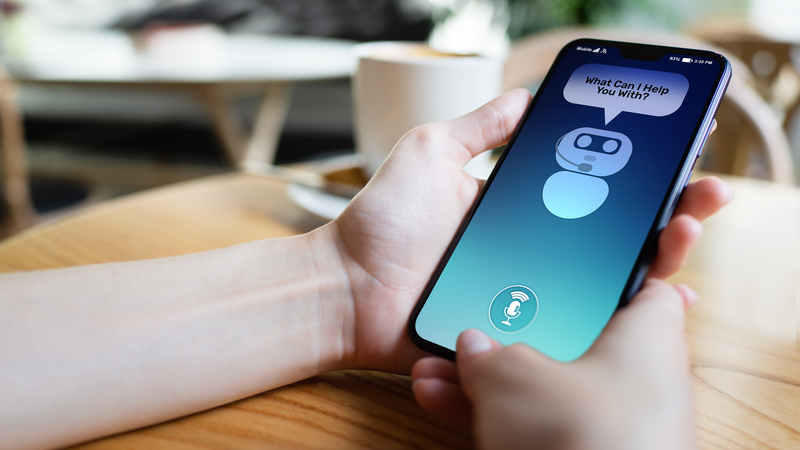
With a view to improving services and developing the means used to enable citizens to report deficiencies, The Municipal Services Office and the Government Technology Authority (GovTech) collaborated to create a “chatbot” and make it available via WhatsApp and Telegram. It was one of the initial projects within Singapore’s National AI Strategy approved in 2019. This project complements the vision of the Government of Singapore, which established a municipal services office in 2014. She described it as a window that enables people to report on daily affairs such as the failure of lighting in a street or the accumulation of garbage in a public place, The following year, The government has also launched the OneService app to receive reports electronically.
Technically, The new “chatbot” relies on “machine learning” algorithms that help the robot to constantly improve its performance, Whereas it receives communications automatically, He then uses natural language processing techniques to analyze them, Within a multi-stage process:
- Determine the nature of the case or complaint automatically and classify it within the appropriate category, such as complaints about waste accumulation, road quality or lighting.
- Extract details about the case such as general location, address and timing, Then send it to the user for endorsement or completion. To do this, The system also uses images and geolocation data sent by the user, This includes a software model that tracks any elements in the image related to municipal affairs such as cigarette extinguishers, traffic lights or sewage nozzles.
- Identify the appropriate entity to deal with the case and transfer it to it.
The robot has been trained using the data of the Unified Service application, which dealt with more than 160,000 cases in two years, During which the technical team experimented with different techniques in natural language processing, While the Office of Municipal Services continued to collect user feedback and classify cases, Whenever a case is dealt with, An employee inserts them into the category they belong to to form a reference database across platform data that users are familiar with.
Due to the similarity of reports between the application and the chatbot, In order to use this data, both the text and type of the case had to be directed to the Categorizer program. Each time separately. Thus, Learn to “Mubawbaw” to associate certain words or patterns that appear in the text of the case or communication with the type of case to which they apply. Based on his experience, Mubawab searches for similar words or symbols, To help him determine the most appropriate case, Based on the text of the communication only.
According to the State Technology Authority, At this stage, the robot “Mubawab” succeeds in predicting the type of case in 80% of reports, As for the process of analyzing and classifying the details of the case or communication, It posed a challenge. Extracting details to configure the pre-prepared model was the most complex task. The team did not have pre-existing keywords, Because the work of the employees of the municipal services office does not require tabulation or keyword tagging of the details of the cases they are dealing with.
To overcome this obstacle, The Group developed a framework for explanatory notes, They asked the staff of the Municipal Services Office to help them distinguish keywords within the reports. using symbols indicating the type of important information that answers basic questions of time, place and facts, After working on 5,600 cases, Mubawab Details is now able to identify different types of key information with 85% accuracy.
The second challenge was the multiplicity of entities that are part of the municipal services system and the diversity of entities that share the responsibility of finding solutions to specific communications. This means that choosing the right and concerned party may not be an easy task in all cases. For this reason, The robot is programmed to use the geolocation and images sent by the user as well, This inspired the team to use it to determine the type of case as well. Before it turns out that its usefulness in enhancing the accuracy of case type identification (ranging from 2% to 3%) is negligible given the long time it will take to achieve this, which may force the user to wait a long time, Other than the stage of determining the concerned party, which begins after the end of the user’s role in submitting the report, In which the robot succeeds in converting cases to the right destinations by 85%.
After a short testing period, The beta version of the “Chatbot” has been launched, The Government Technology Authority is awaiting user feedback to assess the success of the experiment and its impact on enabling residents to report any service-related cases to Singapore’s municipalities.
References:
https://cities-today.com/singapores-chatbot-categorises-feedback-with-ai/
https://www.tech.gov.sg/media/technews/developing-the-one-service-chatbot
https://www.mnd.gov.sg/mso/initiatives/ai-chatbot
https://www.smartnation.gov.sg/what-is-smart-nation/initiatives/Urban-Living/oneservice-app