
To protect its most important natural resources, The Government of Mauritius uses the Internet of Things to monitor seawater quality by tracking key criteria and providing authorities with information directly.
The Internet of Things technology has brought about a global digital revolution, It is becoming increasingly important, especially in resource-constrained countries and in the exceptional circumstances caused by the COVID-19 pandemic. The experience of Mauritius provides a typical example of this. It is an island nation in the Indian Ocean, Dependent on water as a source of food security, The seafood industry accounts for more than 9% of exports, It also benefits from its coral reef location in ecotourism, which accounts for 10% of the labor market and 8% of the economy. Of course, Any disruption to water will entail high environmental, economic and social costs. This is what the government avoids with practices that have led to a decline in oil tanker accidents over the past three decades.
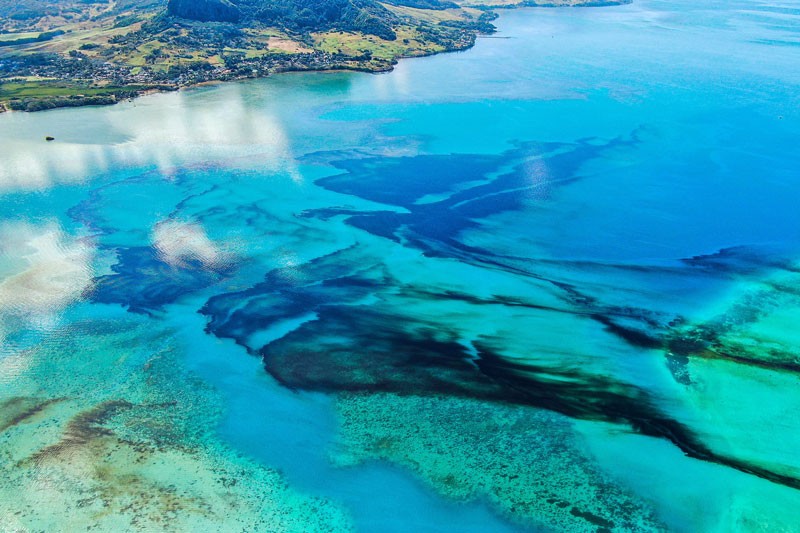
However, an incident of this kind occurred in 2020, When a Japanese cargo tanker ran aground on a coral reef near a wildlife reserve, This led to the leakage of more than a thousand tons of oil derivatives into the water. Satellite imagery showed the black lines left behind by the ship’s location and the direction of the current that washed away the spilled oil. The impact of this incident, which was considered the worst marine pollution in the country, was exacerbated by limited resources. Where institutional and legal mechanisms have failed to manage large-scale clean-up efforts, Especially since the spill was far from the main ports and coincided with a global pandemic and an economic downturn, The likelihood of any long-term political action has diminished.
As a result of the effects that extended along the coasts of the archipelago, The government has launched an innovation program called “Blue Resilience”. It called on various entities, including companies, organizations, research and academic institutions, to explore innovative ideas that may contribute to the management of the island’s resources and the protection of its economy.
Through a partnership with the private sector represented by the local company Digital Twin Services, which provides some of the solutions of the Fourth Industrial Revolution, A seawater quality monitoring project was launched by integrating water testing and analysis products and tools.
After the “proof of concept” phase in which the proposed solutions were tested, Two sites on the island have been selected for the initial trial, Autonomous communication modules, antenna and digital sensors based on a versatile waterproof technology called the Long Range, Low Power Wireless Communication Network (LoRaWAN) will be used. All these elements analyze key parameters of water quality around the clock, Sensors measure dissolved oxygen, temperatures, and the rates of turbidity, salinity, acidity and electrical conductivity, pH, and redox potential. The software then classifies the standards on one of the four approved grades, They are “excellent”, “good”, “acceptable” or “bad”. The executive team also developed a new technology to automate cleaning systems for oxygen sensors and water turbidity.
Data is constantly transmitted through external gateways representing the network output, Instantly and securely access the IoT platform hosted by the Government Data Center. The system then displays all these vital ratios in dynamic graphs and a timeline showing target levels and critical thresholds, This is to facilitate the understanding and analysis of information for non-specialists of officials and decision-makers. A consulting firm will soon be selected to guide authorities towards the creation of the Lagoon Water Quality Index. The term “lagoon” means the lagoon that includes the shore, They are shallow bodies of water that are adjacent to and often in contact with seawater.
Emergency workers were able to pump nearly 3,000 tonnes of fuel oil from the ship before spilling into the ocean. Coastal teams and volunteers used handmade floating arms of hair and straw to absorb whatever oil was available. Researchers at the University of Sydney pointed out that hair has the ability to absorb up to 9 times its weight from oil, These sticky substances adhere to the hair fiber, This makes it a natural sorbent. For this reason, Chosen by the Government of Mauritius as part of its orientation to the use of sustainable resources, To be an alternative to industrial products based on polymer compounds, But she did not rule out that at a later stage she would have to use chemicals to clean the rocks from traces of oil.
Perhaps the most prominent challenge faced by the local government after the incident is the complex frameworks of liability and compensation. In cases of marine accidents, It is necessary to adhere to international principles, However, these grounds do not apply to the case of Mauritius because the leak was caused by a bulk tanker and not by an oil tanker. In this case, shall apply an international convention guaranteeing civil liability for pollution damage with bunker oil, However, compensation is relatively limited and requires several unresolved legal data.
Before the ratification of treaties governing the totality of maritime operations, The risk will remain, Especially off small islands. But this experiment laid the foundation for the creation of a living system based on the Internet of Things to monitor seawater quality. This will protect ecosystems, boost tourism, enhance beach management and support the local economy.
References:
https://ocean.economist.com/governance/articles/mauritius-oil-spill-and-its-aftermath