
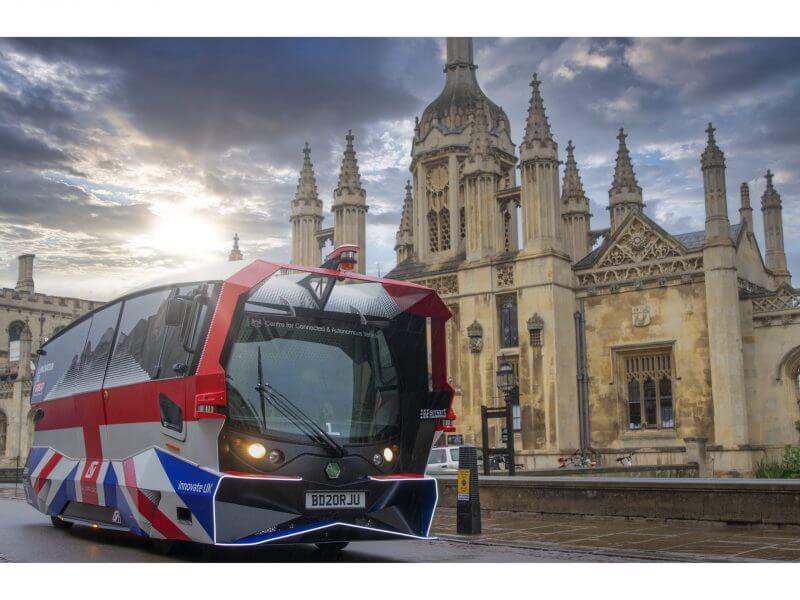
The city of Cambridge in the UK will use autonomous shuttle services as part of its public transport system, a pilot project that is an important step towards the development of sustainable transport systems. Based on the results of this experiment, the municipality will determine the possibility of integrating autonomous electric shuttles into public transport in the UK to make the transportation sector safer and more sustainable. The experience involved the selection of small driverless electric shuttles that can accommodate 10 passengers and transport them at a speed of up to 32 km/h to various destinations across the city.
To ensure modern, comfortable, and sustainable movement in urban areas, public transport needs to be developed. This is crucial in a busy city, such as Cambridge, UK, which has many companies and institutions that operate 24/7, including hospitals, emergency services, and a large number of laboratories. The Greater Cambridge Partnership (GCP) worked in coordination with Aurrigo to launch an initiative that looks into the potential of autonomous EV technology to develop the public transport network to drop residents at their work posts and provide convenient and sustainable trips to the cultural, leisure, and family destinations that the residents and tourists of Cambridge are looking to visit after COVID-19 travel controls are alleviated.
The initiative focuses on the launch of autonomous electric shuttles that can accommodate 10 passengers to drive alongside other vehicles on the city’s roads, in a first-of-its-kind experiment in Cambridge. These shuttles, specially designed by Aurrigo, operate at a speed of up to 32 km/h and are capable of traveling 161 km between charges. These shuttles operate the 20-minute journey around the West Cambridge route every day of the week.
The project is supported by Innovate UK and the government’s Centre for Connected and Autonomous Vehicles (CCAV). The project teams were supposed to start working before 2020, but implementation was delayed due to the pandemic, which was one of the main challenges slowing the project’s progress. Prior to the pandemic, relevant authorities had started developing autonomous shuttles for testing, and the road where the project would be tested using one pilot shuttle was already examined before activities were halted due to social distancing measures against COVID-19.
The pandemic hindered the project, but on the other hand, it proved the urgent need to develop safe and convenient means of transport for small numbers of passengers. Therefore, the work was resumed after the COVID-19 restrictions were lifted. Aurrigo launched a second shuttle to examine the road in preparation for the agreed pilot journeys. The electric shuffles were then piloted to test their performance in two basic systems, one as autonomous shuttles and the second as driverless shuttles. After completion of the trial period, the work team will plan to attract a number of passengers specifically selected to test the project in real life, using a special smartphone app that allows vehicles to pick them up from a number of locations along the two-mile road assigned for the project.
The project represents an important step towards the integration of autonomous shuttles into public transport fleets, providing an opportunity for autonomous shuttles to travel alongside other vehicles, which has not been tested before in the city. However, this experience also raises public concerns about road safety, as road users do not usually trust autonomous vehicles. In order to avoid any accidents and emergencies, the company has been providing shuttles with the latest autonomous software and LiDAR technology for remote sensing, a technology that identifies the ranges between the shuttle and certain objects using laser rays. Moreover, during the first steps of the project, the shuttles will include a driver who will be present at all times to operate the vehicles manually when required.
This project supports additional research to examine the potential for expanding autonomous transport services to connect city centers to train stations and parking locations, as well as providing convenient and sustainable transportation for employees of major business centers. This experience will also highlight the potential for autonomous technology in reducing traffic congestion and environmental pollution.
References: