
The Fourth Industrial Revolution ushered in a new era that saw the rise of several promising sectors capable of unlocking their full potential thanks to modern technology. These sectors include healthcare which has proven its ability to harness modern technologies and artificial intelligence for treatment, drug development, and other areas that elevate the sector as a whole. The global precision medicine market is expected to grow by 15.2% between 2021 and 2025, thus proving that innovation in medicine and healthcare are among the most popular areas of the Fourth Industrial Revolution.
South Korea was and remains adamant to take advantage of these opportunities. It invested in the infrastructure of advanced technologies and is currently focused on national policies paving the way for more advancement in this field. In the same context, South Korea devoted the efforts of the special presidential healthcare commission, which includes an elite group of government officials and experts, to develop a set of strategies known as the “strategies for the development of healthcare in light of the Fourth Industrial Revolution.” These strategies include various healthcare fields and involve the development of groundbreaking technologies that South Korea seeks to promote for a leading role in the global market.
South Korea has designed this initiative to serve as a key factor and incentive to achieve its goal of transforming the country into a global biotech hub. The Ministry of Health and Welfare seeks to enhance its R&D investment in medicine, medical devices, and cosmetics, which will generate around 940,000 new jobs by 2020 within the sector. The ministries of industry, trade, energy, information technology, and communications also cooperated to implement this initiative launched in 2018.
في البحث والتطوير في مجالات الطب والأجهزة الطبية ومواد التجميل بما يثمر عن توفير حوالي 940,000 وظيفة جديدة في القطاع بحلول عام 2020. كما تم التعاون مع وزارات الصناعة والتجارة والطاقة وتكنولوجيا المعلومات والاتصالات لتنفيذ هذه المبادرة المنطلقة عام 2018.

This initiative comprised a set of innovative projects, including harnessing and using AI and sensors in homes, public spaces, and medical facilities to detect emergency health cases, whether infections or diseases. These technologies include wearable devices, robots, and sensors installed in public spaces and equipped with GPS and Wi-Fi to gather information about the patient’s physical activity and transmit the data to other devices. The data are first processed by the wearable device’s sensors and transmitted to the ambulance and the database through the personal digital assistant.
This initiative has offered the patients a specialized treatment that meets their needs based on blockchain technology that stores and analyzes data. Data can also be used to conduct research on incurable diseases. These data must be accessible to all South Korean hospitals to enhance the effectiveness and efficiency of treatment. A wide range of hospitals, fire departments, and other facilities that provide emergency healthcare services can benefit from this initiative and all its advanced technologies and equipment.

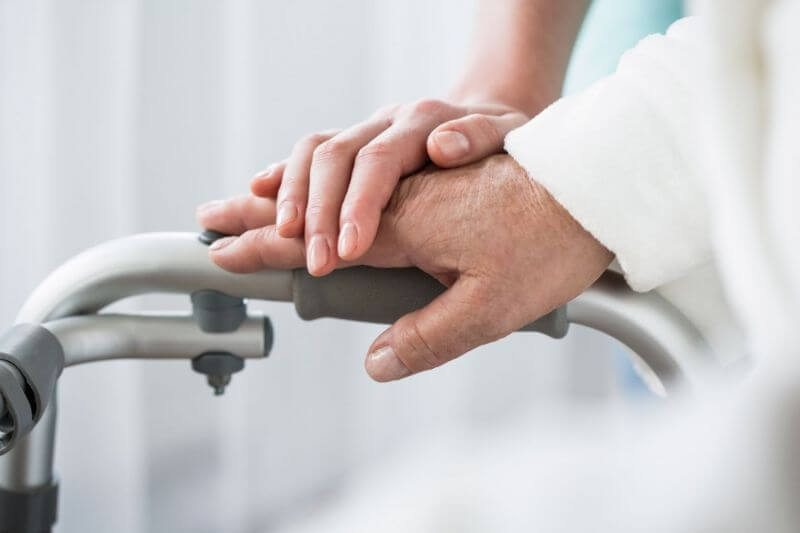
The scope of the project is expected to expand, as South Korea has trialed a drone with LTE technology, equipped with a communications module and video and thermal cameras to collect and transmit information to first responders, enhance communication between them, and respond to emergencies in under three minutes. The new device, Lineable Silver, was also designed to care for senior citizens and people of determination. The device sends alerts to family members to determine the location of patients and notify them when they leave a particular region. Moreover, the device keeps a schedule that organizes medication doses and sends reminders for patients to take them.
Until this day, major hospitals in South Korea have gathered medical data and information from six million patients. The government is committed to increasing its input by 2029 through the expansion of its database to include one million persons, including 400,000 cancer patients. Once data privacy is ensured and patient consent is obtained, the expanded database will be used for further analysis.