
In the rugged mountains and along glacial rivers, indigenous communities are facing the brunt of climate change, relying on their ancestral knowledge and traditions. Collaborating with environmental scientists, they are reviving their ancient wisdom to harmonize their livelihoods and ensure their food security.
Throughout history, societies have developed sophisticated, inherited systems for anticipating and responding to climate change, termed ‘ecological calendars’ by scientists. These calendars relied on precise natural indicators, such as blossoming flowers or insect movements, to determine planting, harvesting, and celebratory times.
Linked to specific biological and physical indicators that vary seasonally, these calendars have fostered knowledge systems that give meaning to time. These systems allowed communities living in a symbiotic relationship with nature to coordinate their livelihoods until the advent of industrialization and urbanization which disrupted these delicate balances. Climate change, driven by human activities, has disrupted these communities’ ability to predict climate patterns, introducing unprecedented challenges such as accelerated glacier melt and retreating glaciers. This is particularly concerning as 70-80% of the world’s population still relies on food produced by small-scale farmers and herders, who are now struggling to manage their lands and livestock.
Consequently, the world needs a proactive capacity to anticipate the future and develop dynamic plans to address uncertainty. This necessitates new systems capable of interpreting nature’s codes and assisting communities in forecasting and adapting.
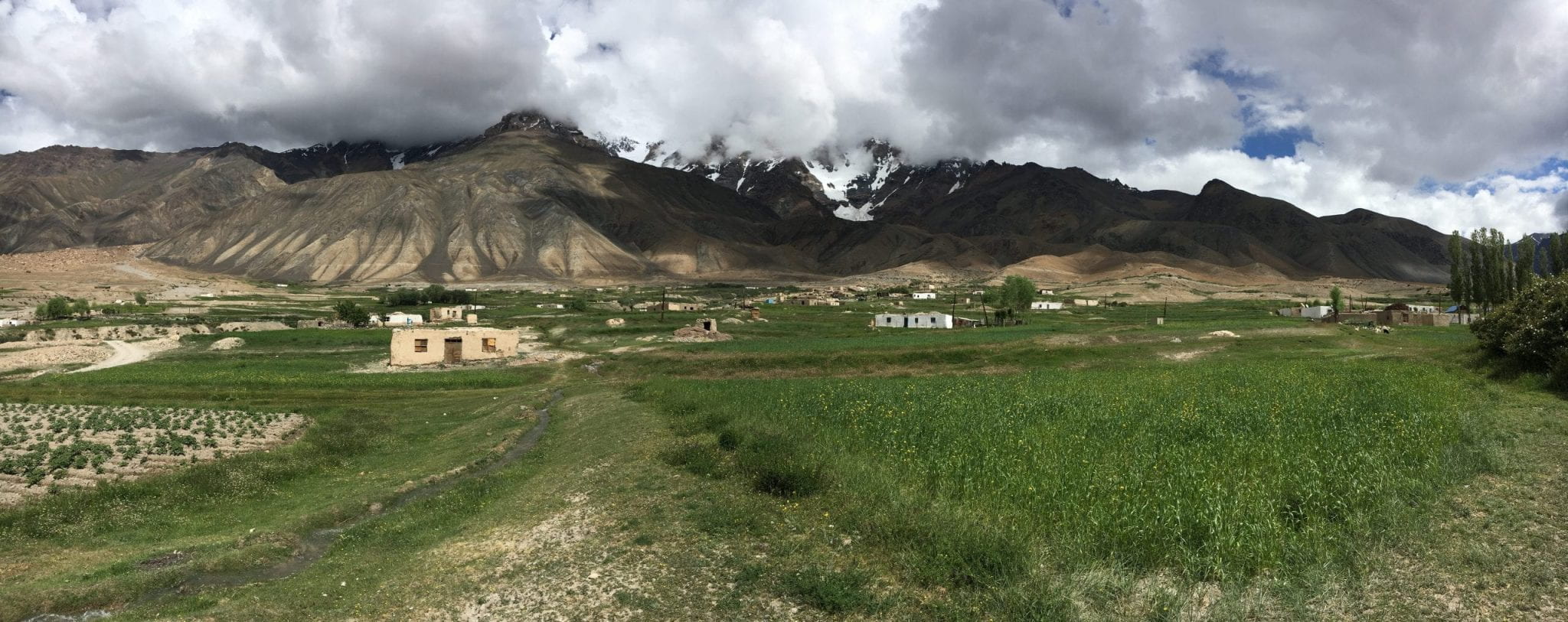
Seeking these systems, a team of researchers from the United States, Germany, Italy, and China embarked on a mission to bridge ancient wisdom with modern science, building on a study initiated at Cornell University’s College of Agriculture and Life Sciences. The researchers distributed their work across five diverse geographical regions, each with its unique ecological context and cultural milieu: the Pamir Mountains in Kyrgyzstan and Tajikistan, and the Standing Rock Sioux, Oneida Lake, and Waterhen communities in the United States.
This was not merely academic research; it was a collaborative endeavour with local communities to validate the concept and create new ecological calendars. The researchers began their journey by identifying seasonal cycles and immersing themselves in the lives of the people. They lived among the villagers, documenting semi-structured interviews and observations about livelihoods. They went beyond the role of observers, becoming part of the fabric of fields, pastures, hunting grounds, and comfortable homes while meticulously recording temperatures, humidity, wind speeds, and other environmental indicators. They also documented existing ecological indicators and the spatial and temporal dimensions of seasons.
The work extended beyond documenting existing ecological calendars for agriculture and pastoralism. The researchers also explored calendars related to the human body and began mapping the seasonal cycles of Central Asian mountain communities by inviting villagers to identify the environmental indicators they used for self-care.
Because these communities have long-standing relationships with researchers, built on trust and mutual understanding, the villagers actively participated in preparing communal meals and engaging in conversations that brought together people from diverse backgrounds, cultures, and knowledge systems to understand the unique climate change challenges faced by each community.
Collaboration and co-creation played a crucial role in this study as it ensured that the research was grounded in local realities and relevant to its people. Fieldwork also involved maintaining existing climate research stations, with the team replacing one station damaged by a glacier collapse. The researchers collected available data from each station and mapped vegetation cover to analyse time series of life cycles and predict climate variability.
The work was not always smooth, as the boundaries separating partners were more complex than differences in scientific backgrounds. Geographic boundaries and, more importantly, language barriers existed. To overcome these, the team had to invest significant effort in preparing every step of their journey in detail well in advance and coordinating work across multiple countries, with numerous colleagues, translators, administrative bodies, community leaders, and local schools, in preparation for travel, communication, giving lectures, and training students.
Additionally, they had to be prepared in terms of technology and available equipment, especially before visiting climate research stations. Although these communities generally trust researchers, it was also necessary to be prepared to deal with individuals, particularly for someone who would be living among them. Indigenous communities are not known for readily sharing their private lives or the essence of their cultural heritage with strangers. Therefore, the researchers took a gradual and patient approach in their conversations, avoiding being pushy or overly inquisitive, and were careful to show respect for traditions.
By involving community members, especially those with traditional ecological knowledge, researchers gained deeper insights and developed adaptation strategies tailored to each context. By combining scientific insights with place-based knowledge and indigenous knowledge, these efforts have restored local communities’ abilities to predict and adapt, albeit partially or initially. It has also strengthened cooperation and fostered a sense of ownership among the inhabitants. The communities have become invested in the research and its outcomes, realizing that their knowledge of their homeland is a source of strength, as their identity, culture, and sacred concepts all stem from their connection to it.
References: