
After the tragic experience of tsunami, the Japanese government has been working for years to improve the resilience of its cities through engineering solutions such as improved design of buildings and walls, upgrading evacuation mechanisms and warning the population of the approaching disaster.
Natural disasters often do not come alone, as they are accompanied by other equally dangerous phenomena. Perhaps tsunami is a good example, as these massive ocean waves may accompany earthquakes, landslides, or even volcanic eruptions.
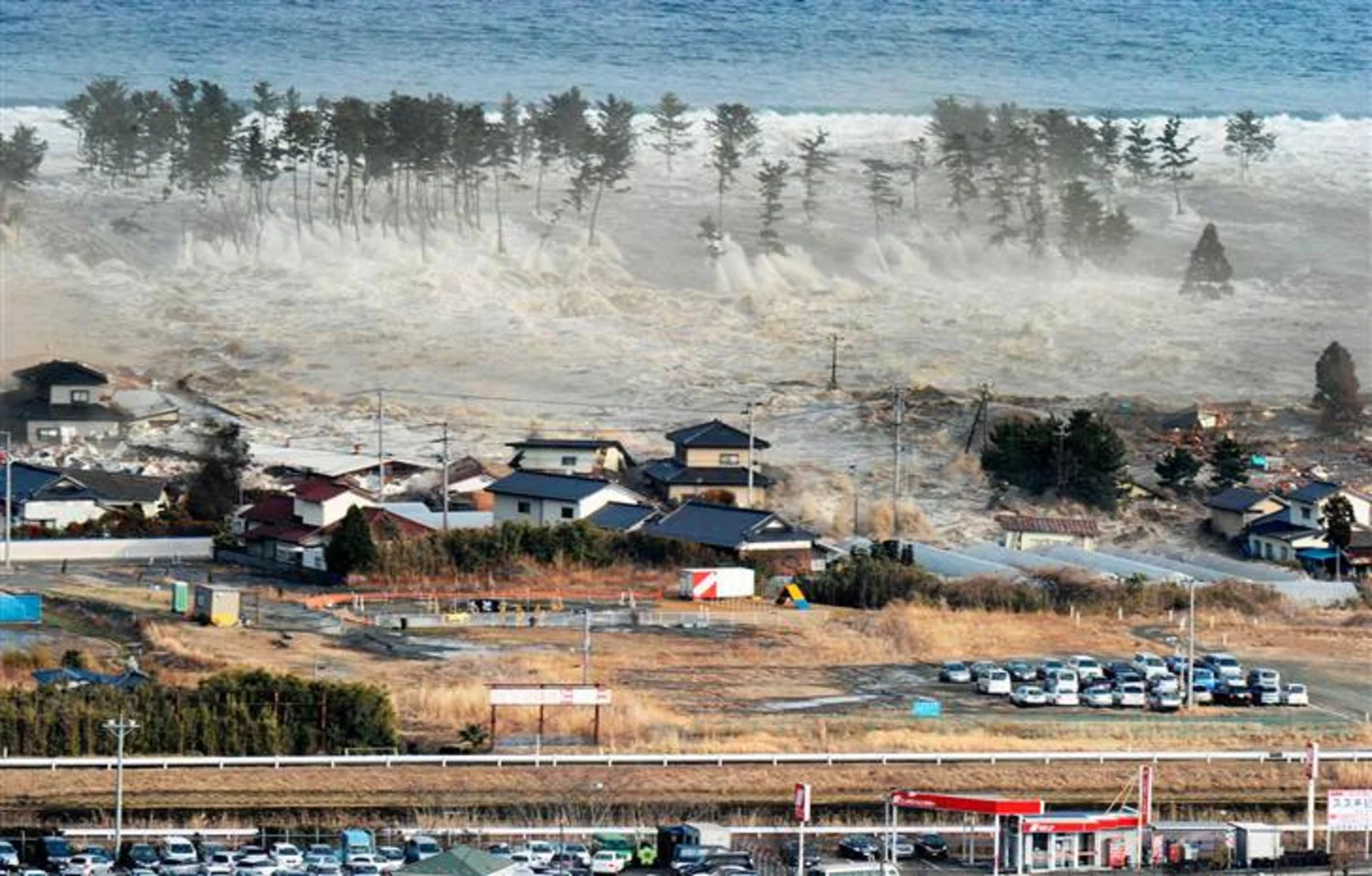
These incidents – despite their rarity – have devastating effects when they hit a populated coastal area, where waves rise to tens of meters, carrying tons of water washing away everything that stands in its way. This is exactly what happened in 2011 in eastern Japan, following the strongest earthquake in the country’s history, as a magnitude of 9, followed by the strongest tsunami, with waves exceeding 40 meters high struck several towns on the Pacific coast, especially within the Tohoku region. As local authorities use disaster prevention administrative radio systems to communicate evacuation information, the Ministry of Internal Affairs and Communications conducted a survey in the aftermath of tsunami, only to find that 35% of those affected did not hear the audio information from the speakers.
Kuril Trench, deep and narrow caused by the convergence of two tectonic plates, lies in the Pacific Ocean Northwest. Residents of coastal areas along its length are at risk, as in the event of a hurricane, they will have no more than 10 minutes to go to safe places, and this is not enough in large gatherings.
Faced with these challenges, the Japanese government has intensified its efforts to prepare. Over the years, it has implemented a series of projects, most notably moving population centres as far from the coast as possible, and building dams as lines of defence that protect the town from torrential waters.
A decade after the disaster, the government has published a plan with a new 10-year goal of reducing the number of fatalities in the event of a massive earthquake along the Kuril and Japan Trenches by 80%. First, the government identified 108 most vulnerable areas that vary between towns, cities, and villages distributed over 7 prefectures.
Choshi City in Chiba Prefecture is one of the designated areas. In this city, tsunami evacuation towers and roads for evacuation are being constructed, and the government has decided to raise the subsidy for the cost from one-half to one-third. Meanwhile, Sendai City in Miyagi Prefecture has invested in an emergency announcement system that uses fully automated drones to urge people to evacuate when tsunami alerts are issued. The two drones will split into two groups and call for evacuation from 50 meters above the ground along an approximately 8 km section of the coastal area.
The drone system uses a dedicated private wireless communication network, which is free from disruption even in the event of a disaster. An infrared camera mounted on a drone takes pictures of disaster victims and other objects while in flight and transmits them to the city’s disaster response headquarters, enabling them to assess the damage in remote areas safely and in real-time.
the city of Kawasaki embraced another technological experiment, as its local authorities collaborated with private and academic institutions to develop the use of artificial intelligence to predict tsunamis and develop response plans. The project combines two simulations: incoming tsunamis and evacuation behaviour. The tsunami flooding simulation is based on high-resolution modelling technology that relies on supercomputers to accurately reproduce the flood dynamics. Using observational data, for example, from off-shore sensors the simulation estimates factors like the wave height and the arrival time. The evacuation simulation on the other hand combines a city-specific model with a simulation of human behaviour and movement, allowing researchers to evaluate the human risks caused by a tsunami. This could be used to create better evacuation routes, and minimise crowding and panic.
To establish early warning channels for the rapid evacuation of the population, the government has worked to develop international warning systems, which are accompanied by radio and television broadcasts and a denser network of loudspeakers. In the future, it is expected to work with the police and fire departments to share information on impassable routes, fire, and power outage conditions.
On the other hand, nuclear facilities, in particular, have in recent years tended to be sited far from the coast and been designed to enter a “safe mode” as soon as an earthquake is detected.
Engineering solutions remain more effective, such as the development and installation of enormous building shock absorbers, sliding walls, and foundation pads to withstand the immense stresses and strains imposed on them during violent events like earthquakes.
In some cases, the government has found a solution that revolves around the construction of massive sea walls with a height exceeding 10 metres to protect highly populated areas, or by designing monstrous floodgates that are intended to channel, tamper, or redirect incoming tsunami waves away from critical infrastructure and population centres. These can be absolutely huge, up to 15 meters tall.
However, there is a risk that none of these efforts will be feasible if the scale of the disaster expands and prediction of this type of disaster is not scientifically feasible, so the government’s focus today is on designing infrastructure that is easy to maintain. Furthermore, experience has shown that sea walls are ineffective in protecting cities, but they generate a sense of reassurance among the population. This is a sufficient reason why walls are among the most protective measures at least now.
Drones will support rescue efforts and mitigate the impact of disasters, and designed buildings will contribute to hurricane resilience, albeit to a limited extent. Artificial intelligence models will provide a baseline that can be built upon to develop more effective evacuation plans and reduce cases of crowding and panic. All these attempts are only the first steps taken by the government of Japan to protect its citizens without hindering the course of nature.
References:
- https://interestingengineering.com/science/japans-engineering-solutions-for-future-tsunami-events
- https://www.weforum.org/agenda/2022/11/cop27-how-japan-is-using-tech-mitigate-natural-disasters/
- https://www.nippon.com/en/news/yjj2022093000690/
- https://govinsider.asia/intl-en/article/japan-predicting-tsunamis