

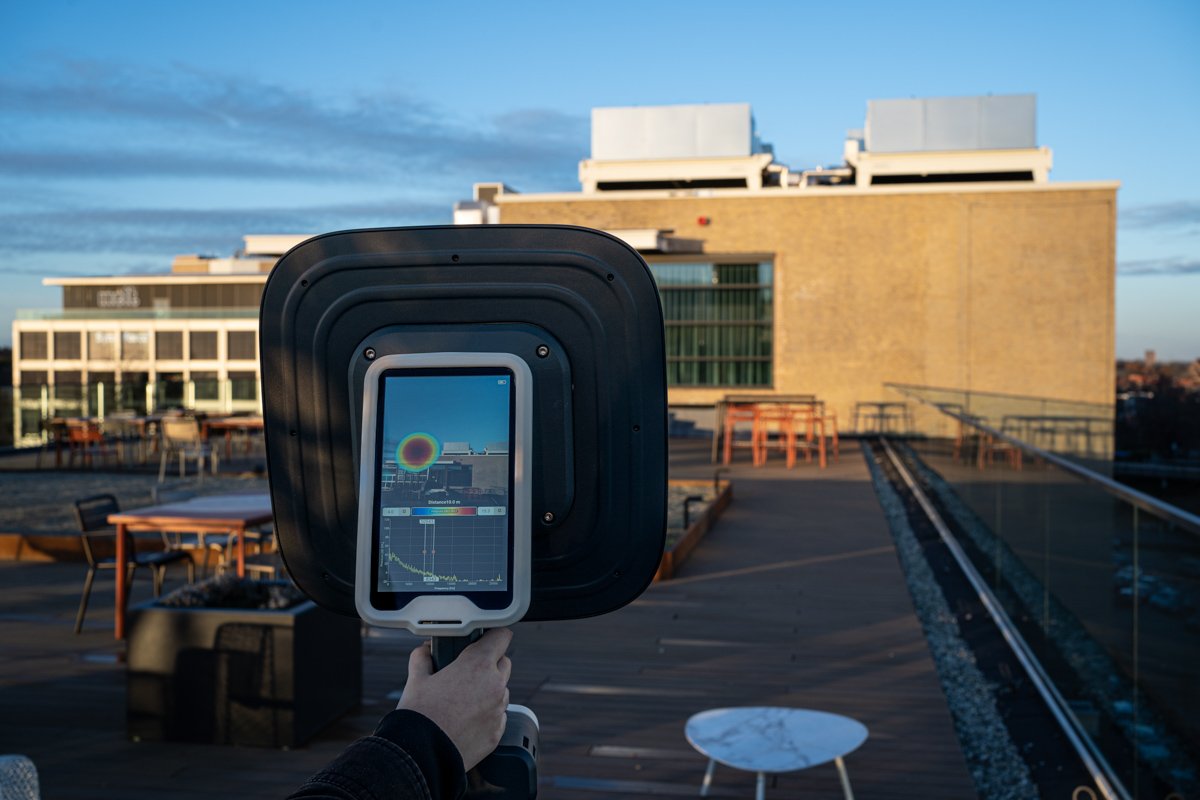
Within the framework of the partnership between the public and private sectors, The Belgian city of Genk has launched a pilot project based on artificial intelligence to measure noise rates from traffic on crowded streets. In order to address the problem of sound pollution, which has become a source of growing complaints from the city’s residents and visitors.
Sound or noise pollution in cities poses a health, social and economic challenge and causes harm to human physical and psychological health and well-being. Where academic studies indicate that human exposure to traffic noise for long periods, Especially at night, causes insomnia and interrupted sleep, This, in turn, raises levels of stress-causing hormone and so-called “oxidative stress.” They are two factors that cause malfunction in the functioning of blood vessels and high blood pressure, This increases the likelihood of heart disease. In addition, The World Health Organization (WHO) warns of a range of other diseases and health disorders directly related to vehicle noise. such as tinnitus, hearing impairment, and a decline in the ability to learn and concentrate, and a general feeling of stress.
For its part, The municipality of Genk has identified sources of high noise caused by traffic modified exhaust for vehicles and motorcycles in the first place, As well as some vehicle engine systems, reckless driving, and audio systems in vehicles. But to obtain quantitative data that can be relied upon in making decisions to reduce noise, The municipality has contracted with Nokia to test a smart digital platform developed by the company with a group of technology companies.
The “Scene Analytics” platform from “Nokia” was installed on one of the main streets in the city, Work is currently underway to test their effectiveness on the ground. This platform was designed within the framework of the “Internet of Things” technology, They are connected to a network of sensors that include microphones and cameras installed in specific locations on the street, It is also connected to the relevant government entity to provide it directly with data.
When the sound intensity of any vehicle exceeds a certain limit, Microphones and cameras automatically start recording the event, The “Scene Analysis” platform measures and analyzes sound based on a special algorithm based on calculating the degree of loudness, Vehicle number registration through Automatic Number Plate Recognition (ANPR) technology, The platform then sends all the data to the concerned department to form a clear picture based on reliable quantitative information about the details and source of the event, In order to consider appropriate policies and develop plans to reduce noise sources at the city level.
AI technology being tested in Genk, It also includes so-called “computer vision” technologies capable of automatically recognizing the content of images and videos, analyzing them and alerting to risks. It can handle thousands of photos and movies and broadcast them to administrators in real time.
It is noteworthy that traffic in Genk is high due to the fact that it is an industrial city. But this situation is not limited to the city. According to the World Health Organization, about 113 million people in the European Economic Area are exposed day and night to sound pollution caused by street traffic at a level of more than 55 decibels. It is the minimum appearance of negative effects of noise, The region’s population exposed to a noise level of more than 65 decibels is about 36 million. The World Health Organization recommends, Which classifies sound pollution as the most harmful environmental factor to humans in Europe after air pollution, The noise level should not exceed 30 dB to ensure a peaceful and sound sleep for citizens.
From this logic, The Genk Municipal Council has high hopes for the success of the experiment. He also believes that technology in general is able to provide solutions to several challenges facing smart cities. Belgium has conducted previous experiments in other cities to try to find appropriate solutions to the issue of traffic noise. But Genk is the first to use artificial intelligence. Several initiatives by other European countries are seeking similar solutions. In France, For example A recent study estimated that the social cost of sound pollution in the country is approximately 156 billion euros ($177 billion) annually. The study based its estimates on various aspects of life affected by noise, Such as public health, sleep disturbances and decline in productivity, And the decline in the value of real estate in areas witnessing an escalation in the level of noise, Decreased ability to learn and concentrate, and others.
It is also worth noting the results of one of the studies carried out by the city of Rotterdam in the Netherlands to reduce traffic noise, It revealed that only 6,000 people were responsible for the violations or exceeded vehicle noise limits – meaning that the problem of vehicle noise could be confined to a small population and this helped the authorities identify ways to address the issue more efficiently.
As part of efforts to reduce traffic noise in Europe, Sweden is testing a system that sends an audio signal over the radio of nearby vehicles. Alerts its drivers when ambulances, firefighting vehicles or police vehicles pass, This is in order to reduce the sound of sirens in the streets.
In the end, it is worth saying that smart digital platforms that combine different technologies, Like those tested in Genk City, It opens up wide horizons for multiple uses, Whether in utilities and public service sectors in residential or industrial areas, It provides smart cities with flexible, sustainable solutions, It is scalable in the face of many challenges.
References:
- https://www.euro.who.int/en/health-topics/environment-and-health/noise/data-and-statistics
- https://www.nokia.com/about-us/news/releases/2021/12/15/nokia-deploys-ai-powered-smart-city-trial-to-address-vehicle-based-noise-pollution-in-the-city-of-genk-belgium/
- https://www.brusselstimes.com/brussels/179274/brussels-wants-to-tackle-noise-pollution-following-ghent-example